
If you’ve searched for suing or sueing you’re probably trying to figure out which spelling is correct. The short answer is simple. Suing is the correct spelling. Sueing is a misspelling and should not be used in standard English.
This confusion happens because the base verb sue ends with the letter e. Many English learners expect to keep that final e before adding ing. English spelling rules do not always work that way. In most cases a silent e is dropped before adding ing. That turns sue into suing not sueing.
The mistake appears surprisingly often in emails legal discussions school assignments and online posts. Since the incorrect spelling looks logical many people assume it must be acceptable. It is not.
This guide explains the difference between suing and sueing using simple grammar rules clear examples and expert editing advice. You’ll also learn why the confusion exists how dictionaries treat the word and how to remember the correct spelling every time.
Need another quick comparison? Read Filed Vs Filled Which Word Is Correct 2026 Guide.
Quick Answer
Suing is the correct spelling. Sueing is incorrect. The verb sue drops its final silent e before adding ing. This follows a common English spelling rule used in words like making and using. Always write suing in formal and informal English.
Suing Or Sueing Comparison Table
| Feature | Suing | Sueing |
|---|---|---|
| Correct spelling | Yes | No |
| Meaning | Taking legal action against someone | Misspelling of suing |
| Part of speech | Present participle and gerund | Not a standard English word |
| Grammar | Correct | Incorrect |
| Used in legal writing | Yes | No |
| Used in everyday English | Yes | No |
| Dictionary entry | Yes | No |
| Example | She is suing the company. | She is sueing the company. ✘ |
Which One Is Correct
The correct spelling is suing.
The word sueing is considered a spelling mistake in modern English.
The reason is simple. English usually drops a final silent e before adding ing.
Examples include.
- Make becomes making.
- Use becomes using.
- Hope becomes hoping.
- Sue becomes suing.
This spelling rule applies in American English British English Canadian English Australian English and other major English varieties.
What Does Suing Mean
Suing is the present participle and gerund form of the verb sue.
To sue means to begin legal action against a person company or organization in a court of law.
Simple Definition
Suing means taking someone to court to resolve a legal dispute or seek compensation.
Common Contexts
You will often see suing in discussions about.
- Personal injury cases.
- Business disputes.
- Contract disagreements.
- Employment law.
- Copyright claims.
- Property disputes.
- Consumer protection.
The word also appears in news reports legal documents conversations and educational materials.
What Does Sue Mean
The verb sue has a specific legal meaning.It means to ask a court to decide a dispute or award damages after someone believes another person or organization caused harm or broke the law.Examples include.
- They decided to sue the contractor after the project failed.
- The customer plans to sue the manufacturer.
- Several employees are suing their former employer.
Although the word almost always relates to legal action people sometimes use it humorously in casual conversation.
Example.
I’m going to sue you for eating my last cookie.
In that sentence nobody expects an actual lawsuit. The speaker is joking.
Why People Confuse Suing And Sueing
The confusion is understandable because English spelling rules are not always predictable.Several factors contribute to the mistake.
The Final E Looks Important
Since sue ends with e many people naturally keep it when adding ing.That instinct feels logical but it does not match standard English spelling.
The Pronunciation Does Not Change
Both spellings would sound the same if spoken aloud.Because pronunciation stays the same writers often rely on what looks correct instead of remembering the spelling rule.
Keyboard Habits
Fast typing often leads people to write the entire base word before adding ing.That produces sueing instead of suing.
Internet Copying
Incorrect spellings spread quickly online.
Someone who repeatedly sees sueing on blogs forums or social media may assume it is acceptable.
Autocorrect Does Not Always Help
Some writing apps fail to catch uncommon spelling mistakes immediately.That allows the incorrect form to slip into emails or documents.
Key Differences Between Suing And Sueing
| Feature | Suing | Sueing |
|---|---|---|
| Standard English | Yes | No |
| Dictionary approved | Yes | No |
| Correct grammar | Yes | No |
| Used by professional editors | Yes | No |
| Suitable for legal documents | Yes | No |
| Recommended for academic writing | Yes | No |
The difference is easy to remember.
Suing follows English spelling rules.
Sueing does not.
Grammar Explanation
Understanding the grammar makes this spelling much easier to remember.
Sue Is A Verb
The word sue is an action verb.
Examples.
- They sue companies for breach of contract.
- She may sue the landlord.
- We cannot sue without evidence.
Suing Is A Present Participle
The ing form creates the present participle.
Examples.
- They are suing the company.
- She is suing her former employer.
- The family is suing the hospital.
Suing Can Also Be A Gerund
A gerund functions as a noun while keeping the ing ending.
Examples.
- Suing is sometimes the last option.
- Suing can take years.
- Suing requires strong evidence.
In all of these examples suing is the only correct spelling.
Suing Or Sueing Spelling Rule Explained
The easiest way to remember the correct spelling is to learn one simple English rule.
When a verb ends with a silent e you usually remove that e before adding ing.
Examples include.
- Make becomes making.
- Use becomes using.
- Drive becomes driving.
- Hope becomes hoping.
- Move becomes moving.
- Sue becomes suing.
This rule applies to thousands of English verbs and is one of the most reliable spelling patterns in the language.
Why The Final E Disappears
The final e in sue is silent.Since the ing ending already begins with a vowel the silent e is no longer needed.Removing it keeps the spelling consistent with standard English grammar.
Still confused? Compare Serpent Vs Snake Difference Meaning And Correct 2026.
Pronunciation Guide
The pronunciation stays the same regardless of the spelling someone writes.That is one reason the mistake happens so often.
Suing
IPA
American English.
/ˈsuːɪŋ/
Syllables
Su ing.
Stress
The first syllable receives the primary stress.
Common Pronunciation Mistakes
Some learners try to pronounce the word as one long syllable.Native speakers naturally separate it into two syllables.
Correct.
Su ing.
Not.
Swing.
Listening to native speakers will quickly make the correct pronunciation feel natural.
Word Origin And History
Understanding a word’s history often makes its spelling easier to remember.The verb sue comes from Old French suivre meaning to follow.It later developed the legal meaning of pursuing a claim in court.
The word entered Middle English centuries ago and has kept the same core meaning ever since.The ing form simply follows normal English spelling rules.No historical version of standard English has treated sueing as the correct spelling.
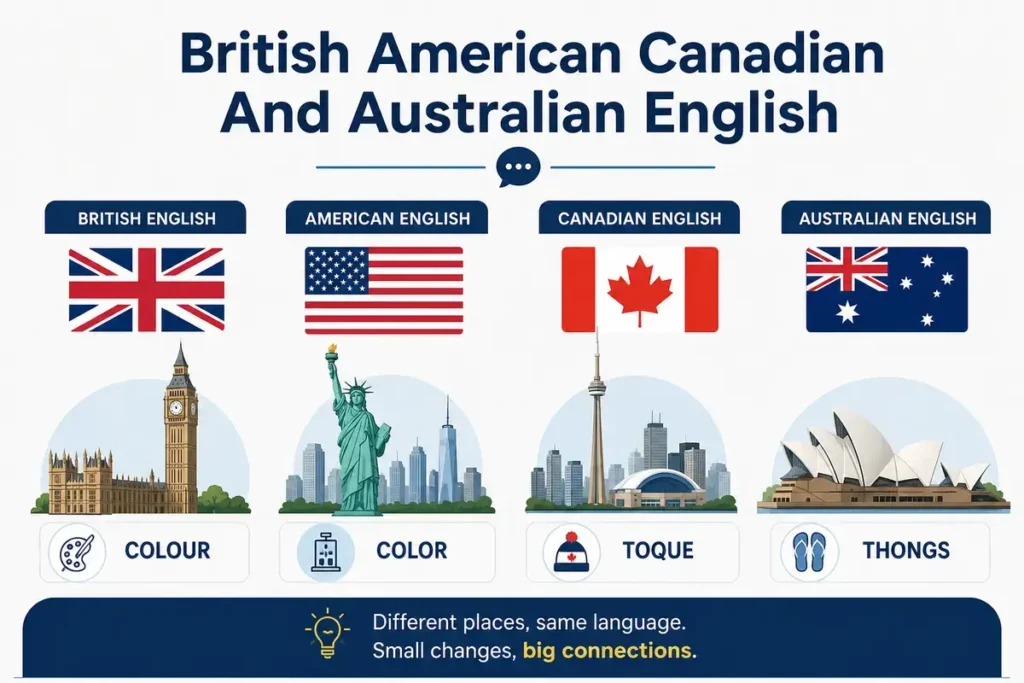
British American Canadian And Australian English
This is one spelling rule that does not change across English speaking countries.
Every major variety of English uses suing.
That includes.
- American English.
- British English.
- Canadian English.
- Australian English.
- New Zealand English.
You will see suing in newspapers court documents university writing and dictionaries throughout the English speaking world.
Real Life Examples
Seeing the word in natural sentences helps it stick.
Daily Conversation
- My neighbor is suing the builder after the repairs failed.
- They’re suing the company for damages.
- Nobody expected him to start suing people.
- She regrets suing her former business partner.
Workplace
- The employee is suing the organization for unfair dismissal.
- Our legal team is handling a client who is suing a supplier.
- The company avoided suing its customer by reaching an agreement.
Emails
- The client is considering suing the contractor.
- Please confirm if anyone is suing the company.
- We discussed the risks of suing before making a decision.
Academic Writing
- Suing often represents the final stage of a legal dispute.
- Researchers studied the reasons people avoid suing despite financial losses.
Journalism
- The actor is suing a newspaper over false claims.
- Several families are suing the manufacturer after the recall.
- Local businesses are suing the city over new regulations.
Social Media
- Everyone keeps joking about suing their friends over tiny mistakes.
- People online started talking about suing the company after the announcement.
- She’s suing because she believes her rights were violated.
Legal Context
- The family is suing for compensation.
- The business spent years suing competitors over trademark issues.
Common Mistakes
The spelling error is simple but surprisingly common.
Writing Sueing
Incorrect.
She is sueing the company.
Correct.
She is suing the company.
Keeping The Silent E
Many learners think every letter in the base word should remain.
English removes the silent e before adding ing in most verbs.
Thinking Sueing Is British English
This is a common myth.
British English also uses suing.
There is no regional spelling difference.
Assuming Both Spellings Are Accepted
Professional editors dictionaries teachers and legal writers all recommend suing.
The form sueing should always be corrected.
Easy Memory Tricks
Simple memory aids make the correct spelling easy to remember.
Think About Using
Use becomes using.
Sue follows the same rule.
Using.
Suing.
Remember The Silent E Rule
If the final e is silent it usually disappears before ing.
That rule works for many common verbs.
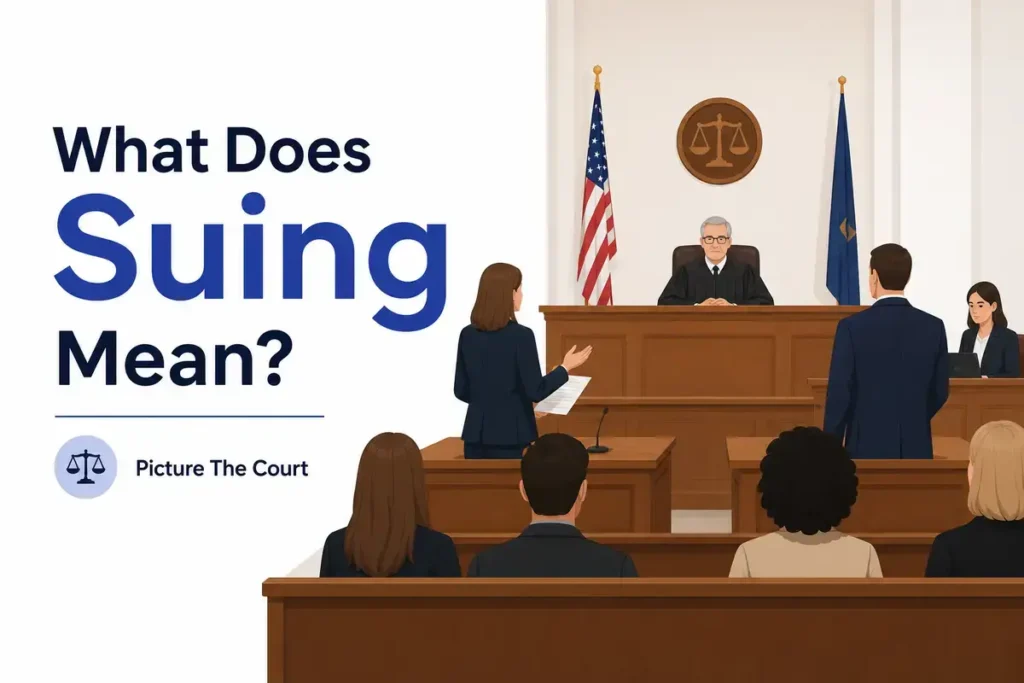
Picture The Court
Imagine someone walking into a courtroom.
As they step inside the silent e stays outside.
Only suing enters the courtroom.
That mental image makes the spelling surprisingly easy to recall.
Related Words
Learning related legal vocabulary builds stronger English.
Words From The Same Family
- Sue.
- Sued.
- Sues.
- Suing.
- Lawsuit.
- Plaintiff.
- Defendant.
- Litigation.
Synonyms
Depending on the context you may also see.
- File a lawsuit.
- Bring legal action.
- Take legal action.
- File a claim.
- Start court proceedings.
Frequently Confused Words
- Suing and suing for.
- Sue and use.
- Suit and lawsuit.
- Trial and hearing.
- Claim and complaint.
Expert Editor’s Note
Professional editors have a simple rule for this word.
Always write suing.
Every major dictionary style guide and legal publication recognizes suing as the standard spelling. You should never use sueing in business writing academic papers legal documents emails or professional communication.
The mistake is easy to make because sue ends with e. Good editors automatically apply the silent e rule and remove it before adding ing.
If you’re proofreading your own work search your document for sueing before publishing. It’s one of those spelling mistakes that can make polished writing look careless.
Frequently Asked Questions
Is Suing Or Sueing Correct?
Suing is the correct spelling. Sueing is incorrect and should not be used in standard English.
Why Is It Suing Instead Of Sueing?
English usually removes a silent e before adding ing. The verb sue follows this rule so it becomes suing.
Is Sueing Ever Correct?
No. Modern dictionaries and style guides do not recognize sueing as a correct spelling.
Is Suing Used In British English?
Yes. British English American English Canadian English Australian English and other major varieties all use suing.
Is Suing A Verb Or A Noun?
It can be both.
As a present participle it forms continuous verb tenses.
Example.
They are suing the company.
As a gerund it functions as a noun.
Example.
Suing is expensive.
What Is The Past Tense Of Sue?
The past tense is sued.
Example.
The customer sued the manufacturer last year.
Can I Use Suing In Everyday Conversation?
Yes. Although it has a legal meaning people sometimes use it humorously.
Example.
I’m suing you for stealing my fries.
Most listeners understand that the speaker is joking.
How Can I Remember The Correct Spelling?
Think of using.
If use becomes using then sue becomes suing. Both words follow the same spelling rule.
Need another quick comparison? Read Ensure Vs Insure Explained Clearly.
Conclusion
The answer to suing or sueing is straightforward.Suing is the only correct spelling in standard English. It follows the common rule that removes a silent e before adding ing.Sueing is simply a spelling mistake. It may look reasonable at first glance but dictionaries style guides and professional editors do not accept it.When you write about legal action always choose suing. Remember the silent e rule and you’ll avoid this mistake every time.Good spelling builds credibility. One small change can make your writing look much more polished.

Editorial Reviewer & Proofreader
Grace Mitchell reviews Gramlify’s articles for clarity, consistency, and readability. She is passionate about creating accurate, approachable content that helps English learners build confidence.