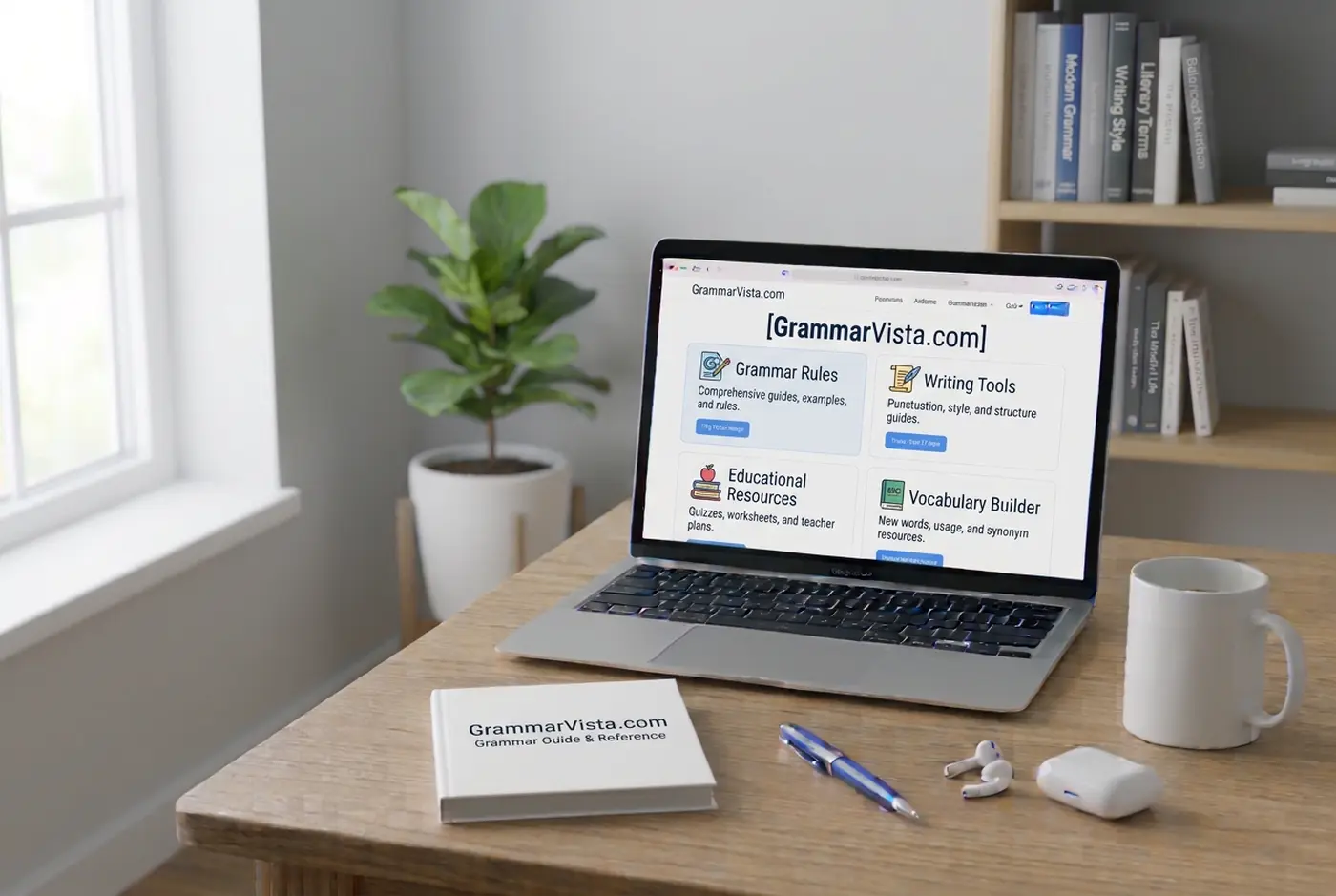
English is one of the most widely used languages for education, business, online communication, and everyday conversations. However, even fluent English speakers sometimes struggle with punctuation, sentence structure, spelling, vocabulary, and commonly confused words. Finding a website that explains these topics in simple language can make learning easier.
This is where GrammarVista.com attracts attention. The website presents itself as an online resource for people who want to improve their English grammar, expand their vocabulary, and communicate more effectively. It aims to make language rules easier to understand through educational articles, practical examples, and writing guidance.
But what does the website actually offer? Is it designed for students, professionals, English learners, or general readers? Does it provide grammar lessons, writing tools, or broader informational content?
In this guide, we explore its purpose, content categories, potential benefits, limitations, and practical ways readers can use its resources. We also explain what to consider before relying on online grammar information for academic or professional writing.
You may also want to read Uitly Review 2026: Features, Benefits and Pricing.
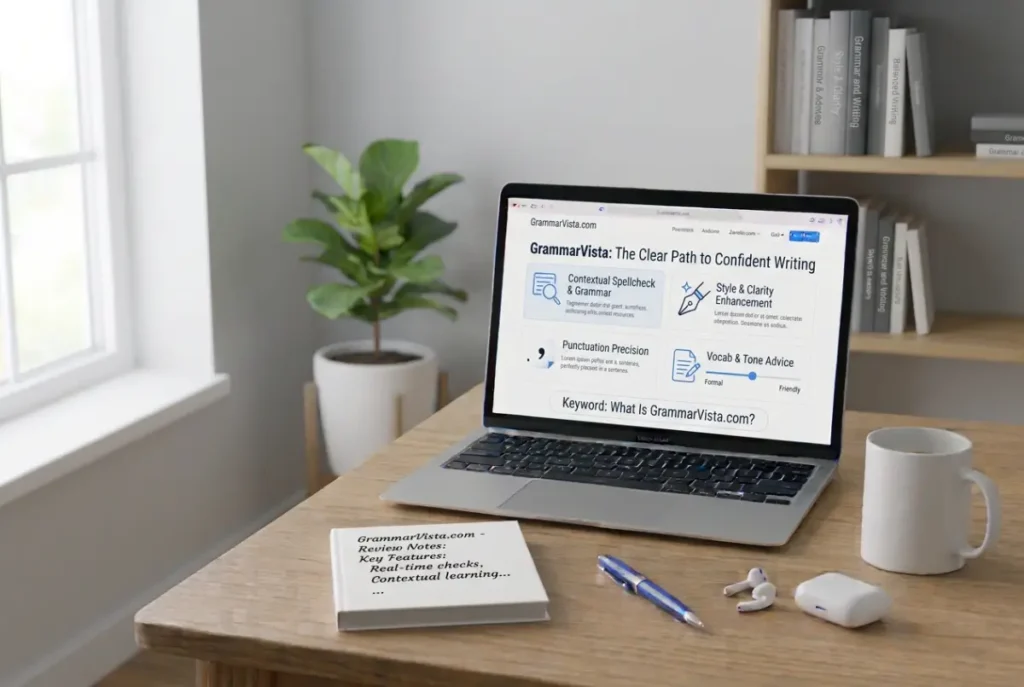
What Is GrammarVista.com?
GrammarVista.com is an online informational website that focuses on English grammar, vocabulary, punctuation, sentence construction, and everyday writing. Its stated goal is to make English easier to understand by presenting language concepts in an accessible format.
Instead of assuming that every visitor already understands complicated grammar terminology, the website aims to explain language rules through straightforward guidance.
For example, someone who struggles with apostrophes may want to understand the difference between singular and plural possessives. Another reader might need help identifying the correct verb tense or choosing between two similar words.
These are the types of questions that grammar-focused educational resources are designed to address.
The website’s About page describes its mission as helping students, professionals, and language enthusiasts improve their communication skills. It also highlights grammar explanations, vocabulary development, correction tips, and engaging educational content.
However, the website’s publishing activity extends beyond traditional grammar lessons. Its public homepage also features articles about technology, lifestyle, business, and other general-interest subjects.
This makes it important to distinguish between its original educational purpose and its wider collection of published articles.
Main Features and Content of GrammarVista
Understanding the website’s content is the best way to decide whether it matches your learning needs.
Here are some of the main areas associated with its educational purpose.
1. English Grammar Guides
Grammar is the foundation of clear communication. It explains how words work together to create meaningful sentences.
The website presents grammar as one of its central educational subjects. Readers interested in improving their writing can explore explanations of basic language rules and more advanced concepts.
Common grammar subjects include:
- Parts of speech
- Subject-verb agreement
- Verb tenses
- Sentence construction
- Pronouns and adjectives
- Singular and plural forms
- Articles and prepositions
- Common grammatical mistakes
Understanding these concepts can help readers recognize errors and express their ideas more clearly.
For example, consider these two sentences:
Incorrect: She go to school every morning.
Correct: She goes to school every morning.
The difference is subject-verb agreement. The verb must match the third-person singular subject.
Simple examples like this can make grammar lessons easier to understand, especially for beginners.
2. Vocabulary Development
A strong vocabulary helps people communicate more naturally and accurately.
Knowing several words with similar meanings is useful, but understanding how those words work in different situations is even more important.
Vocabulary-related learning can include:
- Synonyms and antonyms
- Word meanings
- Common expressions
- Word usage
- Everyday phrases
- Commonly confused words
- Context-based vocabulary
For instance, the words “happy,” “pleased,” “delighted,” and “satisfied” express positive feelings, but they do not always communicate exactly the same meaning.
Learning these differences helps writers choose words that match their intended message.
Vocabulary knowledge is particularly useful for students preparing assignments, professionals writing emails, and English learners developing conversational confidence.
3. Punctuation and Capitalization
Punctuation plays an important role in making written communication understandable.
A sentence without proper punctuation can become confusing, even when its words are correct.
GrammarVista identifies punctuation as one of its main educational categories. This subject can help readers understand how to use commas, periods, quotation marks, apostrophes, colons, and other punctuation marks.
Consider this example:
Without punctuation: Let’s eat Grandma.
With punctuation: Let’s eat, Grandma.
A small comma completely changes how the sentence is understood.
Readers can also benefit from learning capitalization rules, particularly when writing names, locations, titles, and the beginning of sentences.
For American English users, capitalization conventions are important in school assignments, professional documents, and everyday digital communication.
4. Compound Words
Compound words are formed when two or more words combine to create a new meaning.
They are common in English, but their spelling can sometimes be confusing.
Some compound words are written as one word, others use hyphens, and some remain separate.
Examples include:
- Toothbrush
- Notebook
- Ice cream
- Well-known
- Mother-in-law
- Post office
Understanding these differences can help readers avoid spelling inconsistencies.
This topic is particularly helpful for students and writers who frequently encounter unfamiliar compound expressions.
5. Possessives and Apostrophes
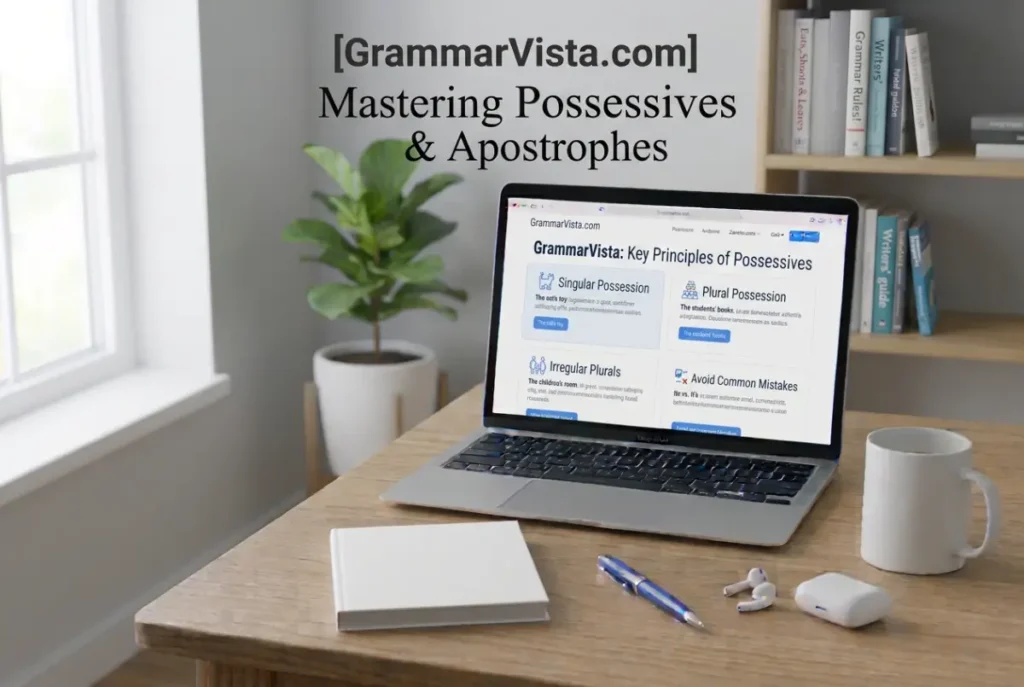
Possessive forms explain ownership or relationships between people, objects, and ideas.
Apostrophes are often confusing because their placement changes depending on whether a noun is singular or plural.
Consider these examples:
- The student’s book
- The students’ classroom
- The children’s toys
- Sarah’s notebook
Each example follows a different grammatical pattern.
Understanding possessives can improve writing accuracy and reduce common mistakes in schoolwork, professional emails, and online content.
6. Sentence Structure
Sentence structure determines how words and phrases are organized to communicate a complete idea.
A well-constructed sentence is easier to read and understand.
Common sentence structures include:
- Simple sentences
- Compound sentences
- Complex sentences
- Compound-complex sentences
For example:
Simple: The student studies English.
Compound: The student studies English, and her brother practices mathematics.
Complex: The student studies English because she wants to improve her writing.
Learning sentence construction can help writers move beyond short, repetitive statements and develop more natural communication.
Who Can Benefit From GrammarVista.com?
A grammar-focused website can serve different audiences depending on the quality, depth, and accessibility of its educational content.
Here are some groups that may find this type of resource useful.
Students
Students regularly work with essays, assignments, research papers, and classroom activities.
Grammar mistakes can affect the clarity of their writing and make otherwise good ideas difficult to understand.
Educational grammar articles can help students review language rules, understand sentence patterns, and improve their written communication.
For example, a student preparing an essay may need to understand how to use commas in introductory phrases or maintain consistent verb tenses.
Short explanations and practical examples can make these subjects easier to review.
However, students should also follow their teachers’ instructions and required academic style guides.
English Language Learners
People learning English as a second or additional language often encounter challenges that native speakers may not notice.
These challenges include:
- Choosing the correct verb tense
- Understanding articles
- Using prepositions naturally
- Building complete sentences
- Learning unfamiliar vocabulary
- Recognizing differences between similar expressions
A simple educational article can provide an accessible starting point.
However, reading alone is not enough to develop language fluency. Learners should combine grammar lessons with listening, speaking, reading, and regular writing practice.
Bloggers and Content Writers
Content writers need to communicate information clearly while keeping readers interested.
Grammar knowledge helps them create articles that are easier to read, understand, and navigate.
Writers can use educational resources to review punctuation, improve sentence flow, select appropriate vocabulary, and avoid repetitive expressions.
For SEO writers, clear language also improves the overall reading experience.
Search optimization should never come at the expense of natural writing. A useful article answers readers’ questions instead of repeating keywords unnecessarily.
Professionals
Professional communication includes emails, reports, proposals, presentations, and business documents.
Even small grammatical mistakes can affect how a message is received.
Professionals may benefit from reviewing:
- Formal and informal writing styles
- Sentence clarity
- Professional vocabulary
- Punctuation
- Concise communication
- Common business writing mistakes
A grammar resource can help users understand these subjects before preparing important documents.
For legal, financial, or contractual writing, however, professional review may still be necessary.
General Readers
Not everyone studies grammar for academic or professional reasons.
Some people simply want to write better social media posts, communicate confidently, or understand unfamiliar English expressions.
For these readers, short educational explanations can be a convenient way to learn something new.
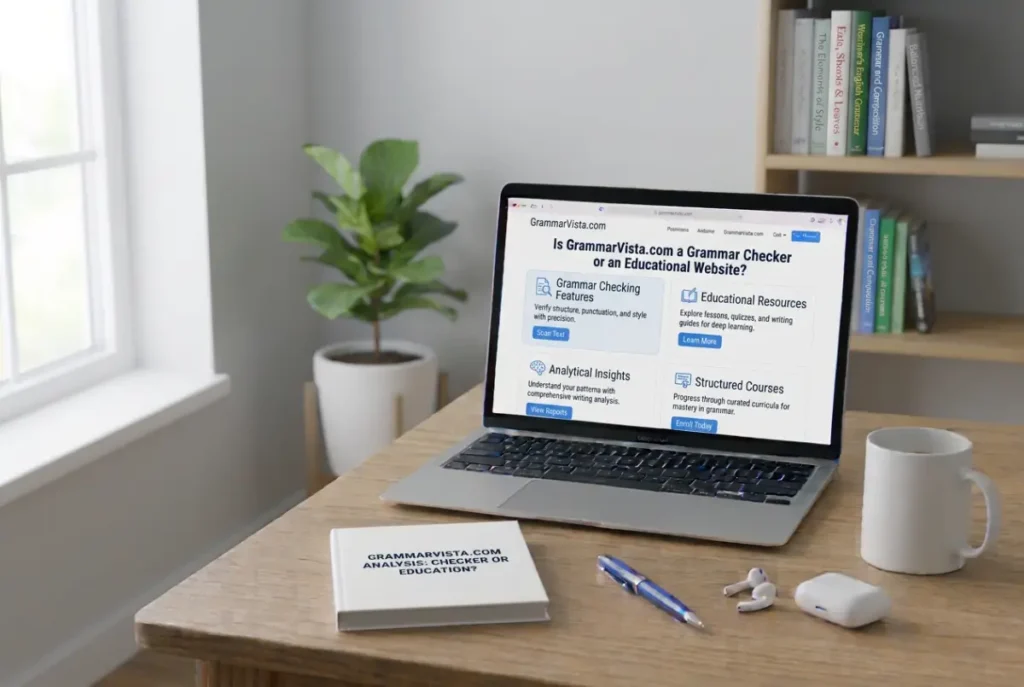
Is GrammarVista.com a Grammar Checker or an Educational Website?
This is an important question because grammar websites can offer very different services.
Some websites publish educational articles that explain language rules. Others provide automated proofreading software that scans text and highlights possible mistakes.
These are two separate types of resources.
A grammar guide teaches readers how English works. A grammar checker analyzes submitted text and identifies potential errors.
The publicly accessible pages reviewed on the exact GrammarVista.com domain establish its educational and publishing content, but do not establish a dedicated automated proofreading application.
Readers should therefore avoid assuming that every feature associated with similarly named grammar services is available on this domain.
If you need automatic spelling corrections, sentence analysis, or real-time proofreading, look for a clearly identified writing tool and review its features and privacy policy before entering personal documents.
What Makes GrammarVista’s Approach Useful?
The main advantage of educational grammar content is that it can help readers understand why a particular sentence is correct.
Simply replacing an incorrect word does not always teach someone how to avoid the same mistake next time.
Consider the difference between these approaches:
Correction-only approach:
Incorrect: He don’t like coffee.
Correct: He doesn’t like coffee.
Learning-based approach:
The subject “he” is third-person singular. In the simple present tense, the correct negative form uses “does not” or “doesn’t,” rather than “do not.”
The second explanation provides a rule that readers can apply to other sentences.
This is why practical examples, explanations, and opportunities for practice are important parts of effective language education.
A useful grammar article should ideally include the following:
- A clear explanation of the language rule.
- Examples showing correct usage.
- Examples of common mistakes.
- An explanation of exceptions.
- Additional practice opportunities.
- References to reliable language resources when necessary.
Readers should evaluate individual articles based on these qualities rather than assuming that every published page has the same educational depth.
Advantages of Using Online Grammar Resources
Online educational resources have changed the way people learn English.
Instead of searching through printed textbooks for every language question, readers can access explanations from a computer, tablet, or smartphone.
Some potential advantages include the following.
Convenient Learning
Online articles are available whenever readers have internet access.
A student can review a grammar rule before completing an assignment, while a professional can look up a punctuation question before sending an email.
This flexibility makes online learning suitable for different schedules.
Self-Paced Education
Everyone learns at a different speed.
Some readers understand grammar concepts quickly, while others need additional examples and practice.
Online resources allow people to spend more time on difficult subjects without following a fixed classroom schedule.
Better Writing Awareness
Learning grammar helps people recognize patterns in their writing.
Over time, readers may become better at identifying incomplete sentences, incorrect verb forms, and confusing expressions.
This awareness can improve both everyday and professional communication.
Vocabulary Improvement
Regular exposure to new words can expand a person’s vocabulary.
However, learning a word should involve more than memorizing its definition. Readers should understand its context, pronunciation, grammatical role, and appropriate usage.
Easy Topic Discovery
A categorized educational website can help readers find specific subjects without reading an entire textbook.
Someone interested in apostrophes can focus on possessives, while another visitor can explore sentence structure or punctuation.
Still confused? Compare Brasssmile.com Review 2026: (Guide).
Limitations and Things to Consider
Although online grammar resources can be useful, readers should understand their limitations.
1. Not Every Article Has the Same Purpose
A website may publish educational guides alongside general-interest articles.
The presence of a grammar category does not automatically mean that every article is written by a language specialist.
Readers should check whether the content actually addresses their question.
2. Author Credentials Matter
Grammar explanations can be relatively straightforward, but specialist subjects require additional knowledge.
Before relying on an article for academic or professional purposes, examine its author information and editorial standards.
Look for relevant experience, supporting references, and clear explanations.
3. Grammar Rules Can Have Exceptions
English contains many conventions that depend on context, dialect, and writing style.
For example, American and British English differ in spelling, vocabulary, punctuation preferences, and certain expressions.
A good educational resource should explain these differences rather than presenting every language rule as universal.
4. Online Information Can Become Outdated
Websites regularly change their content, categories, and publishing priorities.
A page that was accurate several years ago may need revision.
Readers should pay attention to publication dates and updates, particularly when an article covers changing technology, products, or professional guidance.
5. Reading Is Not the Same as Practicing
Understanding a grammar explanation does not automatically mean someone can apply it correctly in every situation.
Active practice is necessary.
Readers should write their own sentences, complete exercises, review mistakes, and apply new concepts in real communication.
GrammarVista.com vs. Other English Learning Resources
No single website needs to meet every language-learning requirement.
Different platforms serve different purposes, and choosing the right one depends on the type of help a reader needs.
Here are some established alternatives worth considering.
| Resource | Main purpose | Best suited for |
|---|---|---|
| GrammarVista.com | Grammar and general informational articles | Readers exploring individual language topics |
| Grammarly | Automated writing assistance | Everyday proofreading and writing suggestions |
| Purdue OWL | Academic writing and citation guidance | Students and academic writers |
| Merriam-Webster | Definitions and dictionary information | Vocabulary and word meanings |
| Cambridge Dictionary | Definitions and language-learning support | English learners |
| British Council LearnEnglish | English lessons and practice | English language learners |
Each resource has a different focus.
For example, Purdue OWL is particularly useful for academic writing guidance, while Merriam-Webster helps readers investigate word meanings and usage.
Dedicated proofreading software serves another purpose by identifying potential issues in a piece of writing.
Using several complementary resources can provide a more complete learning experience.
How to Improve Your English Grammar Alongside Online Resources
Visiting an educational website is a good starting point, but consistent practice is what turns information into a useful skill.
Here are practical ways to develop stronger English communication habits.
Read Something Every Day
Reading exposes learners to sentence patterns, vocabulary, punctuation, and different writing styles.
You can begin with short articles, educational blogs, news stories, or books that match your current reading level.
Pay attention to how sentences are constructed and how writers connect their ideas.
Keep a Vocabulary Notebook
Whenever you discover an unfamiliar word, write down:
- The word
- Its meaning
- Its part of speech
- A sample sentence
- One or two related words
Review your list regularly instead of collecting words without using them.
Practice Writing
Write a short paragraph every day about a familiar subject.
It could be a personal experience, a news story, a book review, or a topic related to your studies.
After writing, review your sentence structure, punctuation, spelling, and word choices.
Learn One Grammar Rule at a Time
Trying to memorize too many rules at once can become frustrating.
Start with basic concepts such as subject-verb agreement, articles, and verb tenses.
Once you understand these subjects, move toward more advanced topics.
Compare American and British English
Readers in the United States generally use American English conventions.
Some common differences include:
| American English | British English |
|---|---|
| Color | Colour |
| Center | Centre |
| Favorite | Favourite |
| Organize | Organise |
| Traveling | Travelling |
Neither variety is inherently better. The important thing is to remain consistent with the audience and style required for your writing.
Ask for Feedback
Feedback can help identify mistakes that you might overlook yourself.
Ask a teacher, editor, or experienced writer to review your work when possible.
You can also use proofreading software as an additional checking method, but automated suggestions should always be reviewed before acceptance.
Is GrammarVista.com Worth Exploring?
Whether a website is worth visiting depends on what someone expects to find.
For readers interested in grammar explanations, vocabulary topics, and general educational information, GrammarVista may provide a useful starting point.
Its stated educational focus covers several important areas of English communication. These include punctuation, possessives, compound words, sentence structure, and vocabulary development.
However, its wider publishing mix means that visitors should not assume every article is a specialist language lesson.
It is also important not to confuse the exact domain with similarly named websites that advertise automated writing tools.
For the best experience, start with a specific question, locate the most relevant article, and assess its explanation and examples. When accuracy is important, compare the information with established dictionaries, university writing centers, and recognized style guides.
Overall, it is reasonable to consider the site as one supplementary source among several available English-learning resources.
Frequently Asked Questions (FAQs)
1. What is GrammarVista.com?
GrammarVista.com is an informational website that presents English grammar, vocabulary, punctuation, and writing guidance. It also publishes articles covering broader informational subjects.
2. Is GrammarVista.com free to use?
Its publicly accessible informational pages can be viewed without an account. Readers should check the current website for any changes to access requirements or additional services.
3. Who can use GrammarVista.com?
Students, English learners, bloggers, professionals, and general readers may find its grammar-related content useful.
4. Does GrammarVista.com provide grammar lessons?
The website describes grammar guides, vocabulary resources, and correction tips as part of its educational purpose. Readers can explore its published language-related articles for specific topics.
5. Is GrammarVista.com an automated grammar checker?
The exact domain’s publicly reviewed pages establish an informational publishing website, not a verified automated proofreading application. Readers should not assume that features offered by similarly named services are available there.
6. Can beginners benefit from GrammarVista?
Beginners may find simple grammar explanations and practical examples helpful. However, language development also requires regular reading, writing, listening, and speaking practice.
7. Does the website cover American English?
Its grammar and vocabulary mission may be relevant to American readers. However, users should check individual articles for clearly explained American English conventions rather than assuming that every article follows one regional standard.
8. Is GrammarVista.com suitable for students?
It can serve as a supplementary learning resource for students reviewing specific grammar topics. Academic assignments should still follow school requirements and recognized writing guidelines.
9. What are some alternatives to GrammarVista?
Popular alternatives include Grammarly, Purdue OWL, Merriam-Webster, Cambridge Dictionary, and British Council LearnEnglish. Each serves a different language-learning or writing purpose.
10. Can online grammar resources replace an English teacher?
No. Online resources can support independent learning, but teachers provide personalized explanations, structured lessons, feedback, and guidance that general websites may not offer.
You may also want to read Domikyo.com: Complete Website Review, Features, Content.
Final Verdict
Learning English grammar does not have to feel complicated. With clear explanations, practical examples, and consistent practice, readers can gradually improve their writing and communication skills.
GrammarVista.com presents itself as an educational destination for grammar, punctuation, vocabulary, and sentence construction. These subjects are useful for students, professionals, bloggers, and people who want to become more confident English users.
Its broader collection of general-interest articles is also worth keeping in mind. The website should be evaluated according to the individual content readers want to explore, rather than treating its entire publishing operation as a specialized grammar service.
The best approach is to use it as a supplementary informational resource, verify important language rules with established references, and practice what you learn in everyday writing.
Ultimately, better communication comes from understanding language, applying its rules, and developing good writing habits over time.

Nusrat Basheer is a website review writer who helps readers discover useful websites, understand online services, and make informed decisions through clear, reliable, and easy-to-understand reviews.