
Have you ever stopped while writing totalling vs totaling and wondered if you accidentally added one extra L? You’re not alone. This spelling question confuses students, professionals, and even experienced writers because both forms appear in books, websites, and official documents.
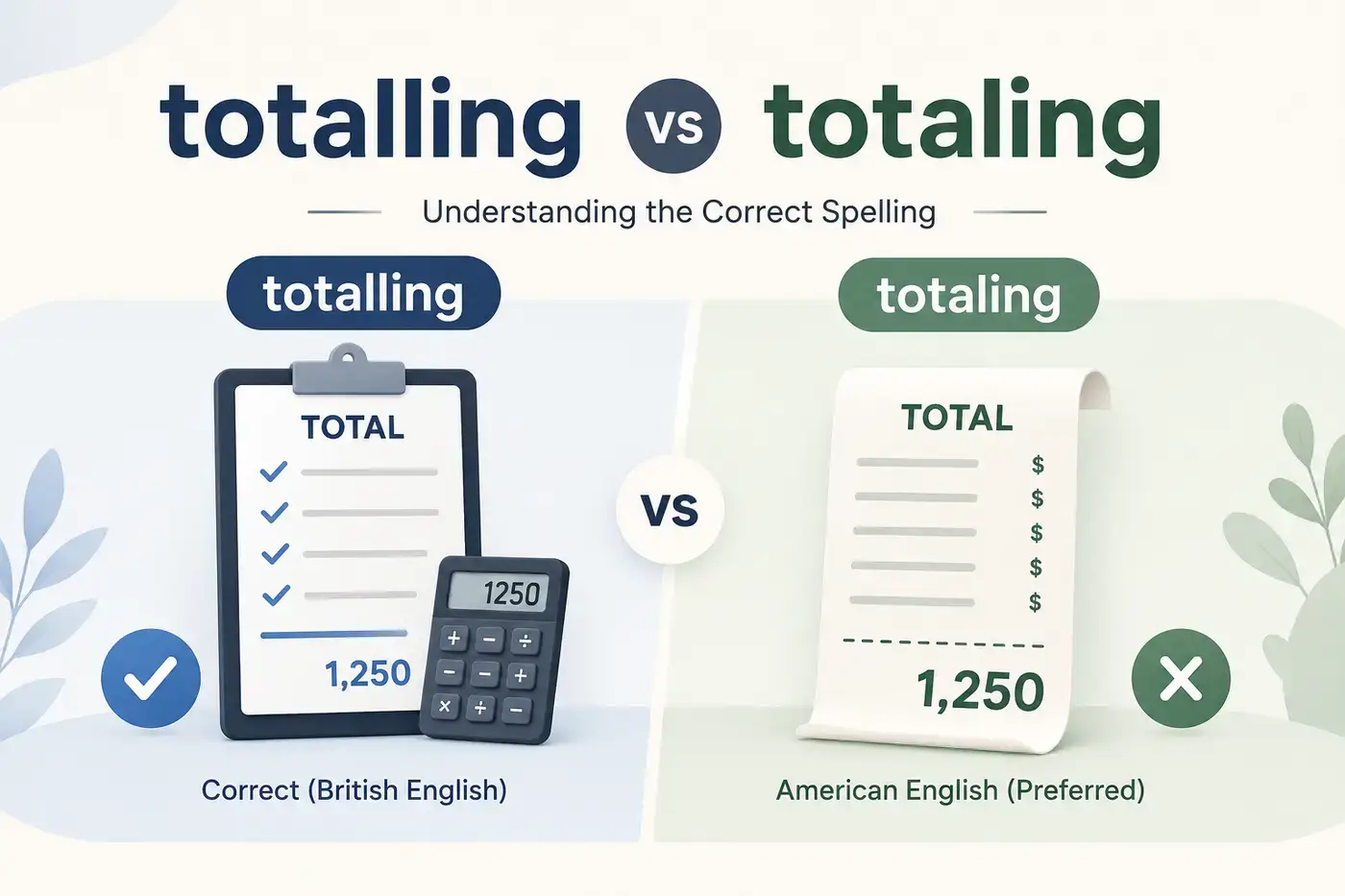
The good news is that both spellings are correct. The right choice depends on the type of English you’re using. Totalling is the standard spelling in British English, while totaling is the preferred spelling in American English. The meaning never changes. Only the regional spelling does.
The confusion comes from a well known spelling rule. British English often doubles the final L before adding endings like ing or ed, while American English usually keeps a single L in many words ending with an unstressed syllable.
This guide explains the difference in simple language. You’ll learn the correct spelling, grammar rules, regional differences, pronunciation, common mistakes, practical examples, and easy memory tricks so you can write with confidence every time.
Many readers also check Mentioned Vs Mentionned Which Spelling Is Correct 2026 Guide.
Quick Answer
Totalling and totaling are both correct spellings of the present participle of the verb total. Totalling is the preferred form in British English, Australian English, and most Commonwealth countries. Totaling is the standard spelling in American English. Choose the spelling that matches the variety of English you are writing.
Totalling Vs Totaling Comparison Table
| Feature | Totalling | Totaling |
|---|---|---|
| Correct spelling | Yes | Yes |
| English variety | British English | American English |
| Part of speech | Verb | Verb |
| Meaning | Adding up to a total | Adding up to a total |
| Pronunciation | Same as totaling | Same as totalling |
| Formal writing | Standard in the UK | Standard in the US |
| Informal writing | Common | Common |
| Example | The expenses are totalling more than expected. | The expenses are totaling more than expected. |
What Does Totalling Mean
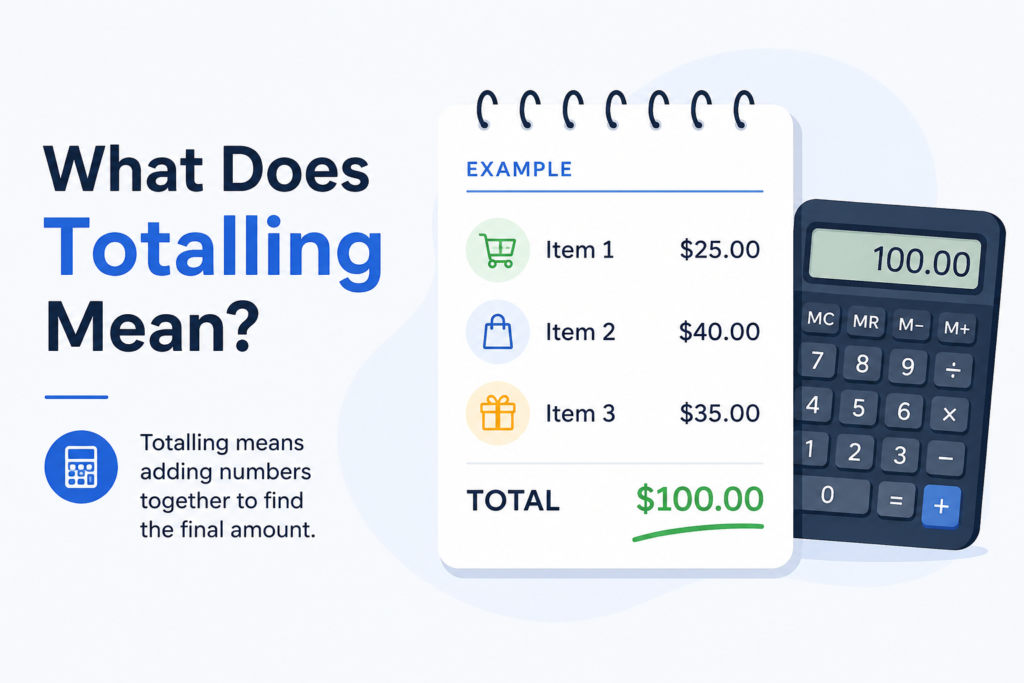
Totalling is the British English present participle and gerund form of the verb total. It means adding numbers together, reaching a final amount, or completely damaging something, especially a vehicle.
Definition
Totalling means calculating the complete amount or reaching a final sum.
It can also mean destroying a vehicle beyond practical repair.
Common Uses
- Totalling expenses at the end of the month.
- Totalling the score after a game.
- Totalling the cost of a project.
- A crash totalling a car.
Examples
- She is totalling the sales figures before submitting the report.
- We spent the afternoon totalling our travel expenses.
- The accountant finished totalling every invoice.
- Heavy rain caused an accident totalling two vehicles.
- The committee is totalling all donations received this year.
What Does Totaling Mean
Totaling has exactly the same meaning as totalling. The only difference is the spelling. It follows American English spelling conventions.
Definition
Totaling means finding the complete amount, calculating a sum, or damaging something beyond repair.
Common Uses
- Totaling expenses.
- Totaling monthly profits.
- Totaling exam scores.
- Totaling a vehicle after an accident.
Examples
- He’s totaling this week’s expenses.
- The cashier is totaling the customer’s purchases.
- The report is totaling nearly one hundred pages.
- The storm ended up totaling several parked cars.
- She’s totaling the final results before announcing the winner.
Which One Is Correct
The direct answer is simple.
Both totalling and totaling are correct.
Use totalling if you’re writing in British English.
Use totaling if you’re writing in American English.
Changing the spelling does not change the meaning, pronunciation, or grammar. It simply matches the spelling rules of the English variety you’re using.
For example.
✔ The accountant is totalling the annual budget. British English.
✔ The accountant is totaling the annual budget. American English.
Both sentences are equally correct. The only difference is regional spelling.
Why People Confuse Totalling And Totaling
The confusion exists because both spellings are correct. Unlike many spelling questions where one word is wrong, totalling and totaling follow different regional spelling conventions.
Many writers see both forms online and assume one must be a mistake. In reality, the spelling changes only because British and American English apply different rules when adding ing to words ending in L.
Several factors make the confusion even more common.
Different Regional Spelling Rules
British English usually doubles the final L before adding ing or ed.
American English often keeps a single L if the final syllable is not stressed.
This is why you also see pairs like:
- Travelling and traveling.
- Cancelled and canceled.
- Labelling and labeling.
- Fuelled and fueled.
Pronunciation Is Identical
Both spellings are pronounced exactly the same.
Since there is no pronunciation difference, readers cannot tell which spelling is being used unless they see it written.
Spell Check And Autocorrect
Your computer or phone may automatically change the spelling depending on the language setting.
If your document is set to American English, it will usually suggest totaling.
If it uses British English, it will recommend totalling.
Mixing English Styles
One of the biggest editing mistakes is mixing British and American spellings in the same document.
For example, this sentence looks inconsistent.
✘ The company is totalling expenses while organizing the final report.
A British English document should use organising and totalling.
An American English document should use organizing and totaling.
Consistency always matters more than the spelling itself.
Key Differences Between Totalling And Totaling
| Feature | Totalling | Totaling |
|---|---|---|
| Meaning | Adding up to a total | Adding up to a total |
| Grammar | Present participle and gerund | Present participle and gerund |
| British English | Preferred | Rare |
| American English | Rare | Preferred |
| Canadian English | Both appear but British spelling is slightly more common in formal writing | Common in American influenced writing |
| Australian English | Preferred | Rare |
| Pronunciation | Same | Same |
The only real difference is regional spelling.
Everything else remains the same.
Grammar Explanation
Both totalling and totaling come from the verb total.
They function exactly the same in grammar.
Present Participle
The present participle helps form continuous tenses.
Examples.
- She is totalling the invoices.
- He is totaling today’s receipts.
Gerund
The word can also act as a noun.
Examples.
- Totalling expenses takes time.
- Totaling receipts is part of my daily routine.
Verb Meaning
Both spellings can mean:
- Adding numbers together.
- Calculating a final amount.
- Completely damaging a vehicle.
Examples.
- The accountant is totalling every payment.
- The accountant is totaling every payment.
- The collision ended up totalling the truck.
- The collision ended up totaling the truck.
Each sentence is correct when matched with the appropriate regional spelling.
Spelling Rule Behind Totalling And Totaling
The spelling difference follows one of the most common differences between British and American English.
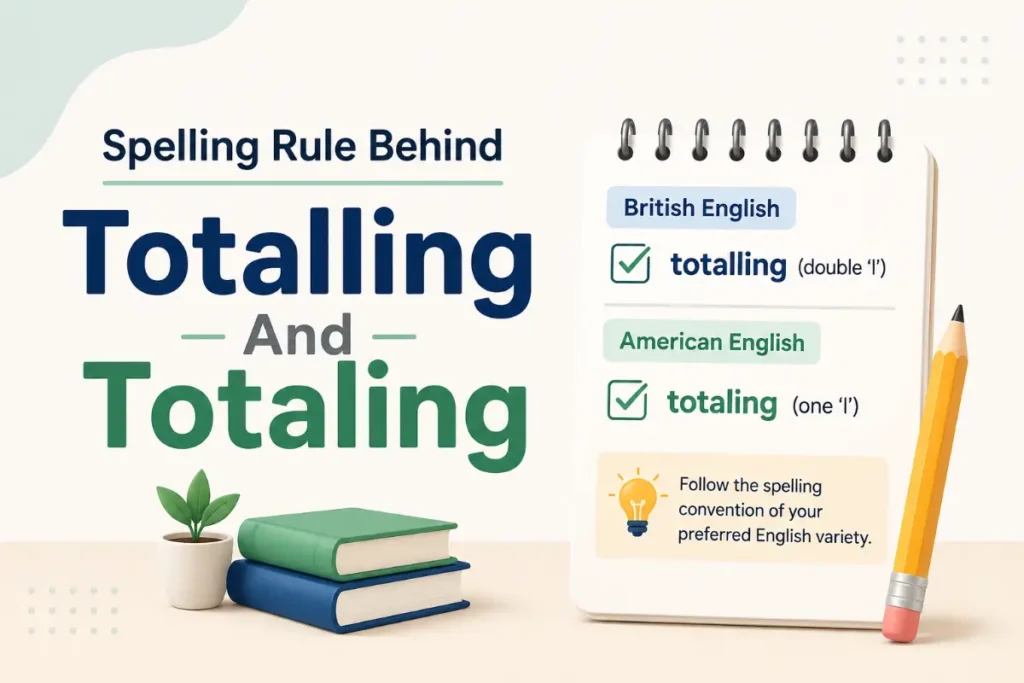
British English Rule
British English usually doubles the final L before adding a suffix like ing or ed, even if the last syllable is not stressed.
Examples.
- Travel becomes travelling.
- Cancel becomes cancelling.
- Signal becomes signalling.
- Total becomes totalling.
American English Rule
American English usually keeps one L when the final syllable is unstressed.
Examples.
- Travel becomes traveling.
- Cancel becomes canceling.
- Signal becomes signaling.
- Total becomes totaling.
Understanding this rule helps you spell many English words correctly, not just totalling and totaling.
Many readers also check Immerse Vs Emerse Which Word Is Correct 2026 Guide.
Pronunciation Guide
The pronunciation stays exactly the same in both varieties of English.
Totalling
IPA
American and British English.
/ˈtoʊtəlɪŋ/
Totaling
IPA
American and British English.
/ˈtoʊtəlɪŋ/
Syllables
To tal ing.
Stress Pattern
The primary stress falls on the first syllable.
Common Pronunciation Mistakes
Some learners try to pronounce the extra L in totalling more strongly.
That is unnecessary.
The double L changes only the spelling, not the pronunciation.
Word Origin
The word total comes from the Medieval Latin word totalis, meaning whole or complete.
It entered English through French and gradually became both a noun and a verb.
The verb to total later developed meanings such as:
- Adding numbers together.
- Reaching a complete amount.
- Destroying a vehicle beyond economical repair.
The spellings totalling and totaling appeared after British and American English developed different spelling conventions during the eighteenth and nineteenth centuries.
British American Canadian And Australian English
British English
Use totalling.
Example.
The finance team is totalling the quarterly expenses.
American English
Use totaling.
Example.
The finance team is totaling the quarterly expenses.
Canadian English
Canadian English accepts both spellings.
Formal publications often follow British conventions, while business writing influenced by the United States commonly uses American spellings.
The most important rule is consistency.
Australian English
Australian English follows British spelling.
Totalling is the standard choice.
Real Life Examples
Daily Conversation
- I’m totalling this month’s grocery bills.
- I’m totaling today’s expenses before dinner.
- She spent the evening totalling every receipt.
- He’s totaling the points after each round.
Workplace
- The accountant is totalling the annual budget.
- Our finance software is totaling every transaction automatically.
- The auditor finished totalling all outstanding invoices.
- She’s totaling customer refunds for the monthly report.
Emails
- I’m still totalling the travel costs.
- I’ll send the report after totaling the final numbers.
Academic Writing
- Researchers began totalling the survey responses.
- The study involved totaling data collected over five years.
Journalism
- Officials are totalling the damage after the storm.
- News reports estimated losses by totaling insurance claims.
Social Media
- I’m totalling my coffee spending this month and I’m shocked.
- She’s totaling every mile from our road trip.
Vehicle Damage
- The crash ended up totalling the family car.
- The accident nearly totaled the delivery truck.
Business
- The cashier finished totalling every purchase before closing.
- The software keeps totaling each invoice automatically.
Common Mistakes
Even native English speakers sometimes use the wrong spelling because they switch between British and American English without noticing.
Here are the mistakes editors see most often.
Mixing British And American Spellings
Incorrect.
The accountant is totalling expenses while organizing the reports.
Correct British English.
The accountant is totalling expenses while organising the reports.
Correct American English.
The accountant is totaling expenses while organizing the reports.
Keep the spelling style consistent throughout the document.
Thinking One Spelling Is Wrong
Many writers believe totalling is incorrect because they learned American English.
Others think totaling is a mistake because they learned British English.
Both spellings are correct. The only difference is the regional standard.
Adding Or Removing The Extra L Incorrectly
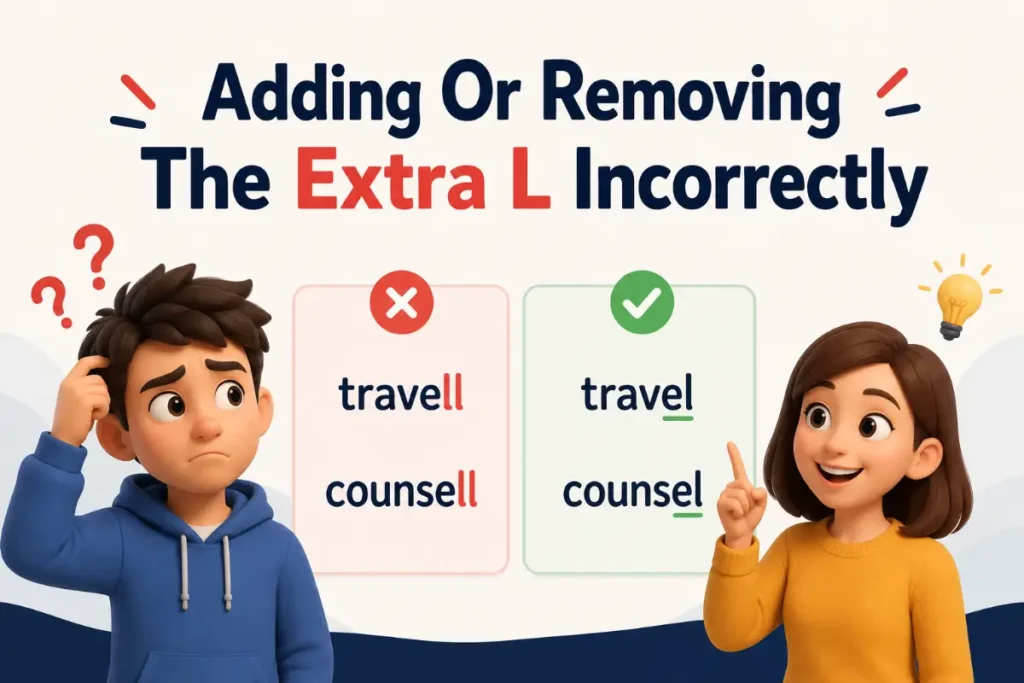
Some learners apply the doubling rule to every English word.
English spelling does not always work that way. Follow the spelling conventions of the English variety you are using instead of guessing.
Easy Memory Tricks
These tricks make the spelling easy to remember.
Remember The Country
Think of the extra L as belonging to British English.
Totalling has two L letters.
Britain usually doubles the final L before adding endings.
American English usually keeps one L.
Match Similar Words
If you already know these spelling pairs, the rule becomes much easier.
| British English | American English |
|---|---|
| Travelling | Traveling |
| Cancelled | Canceled |
| Labelling | Labeling |
| Fuelled | Fueled |
| Totalling | Totaling |
Think About Consistency
Do not ask which spelling is better.
Ask which variety of English you are writing.
That question usually gives you the correct answer immediately.
Related Words
Learning related words strengthens your vocabulary.
Related Verb Forms
- Total.
- Totals.
- Totaled.
- Totalled.
- Totalling.
- Totaling.
Related Nouns
- Total.
- Totality.
- Total amount.
- Grand total.
- Running total.
Similar Words
- Calculate.
- Add.
- Sum.
- Count.
- Compute.
- Estimate.
Frequently Confused Spellings
- Cancelled vs Canceled.
- Travelling vs Traveling.
- Labelling vs Labeling.
- Fuelled vs Fueled.
- Modelled vs Modeled.
These words follow the same regional spelling pattern.
Expert Editor’s Note
Professional editors do not treat totalling and totaling as competing spellings.
They choose the spelling that matches the publication’s style guide.
Most American publishers follow The Chicago Manual of Style and use totaling.
Most British publishers use Oxford Style or similar British editorial standards and prefer totalling.
Major dictionaries recognize both spellings as correct.
The biggest editing mistake is mixing British and American spellings in the same article, report, or website.
Choose one style and use it consistently from beginning to end.
Frequently Asked Questions
Is Totalling Or Totaling Correct?
Both spellings are correct. Totalling is the standard British English spelling, while totaling is the preferred American English spelling. The meaning stays exactly the same.
Why Does British English Use Totalling?
British English usually doubles the final L before adding endings like ing and ed. This spelling rule applies to many words, including travelling, labelling, and totalling.
Why Does American English Use Totaling?
American English usually keeps one L when the final syllable is not stressed. That is why American writers prefer totaling, traveling, and labeling.
Do Totalling And Totaling Mean Different Things?
No. Both words mean adding numbers together, calculating a final amount, or describing a vehicle that has been damaged beyond economical repair.
Which Spelling Should I Use In Business Writing?
Use the spelling that matches your audience. Choose totaling for American readers and totalling for British, Australian, or many Commonwealth readers. Consistency is more important than the spelling itself.
Is Totalled Also Different From Totaled?
Yes. The same regional rule applies. British English prefers totalled, while American English uses totaled.
Does Pronunciation Change?
No. Both spellings have the same pronunciation. The extra L affects only the written form.
Many readers also check Imbed Vs Embed Which Spelling Is Correct 2026.
Conclusion
The answer to totalling vs totaling is straightforward.
Both spellings are correct. The only difference is the variety of English you are using.
Choose totalling for British English, Australian English, and many Commonwealth publications.
Choose totaling for American English.
The grammar, meaning, and pronunciation stay exactly the same. Only the spelling changes.
The easiest way to avoid mistakes is to stay consistent. Once you choose British or American English, follow that style throughout your entire document.
A consistent spelling style makes your writing look polished, professional, and easy to trust.

Editorial Reviewer & Proofreader
Grace Mitchell reviews Gramlify’s articles for clarity, consistency, and readability. She is passionate about creating accurate, approachable content that helps English learners build confidence.