
The internet gives people access to millions of websites, but finding useful and trustworthy information is not always easy. When a new website appears in search results, readers often want to know what it offers, who it serves, and whether its content is worth their time. That is where understanding goralblue.com becomes useful.
This website is associated with a broad range of informational topics, including technology, business, education, finance, health, travel, and lifestyle. Its general-interest approach may appeal to readers who want to explore different subjects without visiting several specialized websites.
However, knowing a website’s purpose is only the first step. Readers should also consider the quality of its articles, the transparency of its publisher, and the reliability of the information it provides.
In this guide, we examine the website’s apparent purpose, content categories, possible benefits, limitations, and safety considerations. We also explain how US readers can evaluate online information before relying on it for everyday decisions.
Need another quick comparison? Read Uitly Review 2026: Features, Benefits and Pricing.
What Is Goralblue.com?
Goralblue.com appears to be a general-interest content website rather than a platform built around a single product or professional service. Public descriptions associate it with articles covering several areas of everyday interest, including technology, business, education, finance, travel, and lifestyle. Independent reviews have also described it as a multi-category blog. Source: IPAddress.com | Source: Technylo
Unlike a specialized publication that focuses entirely on one subject, a general-interest website can attract readers with different needs. One person might be looking for a basic technology explanation, while another may want to explore a lifestyle topic or learn about a business concept.
This type of publishing model can be convenient because it brings different subjects together in one place.
Still, a website’s category list does not automatically demonstrate expertise. A useful travel article, for example, does not prove that the same publisher can provide reliable medical or financial guidance. Each article should be judged by its accuracy, evidence, and relevance to the reader’s question.
For that reason, the best way to approach the site is to consider it a potential starting point for general research, while checking important claims against appropriate sources.
What Topics Does the Website Cover?
The website has been associated with multiple content categories. The available descriptions suggest a broad publishing approach intended to reach readers with different interests.
Here are the main subjects commonly linked to the platform.
1. Technology and Digital Information
Technology changes quickly, making clear explanations useful for everyday internet users. Technology-related articles can help readers understand digital tools, online services, software, and emerging trends.
For US readers, useful technology content might explain how a feature works, compare common tools, or describe basic online security practices.
When reading this type of material, check whether the article includes current information. Software interfaces, subscription prices, product features, and technical requirements can change over time.
If an article discusses a particular device or service, compare its claims with the manufacturer’s official website or documentation.
2. Business and Entrepreneurship
Business content can serve entrepreneurs, small-business owners, freelancers, and people interested in professional development.
Helpful articles in this category may explain basic business terms, productivity methods, customer service, marketing concepts, or common operational challenges.
For example, a small-business owner might look for information about building an online presence or improving communication with customers.
However, general business information is not a replacement for professional advice on contracts, taxes, employment law, or regulatory requirements. US businesses may face different rules depending on their state, industry, and business structure.
Readers should check official government resources and qualified professionals when a decision has legal or financial consequences.
3. Education and Learning
Educational content can help students, parents, and lifelong learners understand unfamiliar topics.
Simple explanations, definitions, examples, and step-by-step guides can make learning easier, especially when a reader is new to a subject.
A useful educational article should do more than repeat a definition. It should explain the concept clearly, offer relevant examples, and identify any important limitations.
Students should also confirm facts with textbooks, academic publications, teachers, or established educational institutions when accuracy is essential.
4. Finance and Money Management
Personal finance is an important subject for American households. Readers often search online for information about budgeting, saving, credit, taxes, debt, and investing.
A general-interest website may introduce these subjects in accessible language, but readers need to be especially careful with money-related claims.
Financial regulations, tax rules, interest rates, and investment conditions can change. Advice that works for one person may not be suitable for another.
Before acting on a financial article, check its publication date, identify the sources behind its claims, and compare its information with authoritative resources such as the Consumer Financial Protection Bureau or the Internal Revenue Service.
Never make a major financial decision based only on an article from an unfamiliar website.
5. Health and Wellness
Health information is another subject associated with the site’s broad content model.
General wellness articles can help readers understand common terms, everyday habits, and questions they may want to discuss with a healthcare professional.
However, medical information requires a higher level of care than ordinary lifestyle content. Incorrect claims about symptoms, medications, diagnoses, or treatments can have serious consequences.
Readers should look for credible evidence, relevant professional expertise, and recent updates. For dependable US health information, consult MedlinePlus or the National Institutes of Health.
Use general online articles to build background knowledge, not to diagnose a condition or replace individualized medical care.
6. Travel and Lifestyle
Travel and lifestyle topics can appeal to readers looking for ideas, inspiration, and practical tips.
Travel articles may discuss destinations, trip preparation, packing, or ways to organize a vacation. Lifestyle content may address routines, productivity, hobbies, and everyday choices.
For US travelers, practical details are particularly important. Transportation schedules, entry requirements, attraction hours, prices, and local rules can change.
Before booking a trip, confirm important details through official tourism websites, transportation providers, airlines, and accommodation providers.
Lifestyle recommendations should also be considered in context. What works for one person may not suit another person’s budget, schedule, location, or preferences.
Why Are People Searching for This Website?
People usually search for an unfamiliar website because they want to understand its purpose before spending time on it.
Several questions may lead someone to investigate a general-interest content platform.
They want to learn something new. A reader may discover an article through a search engine and want to understand the publisher behind it.
They want information in simple language. Clear writing can help people understand unfamiliar subjects without having to work through complicated terminology.
They want to explore multiple topics. A broad website can provide an introduction to different subjects in one location.
They want to check credibility. Before relying on information, readers may want to know whether the publisher provides clear authorship, reliable sources, and current information.
They want to understand website safety. Users may want to know whether a domain uses a secure connection and whether they should share personal information.
These are reasonable concerns. A website should be evaluated not only by its appearance but also by the quality and transparency of the information it publishes.
What Are the Potential Benefits?
A multi-topic content website can offer several advantages when its articles are useful and appropriately maintained.
Easy Access to General Information
Readers often need a quick introduction before exploring a subject in greater depth. A clearly written article can explain basic concepts and help someone identify the next questions to ask.
This can be useful for students, casual readers, and people researching unfamiliar topics.
A Variety of Subjects
A broad content structure allows readers to explore more than one area of interest. Someone researching technology may also find introductory material about business or everyday life.
The benefit depends on whether the individual articles actually answer readers’ questions.
Simple, Accessible Writing
Plain English makes online information easier to understand. Short paragraphs, descriptive headings, and relevant examples can help readers find answers quickly.
For a US audience, familiar terminology and practical examples can make general information more useful.
Opportunities for Further Research
An introductory article can help readers identify important concepts, terminology, and questions for deeper investigation.
For example, a basic article about credit scores might encourage someone to research credit reports through official US consumer resources.
The most useful content does not ask readers to accept every claim without question. It gives them enough context to continue researching confidently.
What Limitations Should Readers Consider?
A broad category structure is not proof of comprehensive coverage. Independent reviews published in 2026 have raised questions about the depth of some categories and the visibility of editorial information. These are observations from third-party reviewers, not proof that every article is inaccurate. Technylo review | Journelviews review
Readers should consider several possible limitations.
Limited Subject-Specific Expertise
Different subjects require different kinds of knowledge. A strong article about personal finance may need current regulatory information, while a medical article may require qualified clinical review.
A general-interest publisher should make the expertise behind sensitive content clear.
Uneven Article Depth
Some articles explain a topic thoroughly, while others provide only a basic overview. Readers should look for meaningful examples, useful details, credible evidence, and answers to the questions that matter most.
A long article is not necessarily a helpful one. Relevance and accuracy matter more than word count.
Unclear Editorial Standards
Readers benefit when a publisher explains who writes its articles, how facts are checked, how corrections are handled, and whether outside contributors are involved.
If those details are difficult to find, it becomes harder to assess the authority of an article.
Information That May Become Outdated
Online information can lose value as circumstances change. This is especially true for tax rules, financial products, software, travel requirements, and health recommendations.
Always check the publication date and confirm time-sensitive information with an appropriate primary source.
Is Goralblue.com Legitimate?
The word legitimate can mean different things. A domain may be registered and technically accessible without being a recognized authority on every subject it covers.
According to IPAddress.com, the domain’s reported registration date is March 18, 2023. The same source reports HTTPS support and Cloudflare-related infrastructure.
These details provide information about the domain and its technical setup. They do not establish the accuracy of its articles, verify the qualifications of its writers, or guarantee that every page is trustworthy.
A balanced assessment should separate three questions:
- Does the domain exist? Public domain records indicate that it is registered.
- Does the connection use standard security technology? Public technical information reports HTTPS support.
- Is the content reliable? That requires evaluating the individual article, its sources, its author, and its claims.
The third question cannot be answered from domain registration alone.
There is not enough evidence in these technical details to declare the website universally trustworthy or to label it a scam. Readers should make a practical assessment based on the page they intend to use.
For another common grammar confusion, see Fundfireinsight.com Review 2026: Is It Legit or Safe to Use?.
Is the Website Safe to Visit?
Website safety involves both technical protection and user behavior.
HTTPS helps encrypt information sent between a browser and a website. This reduces the risk of others reading or changing that information while it travels across the connection.
However, HTTPS does not prove that a website is honest, that its articles are correct, or that every link is safe.
When visiting an unfamiliar website, follow these precautions:
- Check the address. Confirm that the domain is spelled correctly and that you have not opened a misleading lookalike.
- Look for HTTPS. Make sure the browser shows a secure connection, while remembering that encryption is not a guarantee of trustworthiness.
- Avoid unnecessary personal information. Do not provide sensitive details unless there is a clear, legitimate reason.
- Be cautious with downloads. Do not open unexpected files or install unfamiliar software simply because a webpage recommends it.
- Review privacy information. Check how the publisher says it collects, uses, and shares personal data.
- Examine payment requests. Before paying for anything, verify the seller, terms, refund policy, and payment destination.
- Check important claims elsewhere. Compare information with trusted sources before making decisions.
These steps are sensible for any unfamiliar website. They do not imply that the site is malicious; they simply reduce avoidable risks.
How to Evaluate an Article Before Trusting It
Whether you are researching business, health, finance, technology, or travel, a consistent evaluation process can help you distinguish useful content from weak information.
Check the Author
Look for the author’s name, professional background, and relevant experience. A writer covering a specialized subject should have appropriate knowledge or clearly identify the sources used.
An author biography is helpful, but it is not enough by itself. Supporting evidence still matters.
Check the Publication Date
A recent date can be useful, but it does not automatically mean an article has been updated accurately.
Look for meaningful revisions when the subject changes frequently. If an article discusses current laws or prices, confirm those details through an official source.
Examine the Sources
Reliable articles should support important claims with appropriate evidence.
Depending on the topic, useful sources may include government publications, academic research, professional associations, official documentation, and primary records.
Be cautious when an article makes strong claims without showing where its information came from.
Compare More Than One Source
Do not depend on a single webpage for important decisions. Compare the key facts with at least one authoritative source, and seek additional confirmation when the information is disputed or consequential.
For example, US tax questions should be checked against IRS guidance rather than relying solely on a general blog post.
Consider the Consequences of Getting It Wrong
The amount of checking needed depends on the decision.
An article suggesting a new hobby may require little additional research. An article recommending a medical treatment, investment, legal strategy, or major purchase requires much more care.
The higher the potential cost of an error, the stronger your evidence should be.
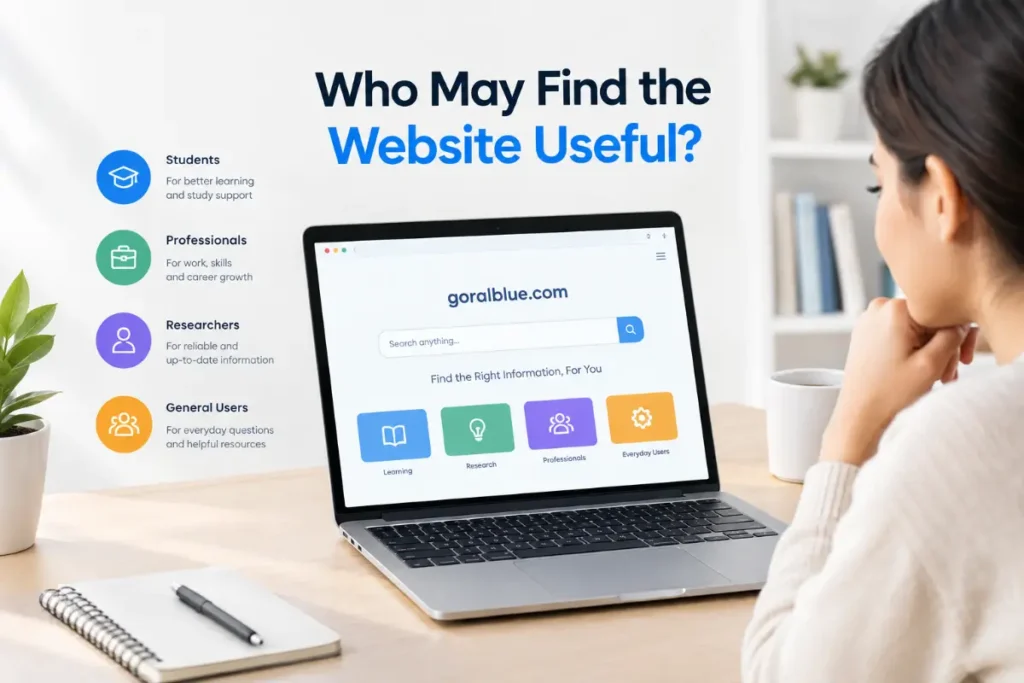
Who May Find the Website Useful?
A general-interest content platform may be useful for several groups of readers, depending on the quality of the individual articles.
Casual readers may appreciate introductory explanations and general information.
Students and lifelong learners may use simple articles to understand a new concept before consulting more detailed materials.
Professionals and entrepreneurs may find basic explanations of business or technology terms helpful when exploring an unfamiliar subject.
Travel planners may use general articles to gather ideas before checking official destination and transportation information.
Curious internet users may enjoy exploring different subjects without committing to a specialized publication.
However, readers who need expert-level research, current professional guidance, or evidence for high-stakes decisions should look beyond a general-interest website.
How Does It Compare With Specialized Websites?
A multi-topic website and a specialist publication serve different purposes.
A general-interest site may provide convenient introductions to several subjects. A specialist website usually focuses on a narrower area and may offer deeper research, dedicated expertise, and more detailed editorial processes.
Consider these differences:
| Feature | General-interest website | Specialized publication |
|---|---|---|
| Topic range | Broad | Narrower and more focused |
| Best starting point | Basic explanations | In-depth subject research |
| Expertise | Must be checked article by article | May be more clearly tied to the subject |
| Research depth | Varies by article | Often designed around a specific field |
| High-stakes advice | Requires independent verification | Still requires checking credentials and evidence |
Neither category guarantees quality. A specialized website can publish errors, and a general blog can produce excellent work.
The important factors are the evidence, expertise, transparency, and accuracy of the specific material you read.
What Should US Readers Look for in a Reliable Website?
American readers have access to many strong primary information sources. Using them alongside general online articles makes research more reliable.
For government rules and public services, start with official federal or state websites. For consumer finance, consult the Consumer Financial Protection Bureau. For taxes, use the Internal Revenue Service. For health topics, consult the National Institutes of Health or MedlinePlus.
For technology products, check official product documentation. For academic questions, look for university publications and original research. For travel, verify schedules, entry requirements, and booking terms with the relevant official provider.
This approach is especially useful when an article contains statistics, recommendations, legal claims, or information that changes frequently.
A good website should help readers understand a topic. It should not discourage them from checking important facts.
Frequently Asked Questions
What is goralblue.com?
It is a registered web domain associated in public descriptions with a general-interest content website covering subjects such as technology, business, education, finance, travel, health, and lifestyle.
What kind of content can readers find?
Public descriptions associate the site with informational articles across multiple categories. The availability, depth, and current status of individual topics should be checked directly on the website.
Is the website legitimate?
Public domain information indicates that the domain is registered and supports HTTPS. These technical details do not independently establish editorial credibility or guarantee the accuracy of its content.
Is it safe to browse?
Use standard precautions when visiting any unfamiliar website. Check the address, use a secure connection, avoid unnecessary downloads, and do not share sensitive information without a clear reason.
Can I rely on its health and financial articles?
Use general articles as introductory material rather than your only source. Confirm medical information with qualified healthcare professionals and financial or tax information with appropriate official resources.
Does the website cover only one subject?
Available public descriptions associate it with several categories rather than a single specialized field. That broad approach may offer convenience, but it does not prove equal expertise across all subjects.
How can I check whether an article is accurate?
Review the author’s background, publication date, evidence, citations, and editorial transparency. Compare important claims with authoritative sources, especially when the information could affect your health, finances, legal rights, or safety.
Should I use it for research?
It may be a starting point for exploring general topics if the article is relevant and clearly supported. For important decisions, verify the information through independent and authoritative sources.
Need another quick comparison? Read Zavalio Com Review: What It Is, Is It Legit, and Can You Trust It?.
Final Verdict
Understanding a website requires more than reading its homepage or checking whether its domain is registered. Readers should also examine the quality of its content, the transparency of its publisher, and the evidence behind its claims.
Overall, goralblue.com is best approached as a general-interest information resource whose individual articles need to be evaluated on their own merits. Its broad subject range may be convenient for casual reading and initial research, but available technical details do not establish it as an expert authority across every category.
For US readers, the most practical strategy is straightforward: explore useful introductory content, check dates and sources, and verify important claims through trusted government, academic, professional, or primary sources.
That approach helps you make better-informed decisions while enjoying the convenience of online information.

Nusrat Basheer is a website review writer who helps readers discover useful websites, understand online services, and make informed decisions through clear, reliable, and easy-to-understand reviews.