
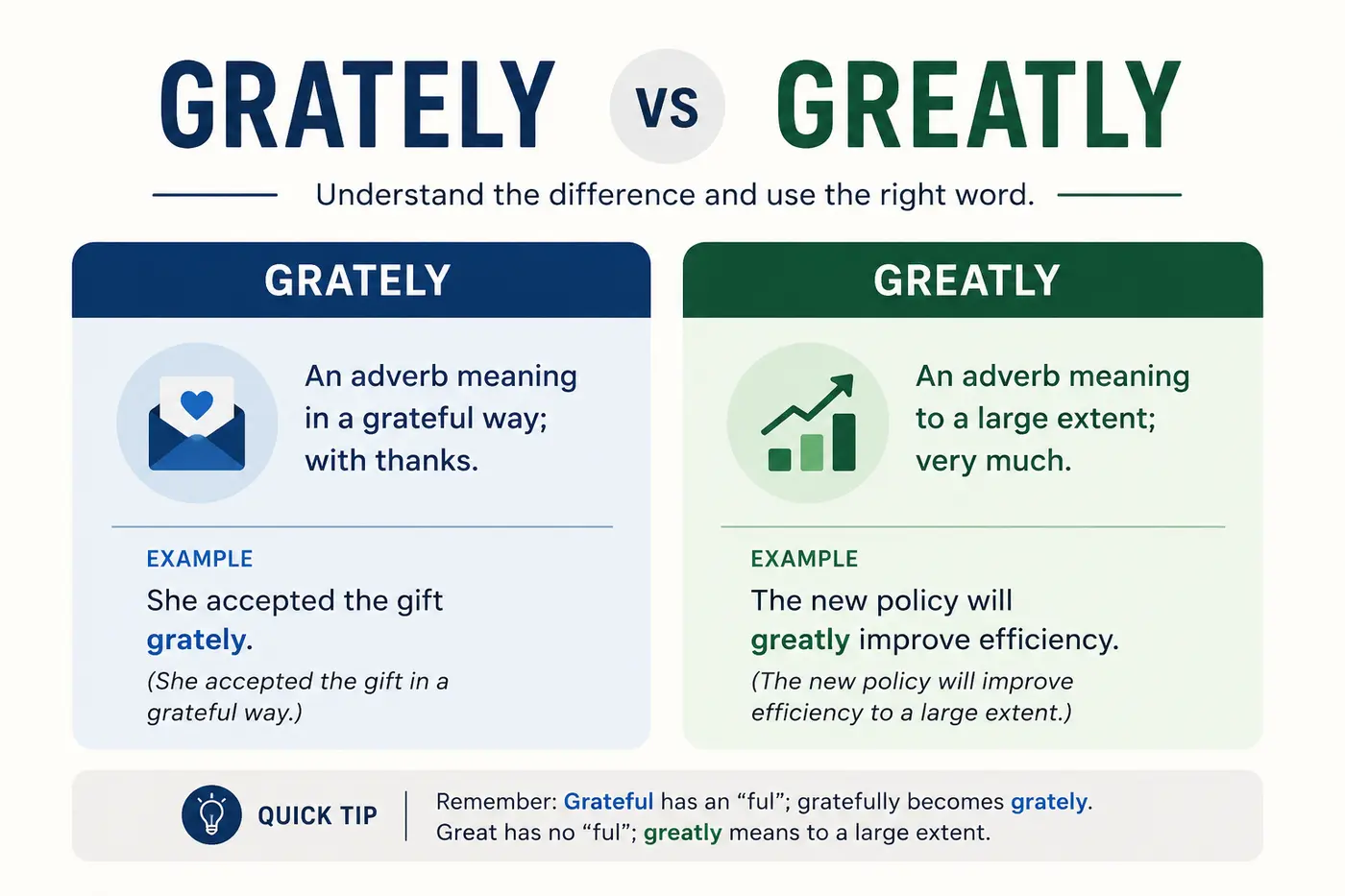
Have you ever written a sentence and stopped at grately vs greatly because both words look like they should exist? This confusion is common because English has many words that seem logical but only one form is accepted in standard usage.
The correct word is greatly. The word grately is not a standard English word and is considered a spelling mistake. English learners often create grately because they connect it with the word great and assume the ending should follow a similar pattern.
The difference is simple once you understand the spelling rule. Greatly is an adverb that means very much, to a large degree, or in an important way. It comes from the adjective great and changes the meaning of a sentence by showing intensity.
In this guide, you’ll learn the correct spelling, meaning, grammar role, pronunciation, common mistakes, word origin, and real examples. You’ll also discover why people write grately by mistake and how to remember the correct form every time.
A related grammar guide is Attornies or Attorneys Which Spelling Is Correct (2026).
Quick Answer
Greatly is the correct spelling. It is an adverb meaning very much, significantly, or to a high degree. Grately is not accepted in standard English and is usually a spelling error. Use greatly in formal writing, conversations, emails, and academic work.
Grately vs Greatly Comparison Table
| Feature | Greatly | Grately |
|---|---|---|
| Correct spelling | Yes | No |
| Part of speech | Adverb | Not a standard English word |
| Meaning | Very much or to a large degree | No accepted meaning |
| Usage | Formal and informal English | Incorrect usage |
| Common contexts | Writing, speech, emotions, results | Usually typing mistakes |
| Example | Your help greatly improved my work. | Incorrect form |
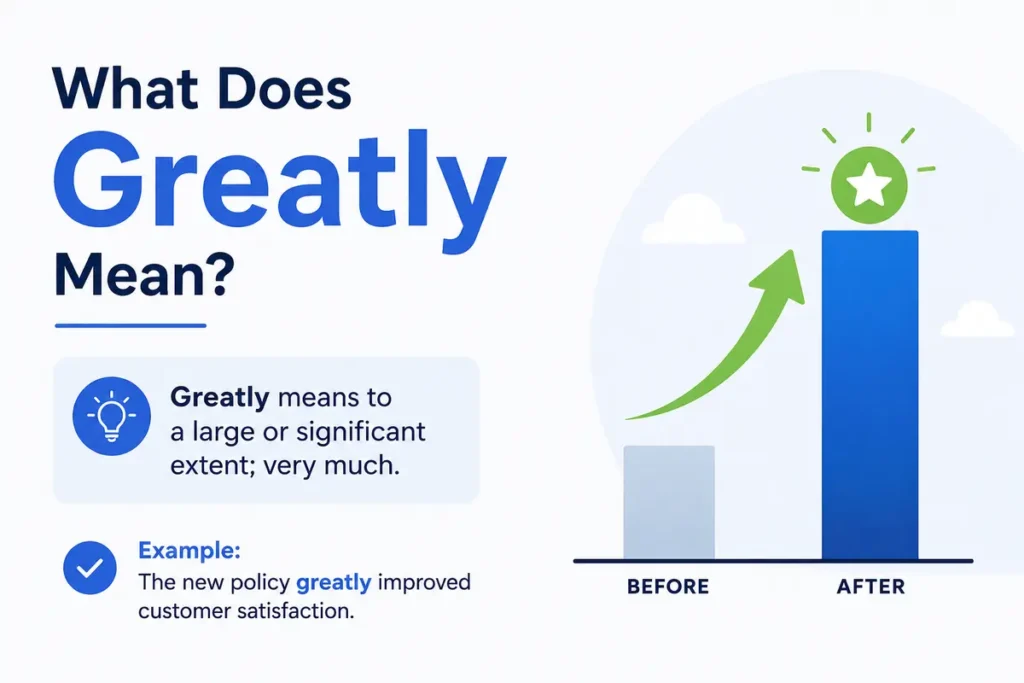
What Does Greatly Mean
Greatly is an adverb used to show a strong level of feeling, effect, change, or importance.
It comes from the adjective great, which means large, important, excellent, or powerful.
Simple Definition Of Greatly
Greatly means very much or to a significant degree.
How Greatly Is Used
Writers use greatly when something has a strong impact or happens at a high level.
Examples:
- I greatly appreciate your support.
- The new system greatly improved productivity.
- Her advice greatly influenced my decision.
- The weather greatly affected the travel plans.
- We greatly value your opinion.
In each example, greatly strengthens the meaning of the verb.
Compare these sentences.
Your help improved my work.
Your help greatly improved my work.
The second sentence shows a much stronger effect.
What Does Grately Mean
Grately is not a recognized English word in modern dictionaries.
Most uses of grately happen because writers add the ending ly to great incorrectly. Since many adjectives become adverbs by adding ly, people naturally assume great becomes grately.
That assumption feels reasonable, but English spelling does not always follow a simple pattern.
The correct transformation is:
Great becomes greatly.
Not:
Great becomes grately.
Examples:
Correct.
- She greatly enjoyed the concert.
- I greatly respect my teacher.
Incorrect.
- She grately enjoyed the concert.
- I grately respect my teacher.
Which One Is Correct
The correct word is greatly.
English speakers use greatly when they want to express a strong degree of something. It works in both everyday and professional writing.
Grately is incorrect and should not appear in standard English.
A quick test can help.
If you mean very much, significantly, or deeply, use greatly.
Examples:
- I greatly admire her work.
- The company greatly benefited from the change.
- He was greatly surprised by the result.
Do not use grately because readers may see it as a spelling error.
Why People Confuse Grately And Greatly
The confusion comes from normal spelling patterns in English. Many learners know that adjectives can become adverbs by adding ly.
Examples:
- Quick becomes quickly.
- Slow becomes slowly.
- Careful becomes carefully.
Because of this pattern, people may think:
Great becomes grately.
However, English keeps the original spelling of great before adding ly.
The correct form is:
Great plus ly equals greatly.
Visual Similarity
The letters are very close.
Greatly.
Grately.
Only one letter changes, so the mistake is easy to miss during quick writing.
Keyboard Mistakes
Fast typing can cause people to remove letters or replace letters accidentally. Since both forms look familiar, spell check may not always catch the mistake in every situation.
Internet Influence
Incorrect spellings can spread online because users copy what they see. A repeated mistake does not make a word correct.
Learning Patterns
English learners often build new words by following rules they already know. This is a useful learning method, but some words have fixed spellings that must be remembered.
Key Differences Between Grately And Greatly
The main difference is simple.
Greatly is a real English word.
Grately is not.
Meaning Difference
Greatly has a clear meaning.
It shows a strong amount or degree.
Examples:
- I greatly enjoyed the movie.
- The discovery greatly changed science.
Grately has no standard meaning.
Grammar Difference
Greatly functions as an adverb.
It modifies verbs, adjectives, or other adverbs.
Examples:
- She greatly improved her skills.
- The project was greatly successful.
Grately has no grammar function because it is not a standard word.
Usage Difference
Greatly appears in:
- Professional writing.
- Academic writing.
- Personal messages.
- News articles.
- Everyday conversations.
Grately usually appears only as a mistake.
Grammar Explanation Of Greatly
Understanding grammar helps you use greatly correctly.
Greatly As An Adverb
An adverb describes how, how much, when, or where something happens.
Greatly answers the question:
How much?
Example:
The experience greatly changed my perspective.
How much did it change my perspective?
Greatly.
Greatly Modifies Verbs
Most commonly, greatly modifies verbs.
Examples:
- We greatly appreciate your kindness.
- The treatment greatly reduced the symptoms.
- She greatly exceeded expectations.
The word adds extra strength to the action.
Sentence Structure With Greatly
Greatly often appears before the main verb.
Pattern:
Subject plus greatly plus verb.
Examples:
- They greatly enjoyed the event.
- The decision greatly affected the team.
It can also appear after helping verbs.
Examples:
- The results have greatly improved.
- The quality has greatly increased.
Learn the difference in Dutchess vs Duchess Which Spelling Is Correct 2026 Guide.
Spelling Rule Behind Greatly
The spelling of greatly follows a common English pattern.
When adding ly to great, the final spelling stays the same.
Great plus ly becomes greatly.
The letter e remains because it is part of the original word.
Similar examples include:
- Complete becomes completely.
- Immediate becomes immediately.
- Accurate becomes accurately.
Greatly follows the same idea.
The mistake happens because some writers expect the word to change before adding the ending. In this case, no spelling change occurs.
Key Differences Between Grately And Greatly
The biggest difference between grately and greatly is simple.
Greatly is a correct English word.
Grately is not a standard English word and is considered a spelling mistake.
Many people confuse them because they connect grately with the word great. Since great becomes greatly when adding the suffix ly, some writers accidentally add an extra letter and create grately.
| Feature | Greatly | Grately |
|---|---|---|
| Correct spelling | Yes | No |
| Meaning | To a large degree or very much | No accepted meaning |
| Part of speech | Adverb | Incorrect form |
| Used in formal writing | Yes | No |
| Common context | Appreciation, importance, emotions, change | Spelling mistake |
Grammar Explanation Of Greatly
Understanding grammar makes the correct choice easier.
Greatly As An Adverb
Greatly is an adverb. It modifies verbs, adjectives, or other adverbs by showing a high level or strong degree.
Examples.
- I greatly appreciate your help.
- The new system greatly improved productivity.
- She was greatly surprised by the news.
- His advice greatly influenced my decision.
In each sentence, greatly explains how much something happens.
Greatly With Verbs
Greatly often appears before verbs.
Examples.
- We greatly value your support.
- The team greatly benefited from the training.
- They greatly enjoyed the performance.
Here, greatly strengthens the action.
Greatly With Emotions And Feelings
People often use greatly when describing strong feelings.
Examples.
- I am greatly honored to receive this award.
- She was greatly disappointed by the result.
- They were greatly relieved after hearing the good news.
The word adds emphasis and shows that the feeling is strong.
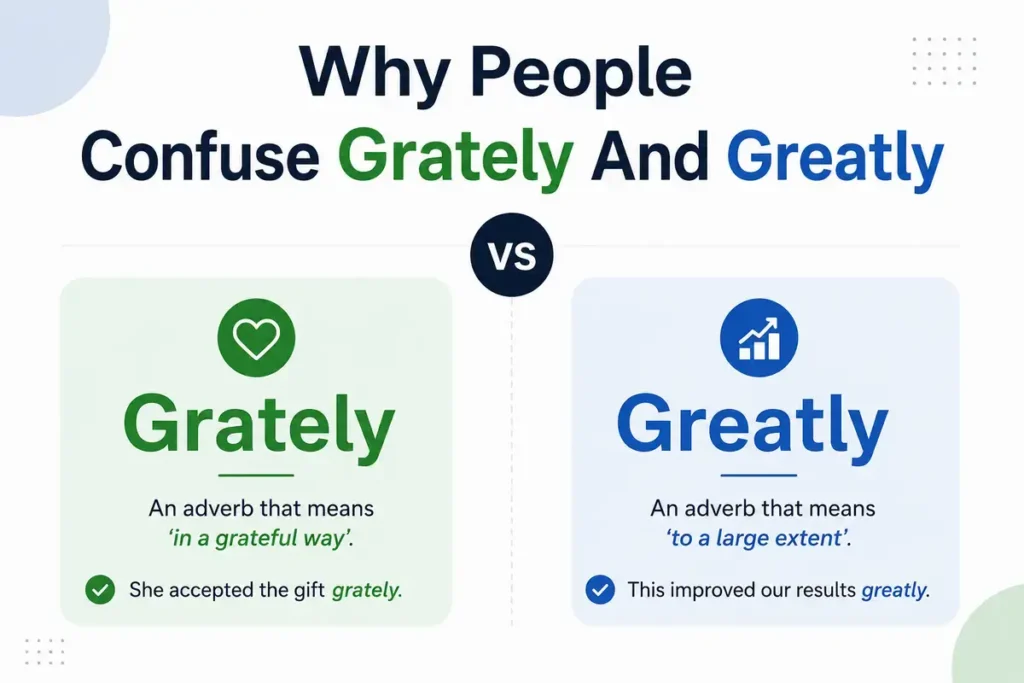
Why People Confuse Grately And Greatly
The confusion between these words happens for several reasons.
The Word Great Creates Confusion
The adjective great means large, excellent, or important.
When people add the suffix ly, they know many words simply add letters.
Examples.
- Quick becomes quickly.
- Slow becomes slowly.
- Great becomes greatly.
Because the spelling changes naturally, some writers accidentally remove the second e and create grately.
Pronunciation Can Be Misleading
In normal speech, the middle sound in greatly is not always strongly pronounced. This can make the spelling less obvious.
People may hear the word and guess the spelling instead of remembering the written form.
Typing Mistakes
Fast typing can also create errors. Since grately looks close to greatly, the mistake may pass unnoticed.
This happens often in:
- Emails.
- Social media posts.
- Online comments.
- Quick messages.
Internet Influence
A misspelled word can appear many times online. Some people assume a word is correct simply because they see it frequently.
Repeated use does not change standard English spelling.
Spelling Rules For Greatly
The spelling of greatly follows a common English pattern.
The base word is:
Great.
The suffix is:
Ly.
When combined:
Great + ly = Greatly.
The original spelling remains unchanged.
Examples.
- Great becomes greatly.
- Complete becomes completely.
- Immediate becomes immediately.
- Accurate becomes accurately.
A common mistake is removing a letter that belongs to the original word.
Incorrect.
Grately.
Correct.
Greatly.
Pronunciation Guide For Greatly
Greatly Pronunciation
American English:
/ˈɡreɪt.li/
Syllables:
Great ly.
Stress pattern:
The first syllable receives the main stress.
It sounds like:
GRAYT lee.
Common Pronunciation Mistake
Some speakers pronounce the word too quickly and may not clearly hear the t sound.
However, the pronunciation does not change the spelling.
The correct form always remains:
Greatly.
Real Life Examples Of Greatly Usage
Seeing natural examples helps you understand how native speakers use the word.
Daily Conversation
- I greatly appreciate everything you have done.
- Your kindness has greatly helped me.
- The weather greatly affected our plans.
- She greatly enjoyed her vacation.
Workplace Examples
- The company greatly improved its customer service.
- We greatly value your experience and dedication.
- His leadership greatly contributed to the project’s success.
- The changes greatly reduced costs.
Academic Writing
- Research methods have greatly changed over time.
- Technology has greatly influenced modern education.
- The study greatly supports previous findings.
- The results greatly differ from earlier research.
Professional Communication
- We greatly appreciate your quick response.
- Your feedback is greatly appreciated.
- I am greatly thankful for your assistance.
- The organization has greatly benefited from your efforts.
Social Media And Informal Writing
- I greatly enjoyed this experience.
- Your support means greatly to me.
- I greatly love this idea.
- This opportunity has greatly changed my life.
Note: In casual speech, native speakers often choose simpler words like really or very instead of greatly.
For example.
More natural:
I really appreciate your help.
More formal:
I greatly appreciate your help.
Sentence Structure With Greatly
Greatly often appears before the main verb.
Pattern:
Subject plus greatly plus verb.
Examples:
- They greatly enjoyed the event.
- The decision greatly affected the team.
It can also appear after helping verbs.
Examples:
- The results have greatly improved.
- The quality has greatly increased.
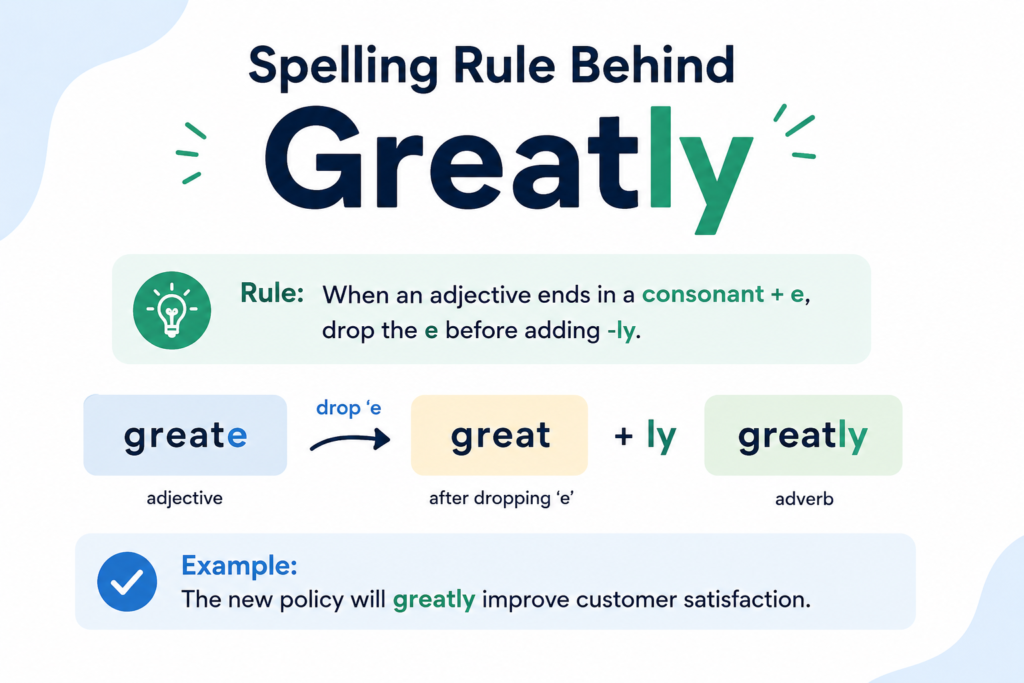
Spelling Rule Behind Greatly
The spelling of greatly follows a common English pattern.
When adding ly to great, the final spelling stays the same.
Great plus ly becomes greatly.
The letter e remains because it is part of the original word.
Similar examples include:
- Complete becomes completely.
- Immediate becomes immediately.
- Accurate becomes accurately.
Greatly follows the same idea.
The mistake happens because some writers expect the word to change before adding the ending. In this case, no spelling change occurs.
Frequently Asked Questions About Grately Vs Greatly
Is Grately A Correct English Word?
No. Grately is not a standard English word and is considered a spelling mistake. The correct spelling is greatly. English speakers use greatly as an adverb to show a high degree of something, such as strong appreciation, major improvement, or a significant effect.
What Does Greatly Mean In English?
Greatly means very much, significantly, or to a large degree. It strengthens the meaning of a verb by showing that an action, feeling, or result has a powerful effect.
Examples:
- I greatly appreciate your kindness.
- The decision greatly influenced the outcome.
- She greatly improved her skills.
Why Do People Spell Greatly As Grately?
People often write grately because they know many adjectives become adverbs by adding ly. They assume great changes to grately, but English keeps the original spelling. The correct form is great plus ly, which creates greatly.
Is Greatly Formal Or Informal?
Greatly works in both formal and informal English. It appears in professional emails, academic writing, business documents, conversations, and everyday messages.
Examples:
Formal:
We greatly appreciate your contribution.
Informal:
I greatly enjoyed the event.
What Is The Difference Between Great And Greatly?
Great is an adjective that describes a person, thing, or idea.
Example:
She is a great teacher.
Greatly is an adverb that describes the strength or degree of an action.
Example:
She greatly helped her students.
How Do You Pronounce Greatly?
Greatly is pronounced as /ˈɡreɪt.li/.
It has two syllables:
Great ly.
The first syllable sounds like the word great.
Can Greatly Be Used Before A Noun?
No. Greatly is an adverb, so it does not directly describe nouns.
Incorrect:
She is a greatly leader.
Correct:
She is a great leader.
Correct:
She greatly helped the team.
Is Greatly The Same As Gratefully?
No. These words have different meanings.
Greatly means very much.
Example:
I greatly appreciate your support.
Gratefully means with thanks or appreciation.
Example:
I gratefully accepted the award.
Internal Linking Opportunities
Add these related articles naturally within the content.
- Anchor text: Great Vs Greater Difference Explained
Placement: After the introduction when explaining the relationship between great and greatly.
- Anchor text: Common English Spelling Mistakes To Avoid
Placement: Before the conclusion when discussing spelling errors and learning strategies.
Many readers also check Carrer Or Career Which Spelling Is Correct 2026 Guide.
Conclusion
The correct answer in the grately vs greatly comparison is simple. Greatly is the correct English word, while grately is a common spelling mistake.
Greatly works as an adverb and means very much, significantly, or to a high degree. It helps writers express strong effects, emotions, and results clearly.
The main mistake people make is changing great into grately because they expect English spelling patterns to work the same way every time. However, the correct form keeps the original spelling of great.
A useful rule to remember is this:
Great plus ly equals greatly.
When you write emails, essays, reports, or everyday messages, choose greatly whenever you want to express a strong level of appreciation, impact, or change.
Small spelling choices create strong writing habits. Learning the right word today makes every sentence more accurate tomorrow.

Editorial Reviewer & Proofreader
Grace Mitchell reviews Gramlify’s articles for clarity, consistency, and readability. She is passionate about creating accurate, approachable content that helps English learners build confidence.
1 thought on “Grately vs Greatly Which Word Is Correct 2026 Guide”