
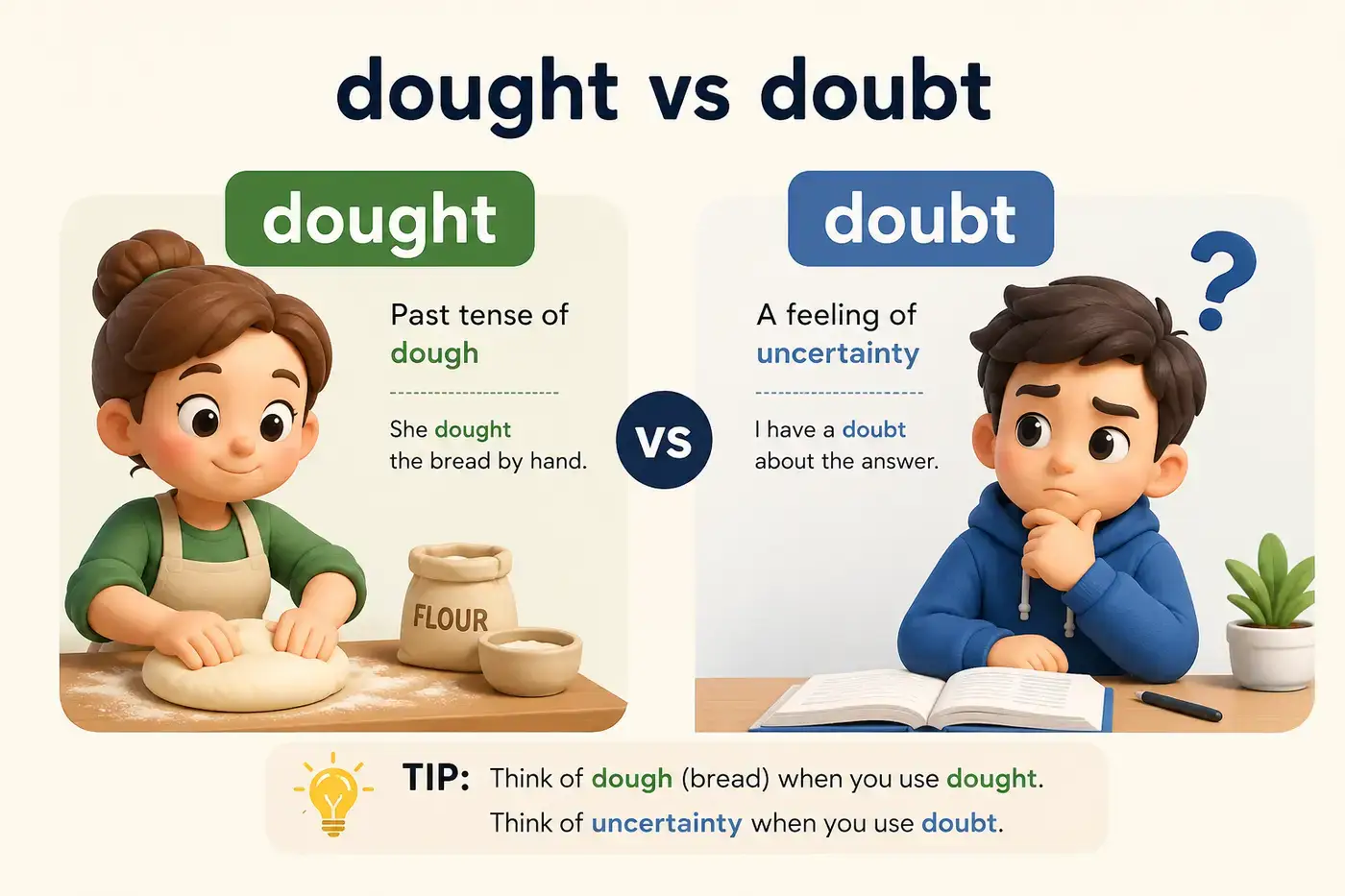
Have you ever typed dought vs doubt and wondered if one of these words is a spelling mistake? You are not alone. These two words look almost identical, but they have completely different meanings and uses in English.
The confusion happens because one small letter changes the entire word. Most English learners know doubt as a common word connected with uncertainty, questions, or a lack of confidence. However, dought is a rare historical word that many modern speakers never see.
The correct word depends on your meaning. If you are talking about uncertainty, hesitation, or questioning something, doubt is the word you need. If you are reading old English literature or historical texts, you may find dought, which means strength, ability, or courage.
In this guide, you’ll learn the difference between dought and doubt, their meanings, pronunciation, grammar roles, origins, examples, and common mistakes. You’ll also discover why these words are confused and how to choose the right one every time.
Still confused? Compare Tweek Vs Tweak Which Spelling Is Correct 2026.
Quick Answer
Doubt is the correct and commonly used word in modern English. It means uncertainty, disbelief, or a feeling of not being sure. Dought is an old English word meaning strength, courage, or ability. It is rarely used today and mostly appears in historical writing or literature.
Dought Vs Doubt Comparison Table
| Feature | Doubt | Dought |
|---|---|---|
| Correct spelling | Yes | Yes |
| Modern usage | Very common | Extremely rare |
| Meaning | Uncertainty or lack of confidence | Strength, courage, or ability |
| Part of speech | Noun and verb | Verb |
| Pronunciation | /daʊt/ | /doʊt/ |
| Silent letters | b is silent | gh is silent |
| Common context | Everyday speech, writing, questions | Old English texts, historical literature |
| Formality | Used in all types of writing | Mostly historical or literary |
| Example | I doubt his story. | The knight dought defend his kingdom. |

What Does Doubt Mean
Doubt is one of the most common words in English. It describes a feeling of uncertainty or a lack of belief about something.
Doubt Definition
Doubt means a feeling that something may not be true, correct, possible, or successful.
It can also mean to question something or to lack confidence in an idea, person, or result.
Doubt As A Noun
As a noun, doubt refers to uncertainty or hesitation.
Examples.
- I have some doubt about the accuracy of the report.
- There is no doubt that she worked hard.
- His sudden change created doubt among the team members.
- The evidence removed all doubt about the decision.
In these examples, doubt describes a feeling or situation where certainty is missing.
Doubt As A Verb
As a verb, doubt means to question or not believe something.
Examples.
- I doubt he will arrive on time.
- She doubts the information she received.
- Many people doubted the plan at first.
- Scientists doubt the accuracy of those claims.
The verb form is extremely common in conversations, emails, academic writing, and professional communication.
What Does Dought Mean
Dought is a rare and old English word. Most modern speakers do not use it in everyday conversation.
Dought Definition
Dought means to be capable, strong, brave, or powerful.
It was often used to describe someone’s ability, especially in heroic or historical contexts.
Dought Usage
Today, you are more likely to find dought in old poems, medieval stories, or historical texts than in normal writing.
Examples.
- The warrior dought defend his people.
- The hero dought overcome every challenge.
- Ancient writers described knights who dought perform great deeds.
These examples sound unusual to modern English speakers because the word has almost disappeared from everyday use.
Which One Is Correct
Both doubt and dought are real English words, but they are not interchangeable.
For almost all modern writing and conversation, doubt is the correct choice.
Use doubt when you mean:
- Uncertainty.
- Suspicion.
- Lack of confidence.
- Questioning something.
Example.
I doubt the story is true.
Use dought only when you are discussing historical English or studying old literature.
Example.
The poem describes a warrior who dought fight bravely.
If you are writing an email, article, essay, or everyday message, doubt will almost always be the word you need.
Why People Confuse Dought And Doubt
The confusion between dought and doubt comes from their similar appearance. A single letter creates a completely different meaning.
Similar Spelling
Both words contain the letters d, o, u, and t. When reading quickly, the brain often fills in familiar patterns.
Since doubt is a common word, people may assume dought is simply an unusual spelling variation.
It is not.
Silent Letters Create Confusion
English has many words with silent letters.
Examples.
- Know.
- Write.
- Honest.
- Doubt.
In doubt, the letter b is silent.
Many learners expect every written letter to have a sound, which makes words like doubt harder to remember.
Keyboard Mistakes
Typing errors also create confusion.
Someone may accidentally type dought instead of doubt because the letters are close in spelling. Autocorrect can sometimes make the situation more confusing, especially when dealing with rare words.
Internet Influence
Search engines and social media expose people to unusual words more often than before. A person may see dought in an old quote or historical discussion and assume it is a modern alternative.
It is not.
Historical Changes In English
English has changed significantly over hundreds of years. Many words that were common in older forms of English have become rare or disappeared from everyday use.
Dought is an example of a word that survived mainly in historical records.
Key Differences Between Dought And Doubt
Understanding the main differences makes these words easy to separate.
Meaning Difference
The biggest difference is meaning.
Doubt relates to uncertainty.
Example.
I doubt the answer is correct.
Dought relates to strength or ability.
Example.
The warrior dought complete the mission.
Grammar Difference
Doubt works as both a noun and a verb.
Examples.
Noun.
I have a doubt about the result.
Verb.
I doubt the result.
Dought is mainly found as an old verb.
Usage Difference
Doubt appears everywhere.
You will see it in:
- Daily conversations.
- Workplace communication.
- Academic writing.
- News reports.
- Books.
Dought appears mostly in:
- Historical texts.
- Medieval literature.
- Old English studies.
- Dictionary examples.
Pronunciation Difference
The words do not sound the same.
Doubt is pronounced like “dout.”
Dought is pronounced closer to “doht” in historical usage.
The pronunciation difference helps separate them when reading aloud.
Grammar Explanation For Doubt
Because doubt is common in modern English, understanding its grammar is important.
Doubt As A Noun
A noun names a person, place, thing, or idea.
Examples.
- She had doubts about the decision.
- There is no doubt about his talent.
- My biggest doubt was the timing.
Common phrases include:
- No doubt.
- Without a doubt.
- Beyond doubt.
- Doubt about something.
Doubt As A Verb
As a verb, doubt follows normal verb patterns.
Present tense.
I doubt the answer.
Past tense.
I doubted the answer.
Present participle.
I am doubting the answer.
Third person singular.
She doubts the answer.
Common Sentence Patterns
Doubt + noun.
I doubt his explanation.
Doubt + pronoun.
They doubt me.
Doubt + clause.
I doubt that she knows the truth.
The word fits naturally into many sentence structures, which is why it remains an important vocabulary word.
Spelling Rules Behind Doubt
The spelling of doubt can feel unusual because English keeps letters from older language forms.
The silent b comes from the word’s history rather than modern pronunciation.
Similar examples include:
- Debt.
- Subtle.
- Doubt.
These words contain silent letters because English spelling often preserves historical connections.
A helpful reminder:
The b in doubt is silent, but it stays in the spelling.
Think of it as a historical fingerprint left behind by the language.
Pronunciation Guide For Dought And Doubt
Pronunciation is another reason these words confuse learners. They look similar on the page, but their sounds and history are different.
How To Pronounce Doubt
Doubt is pronounced:
IPA: /daʊt/
Syllables: One syllable.
Sound: Like “dout.”
The letter b is silent.
Examples.
- doubt sounds like out with a d at the beginning.
- about and doubt share a similar vowel sound.
Common mistake.
Some learners pronounce the b in doubt and say “doubt” with a strong b sound. This pronunciation is incorrect in modern English.
Correct.
I doubt his answer.
Incorrect.
I dbout his answer.
How To Pronounce Dought
Dought has a different historical pronunciation.
IPA: /doʊt/
Syllables: One syllable.
The word is rare today, so many native speakers may never hear it spoken.
Because of its old English origin, pronunciation guides may vary depending on the historical period being studied.
In modern English learning, you usually do not need to use dought unless you are reading older texts.
Common Pronunciation Mistakes
Pronouncing The Silent Letter In Doubt
Many learners pronounce every written letter. English does not always work this way.
Examples.
- Knife.
- Honest.
- Doubt.
- Island.
The spelling shows history, not always sound.
Confusing Dought With Dough
Some people see dought and connect it with dough, the mixture used for bread.
They are not related in meaning.
Dough.
A mixture of flour and liquid used for baking.
Dought.
An old word meaning ability or strength.
You may also want to read Oversight Vs Oversite Which Word Is Correct 2026 Guide.
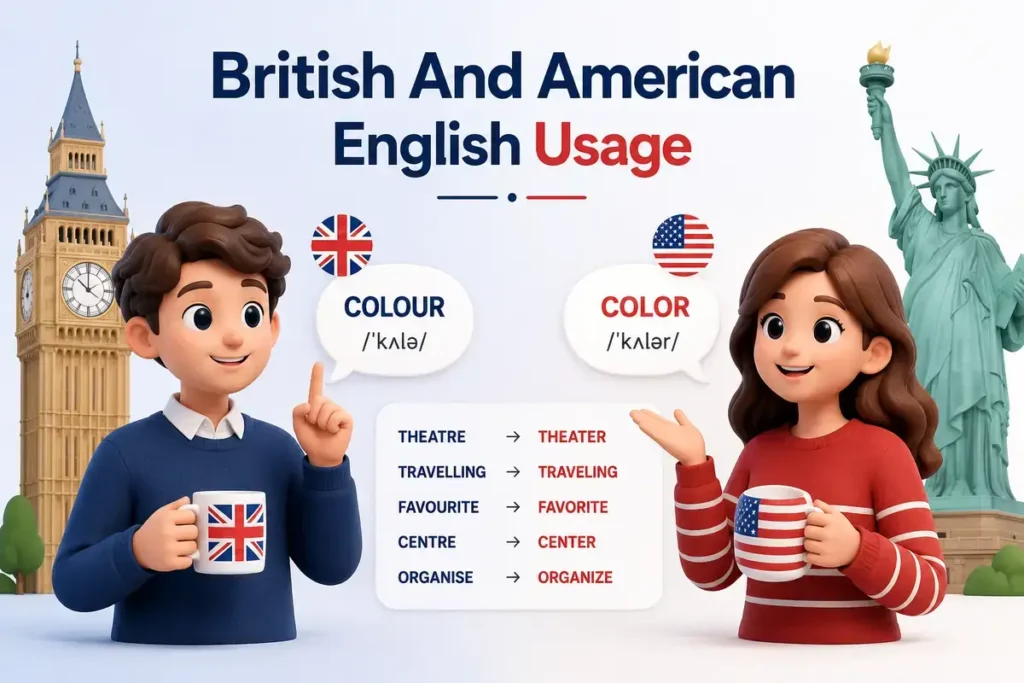
British And American English Usage
There is no major spelling difference between American English and British English for these words.
Both regions use:
Doubt as the normal modern word.
Dought as a historical or literary term.
The difference is frequency, not spelling.
American English
In American English, doubt appears regularly in conversation and writing.
Examples.
- I doubt that will happen.
- There is no doubt about her skills.
British English
British speakers also use doubt in the same way.
Examples.
- I doubt he remembers.
- Without a doubt, it was the right choice.
Canadian And Australian English
Canadian and Australian English follow the same pattern.
Doubt is common.
Dought remains a rare historical word.
Real Life Examples Of Doubt
Because doubt is the word people use today, seeing examples will help you understand its natural usage.
Daily Conversation
- I doubt we will finish before dinner.
- She had doubts about moving to another city.
- There is no doubt that he cares about his family.
- I doubt my phone battery will last all day.
- Do you doubt my ability to complete this task?
Workplace Examples
- I have no doubt that the team can complete the project.
- The manager doubted the accuracy of the report.
- She expressed doubt about the deadline.
- The results removed any doubt about the strategy.
- I doubt the client will approve the first version.
Email Examples
- I have some doubt regarding the information provided.
- Without a doubt, your contribution helped the team succeed.
- I doubt there will be any delays after this update.
Academic Writing Examples
- Researchers often doubt claims that lack strong evidence.
- The study leaves little doubt about the importance of exercise.
- Historians sometimes debate and doubt older interpretations.
Journalism Examples
- Experts doubt the accuracy of the original report.
- The investigation raised new doubts about the decision.
Social Media Examples
- No doubt this was one of the best moments of the year.
- I doubt anyone expected this result.
Real Life Examples Of Dought
Since dought is uncommon, examples mainly appear in historical settings.
- The knight dought defend the kingdom.
- The hero dought complete the difficult journey.
- Ancient writers praised warriors who dought show great courage.
- The poem describes a leader who dought overcome every enemy.
- The legend tells of a warrior who dought protect his people.
Modern writers usually replace these sentences with words like:
- Could.
- Was able to.
- Had the strength to.
- Had the courage to.
For example.
Old style.
The warrior dought protect the village.
Modern style.
The warrior was able to protect the village.
Etymology And Word Origin
Understanding the history behind these words explains why they look similar but mean different things.
Origin Of Doubt
The word doubt comes from the Latin word dubitare, meaning to hesitate or question.
It entered English through Old French.
Over time, the pronunciation changed while the spelling kept the letter b to show its connection to Latin roots.
This is common in English.
Many words keep letters from their original language even after pronunciation changes.
Examples.
- Debt from Latin roots.
- Subtle from Latin roots.
- Doubt from Latin roots.
Origin Of Dought
The word dought comes from Old English.
It was connected with ideas of:
- Strength.
- Ability.
- Power.
- Courage.
The word was once used more often in heroic writing, especially when describing warriors and great deeds.
As English changed, common words like could, can, and able replaced it.
Today, dought survives mainly as a historical word.
Spelling Rules And Memory Tips
Remembering these words becomes easier when you connect spelling with meaning.
Remember Doubt With The Silent B
Think:
Doubt has a hidden b but a clear meaning.
The b stays in spelling but disappears in pronunciation.
Remember Dought As An Old Word
Think:
Dought belongs to old stories.
If you see it in a medieval poem or historical text, it probably means strength or ability.
The Simple Difference
Use this rule:
Doubt means uncertainty.
Dought means ability.
Most of the time, you will write doubt.
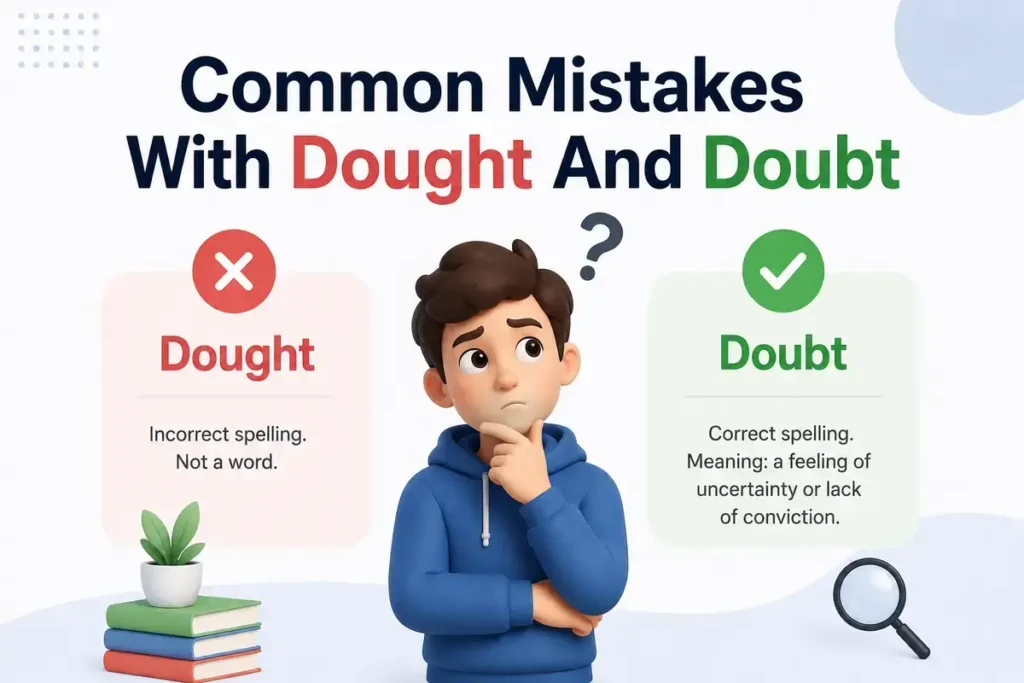
Common Mistakes With Dought And Doubt
Mistake One Using Dought For Uncertainty
Incorrect.
I dought his answer.
Correct.
I doubt his answer.
The correct word for uncertainty is doubt.
Mistake Two Thinking Dought Is A Modern Alternative
Incorrect.
Dought is another spelling of doubt.
Correct.
Dought is an old English word with a different meaning.
Mistake Three Pronouncing The B In Doubt
Incorrect.
I b doubt his story.
Correct.
I doubt his story.
Mistake Four Using Dought In Everyday Writing
Incorrect.
I dought this plan will work.
Correct.
I doubt this plan will work.
Most readers will find dought confusing outside historical contexts.
Related Words And Frequently Confused Terms
Understanding related words helps you build a stronger vocabulary and avoid mistakes with similar looking terms.
Words Related To Doubt
Doubtful
Doubtful means uncertain or unlikely.
Examples.
- I am doubtful about the final result.
- The weather looks doubtful for tomorrow’s event.
Doubting
Doubting describes the action of questioning something.
Examples.
- He is doubting his original decision.
- She spent hours doubting the plan.
Undoubtedly
Undoubtedly means something is certain or clearly true.
Examples.
- She is undoubtedly talented.
- This is undoubtedly one of the best options.
Question
A question asks for information, but doubt questions something because of uncertainty.
Example.
I have a question about the schedule.
I doubt the schedule will work.
Words Related To Dought
Because dought is an old word, its related forms are rarely used today.
Modern alternatives include:
- Able.
- Capable.
- Strong.
- Powerful.
- Brave.
- Courageous.
- Skilled.
These words express the same general ideas that dought once carried.
Opposites Of Doubt
The opposite of doubt is certainty.
Related opposite words include:
- Confidence.
- Trust.
- Belief.
- Assurance.
- Certainty.
Examples.
I have confidence in the team.
There is no doubt about her ability.
Opposites Of Dought
The opposite of dought would describe weakness or inability.
Examples.
- Weak.
- Powerless.
- Unable.
- Incapable.
Idioms And Expressions With Doubt
English speakers use many common phrases with doubt.
No Doubt
Meaning: Something is certainly true.
Example.
No doubt she will succeed.
Without A Doubt
Meaning: Completely certain.
Example.
He is without a doubt the best player on the team.
Beyond Doubt
Meaning: Proven or completely certain.
Example.
The evidence proved his innocence beyond doubt.
Doubt Yourself
Meaning: To lose confidence in your own abilities.
Example.
Do not doubt yourself before trying something new.
A related grammar guide is Inbalance Or Imbalance Which Word Is Correct 2026 Guide.
Expert Editor’s Note
Professional editors pay close attention to meaning, not just spelling.
When reviewing a sentence with doubt, editors check if the writer means uncertainty, hesitation, or questioning. In almost every modern context, doubt is the correct and natural choice.
Dought is not a spelling mistake, but it is a historical word. Modern dictionaries include it mainly because of its importance in older English texts.
For everyday writing, academic work, business communication, and online content, professional editors recommend using clear modern alternatives.
Use:
- Doubt when you mean uncertainty.
- Able or capable when you mean strength or skill.
- Dought only when discussing historical language.
A good writer does not choose rare words just because they look interesting. A good writer chooses words that communicate clearly.
FAQs About Dought Vs Doubt
Is Dought A Misspelling Of Doubt?
No. Dought is a real but very rare English word. It is an old word that means strength, courage, or ability. Doubt is the modern word used for uncertainty or questioning something.
What Is The Correct Spelling Doubt Or Dought?
The correct spelling depends on the meaning. Use doubt when you mean uncertainty. Use dought only when referring to an old English word connected with strength or ability.
Why Is The B Silent In Doubt?
The b in doubt is silent because the spelling comes from older language roots. English kept the letter to show its connection with the Latin word dubitare, even though pronunciation changed over time.
Is Dought Used In Modern English?
Dought is rarely used in modern English. You may find it in old poems, medieval writing, or historical discussions. Most modern writers use words like able, capable, or strong instead.
How Do You Pronounce Doubt?
Doubt is pronounced /daʊt/. It sounds like dout, and the letter b is silent. Many learners make mistakes by trying to pronounce every written letter.
Can Doubt Be A Verb And A Noun?
Yes. Doubt can work as both a noun and a verb. As a noun, it means uncertainty. As a verb, it means to question or lack belief in something.
What Does Dought Mean In Old English?
In Old English, dought described someone who was strong, capable, or brave. It was often used in heroic writing to describe warriors and their achievements.
Which Word Should English Learners Use Most Often?
English learners should focus on doubt because it appears frequently in modern speech and writing. Dought is mainly useful for understanding historical texts rather than everyday communication.
Conclusion
The difference between dought vs doubt is simple once you understand their meanings.
Doubt is the correct modern word for uncertainty, hesitation, or questioning something. It works as both a noun and a verb and appears in everyday conversations, professional writing, and academic work.
Dought is a rare historical word connected with strength, courage, and ability. It is not a modern replacement for doubt and should only be used in historical or literary contexts.
The biggest mistake is assuming that similar spelling means similar meaning. English has many words that look alike but carry completely different ideas.
When you are unsure, remember this simple rule:
Doubt questions reality. Dought describes old fashioned strength.
Choosing the right word is not about using the most unusual word. It is about making your meaning clear.

Editorial Reviewer & Proofreader
Grace Mitchell reviews Gramlify’s articles for clarity, consistency, and readability. She is passionate about creating accurate, approachable content that helps English learners build confidence.
1 thought on “Dought Vs Doubt Which Word Is Correct 2026 Guide”