
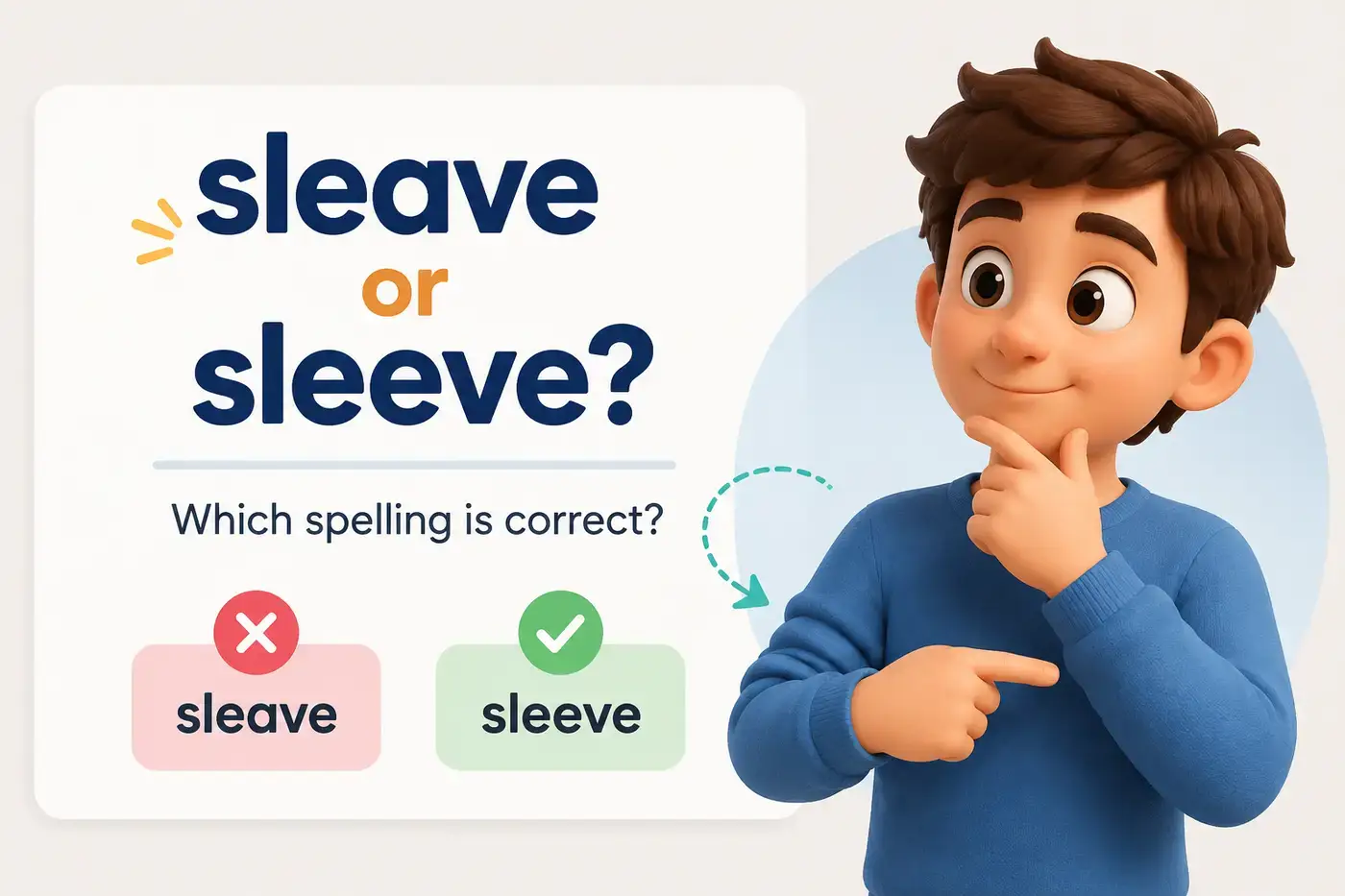
Have you ever typed sleave or sleeve and stopped to wonder if both words are correct? You’re not alone. Thousands of English learners and even native speakers second guess this pair because one word appears in everyday writing while the other occasionally shows up in literature or online discussions. At first glance they seem like simple spelling variants, but they are not.
The short answer is that sleeve is the correct word in almost every modern situation. It refers to the part of a shirt, jacket, dress, or another garment that covers the arm. Sleave, on the other hand, is an old English word that survives mainly in historical texts and Shakespeare. It is not a misspelling of sleeve, but it is rarely used in modern English.
This confusion often happens because the words differ by only one letter and have similar pronunciations. Spell checkers may not always explain the difference, leaving writers unsure which form belongs in their sentence.
In this guide you’ll learn the meaning of both words, why people confuse them, when each one is appropriate, and how to avoid one of the most common spelling mistakes involving this word pair.
Suggested Internal Link: Commonly Confused English Words Every Writer Should Know.
Need another quick comparison? Read Sentence Or Sentance Which Spelling Is Correct 2026 Guide.
Quick Answer
Sleeve is the correct spelling in modern English when referring to the part of clothing that covers the arm. Sleave is a rare and archaic English word meaning untwisted silk or thread. Unless you’re discussing literature or historical English, use sleeve.
Sleave Or Sleeve Comparison Table
| Feature | Sleeve | Sleave |
|---|---|---|
| Correct modern spelling | Yes | Rarely |
| Meaning | Part of a garment that covers the arm | Fine untwisted silk or thread |
| Part of speech | Noun | Noun |
| Modern usage | Very common | Archaic and uncommon |
| Formal writing | Yes | Only in historical or literary contexts |
| Everyday conversation | Yes | Almost never |
| Common mistake | Sometimes misspelled as sleave | Often mistaken for sleeve |
| Example | She rolled up her sleeve. | The poet mentioned sleave in an old text. |
What Does Sleeve Mean
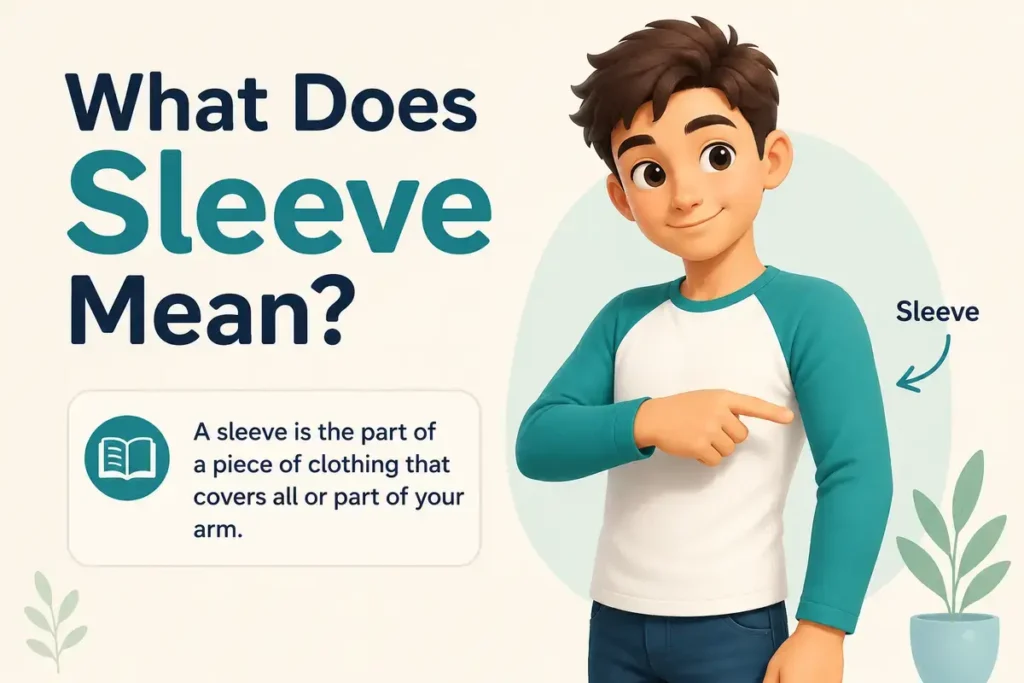
A sleeve is the part of a piece of clothing that covers all or part of the arm. It appears on shirts, jackets, sweaters, dresses, coats, uniforms, and many other garments.
The word also appears in several everyday expressions and technical terms.
Simple Definition
A sleeve is the fabric attached to a garment that fits over the arm.
Common Uses Of Sleeve
People use sleeve in everyday English to talk about clothing, fashion, sports, and even figurative expressions.
Examples.
- She rolled up her sleeve before washing the dishes.
- His jacket has short sleeves.
- The tailor shortened the sleeves on my coat.
- Please keep your phone inside the protective sleeve.
- He always has a surprise up his sleeve.
Notice that the last example uses an idiom. It means someone has a hidden plan or secret idea.
Sleeve In Different Contexts
Daily conversation.
My shirt sleeve got caught on the door.
Workplace.
Please wear long sleeves while working in the laboratory.
Fashion.
Puff sleeves are popular again this season.
Sports.
The player wore a compression sleeve during the game.
Technology.
Store the laptop inside its protective sleeve before traveling.
What Does Sleave Mean
Sleave is an old English noun that refers to fine untwisted silk or thread. The word is considered archaic, which means it belongs to an older stage of English and rarely appears in modern writing.
Today, most people encounter sleave only while reading classic literature, historical works, or Shakespeare.
One of its best known appearances is in Macbeth, where Shakespeare uses the phrase the sleave of care to describe peaceful sleep that untangles the worries of the mind.
Simple Definition
Sleave means fine untwisted silk or thread. In modern English it is an archaic word with very limited use.
Examples Of Sleave
- The old manuscript mentioned sleave used in fine weaving.
- Scholars explained the meaning of sleave in Shakespeare’s writing.
- The museum displayed fabrics made from delicate sleave.
- The editor added a note explaining the archaic word sleave.
- Most modern dictionaries label sleave as an old or literary term.
Which One Is Correct
The correct choice depends on what you want to say.
If you’re talking about clothing, fashion, uniforms, jackets, shirts, dresses, or anything that covers the arm, the correct spelling is sleeve.
Examples.
✔ She folded her sleeve before painting.
✔ He spilled coffee on his shirt sleeve.
Use sleave only when discussing historical English, classic literature, or its original meaning of fine untwisted silk or thread.
Examples.
✔ Shakespeare used the word sleave in Macbeth.
✔ The dictionary marks sleave as an archaic noun.
For almost every email, article, school assignment, workplace document, or everyday conversation, sleeve is the word you need. Choosing sleave in those situations will usually be treated as a spelling mistake rather than an alternative spelling.
Why People Confuse Sleave And Sleeve
The confusion comes from their nearly identical spelling. Only one letter separates the two words, and they sound almost the same when spoken. Since sleeve is a common everyday word, many people assume sleave is simply an alternative spelling.
It isn’t.
Here are the main reasons people mix them up.
Similar Spelling
The words differ by only one letter.
Sleeve
Sleave
When reading quickly or typing in a hurry, it’s easy to replace one with the other.
Similar Pronunciation
The pronunciation is very close.
Most native speakers won’t notice a difference in casual conversation. As a result, people often spell the word from memory instead of checking a dictionary.
Typing Mistakes
The letters a and e sit close together on a keyboard. A simple typing slip can turn sleeve into sleave.
Fortunately, most spell checkers recognize this mistake and suggest the correct spelling.
Old Literature
Some readers discover sleave while reading Shakespeare or historical books. They later remember seeing the word but forget that it belongs to older English.
Internet Confusion
Some websites incorrectly describe sleave as another spelling of sleeve.
Modern dictionaries disagree. They list sleave as an archaic noun with a completely different meaning.
Key Differences Between Sleave And Sleeve
| Feature | Sleeve | Sleave |
|---|---|---|
| Meaning | Part of clothing that covers the arm | Fine untwisted silk or thread |
| Modern English | Yes | Rarely used |
| Part of speech | Noun | Noun |
| Everyday writing | Very common | Almost never |
| Literature | Common | Mainly historical texts |
| Dictionary status | Standard English | Archaic English |
The easiest way to remember the difference is simple.
If you’re talking about clothing, choose sleeve.
If you’re reading Shakespeare or studying old English vocabulary, you may come across sleave.
Grammar Explanation
Although these words have different meanings, they share one grammatical feature.
Both are countable nouns.
Examples.
A sleeve.
Two sleeves.
A sleave.
Several sleaves.
The difference lies in how often they appear.
Sleeve In A Sentence
The noun sleeve usually refers to clothing or protective covers.
Examples.
- Her sweater has long sleeves.
- I rolled up my sleeve before cooking.
- The tailor repaired the torn sleeve.
- This laptop sleeve protects the device from scratches.
Sleave In A Sentence
The noun sleave appears almost entirely in historical or literary writing.
Examples.
- The glossary explained the meaning of sleave.
- Shakespeare used sleave in a poetic sense.
- Historians discussed the production of sleave in medieval textiles.
Most English learners will never need to use sleave in everyday writing.
Spelling Rules
The spelling difference is easier to understand once you know the history of the words.
Sleeve Follows Standard Modern English
The spelling sleeve has remained stable for centuries.
The double ee represents the long e sound found in words like these.
- Tree.
- Free.
- Green.
- Sleeve.
Sleave Is Not A Misspelling
Many people assume sleave is simply an incorrect spelling of sleeve.
It is actually an independent word with its own history and meaning.
This is why dictionaries include both entries even though one is rarely used today.
A related grammar guide is Feel Or Feal Which Spelling Is Correct 2026 Guide.
Pronunciation Guide
Both words are pronounced almost the same in modern English.
Sleeve
IPA
American English
/sliːv/
Syllables
Sleeve.
Stress
Single syllable.
Sleave
IPA
American English
/sliːv/
Syllables
Sleave.
Stress
Single syllable.
Common Pronunciation Mistakes
There are very few pronunciation mistakes because both words share the same sound.
The challenge is choosing the correct spelling after hearing the word.
Reading the surrounding sentence usually makes the meaning obvious.
Word Origin And Etymology
Understanding where these words came from explains why they look similar.
Sleeve
The word sleeve comes from Old English slēfe.
Its meaning has stayed remarkably consistent for hundreds of years. It has always referred to the part of clothing that covers the arm.
As clothing styles changed, the word remained part of everyday English.
Sleave
The word sleave also traces back to older forms of English.
It referred to fine untwisted silk or thread used in weaving and textile production.
Over time the textile industry changed, and the word gradually disappeared from everyday speech.
Today it survives mostly in literary works and historical dictionaries.
British American Canadian And Australian English
There is no spelling difference across the major English speaking countries.
People in the United States, the United Kingdom, Canada, Australia, and New Zealand all use sleeve when referring to clothing.
Likewise, sleave remains an archaic literary word in every major variety of English.
Unlike words such as color and colour or center and centre, this pair is not a regional spelling difference.
Real Life Examples
Seeing these words in context makes the difference much easier to remember.
Daily Conversation
- I tore my sleeve while climbing the fence.
- She pushed up her sleeves before washing the car.
- His jacket sleeve caught on the chair.
- Roll your sleeves up before you start painting.
Workplace
- Employees must wear long sleeves inside the laboratory.
- The uniform sleeve displays the company logo.
- The mechanic pulled his sleeve away from the machine.
Emails
- Please wear long sleeves during tomorrow’s site visit.
- I noticed the right sleeve of the sample jacket needs adjustment.
Academic Writing
- Researchers studied clothing styles with wide sleeves.
- The manuscript includes the archaic word sleave.
Literature
- Shakespeare used sleave in Macbeth.
- The editor explained the meaning of sleave in a footnote.
Journalism
- The designer introduced oversized sleeves in the new collection.
- The exhibition displayed garments with embroidered sleeves.
Social Media
- I spilled coffee all over my sleeve today.
- These sweater sleeves are so comfortable.
- I finally found the perfect laptop sleeve.
- That old novel taught me the meaning of sleave.
- I had never seen sleave outside Shakespeare before.
Common Mistakes
Most mistakes happen because people assume sleave is another spelling of sleeve. It isn’t. Here are the errors editors see most often.
Using Sleave For Clothing
Incorrect.
✘ She rolled up her sleave.
Correct.
✔ She rolled up her sleeve.
The word refers to the arm covering on a garment, so sleeve is the only correct choice.
Thinking Sleave Is Modern English
Many writers believe sleave is simply an older spelling that still works today.
It doesn’t.
Outside discussions of literature or language history, sleave looks like a spelling mistake.

Confusing Sleave With Sleeve In Shakespeare
Some readers find the word sleave in Macbeth and assume Shakespeare misspelled sleeve.
He didn’t.
He used an entirely different word with a different meaning.
Trusting Every Online Source
Not every website explains the difference accurately.
Reliable dictionaries consistently define sleeve as the clothing term and sleave as an archaic noun referring to fine untwisted silk or thread.
Memory Tricks
Simple memory tricks make this pair easy to remember.
Think About Clothing
A shirt has two ee letters in sleeve, just like it has two sleeves.
The double ee can remind you of the pair of sleeves on most shirts.
Remember The Rare Letter
The a in sleave stands for ancient.
If you see the letter a, think of an ancient word that belongs in historical writing.
Use One Quick Question
Ask yourself.
Am I talking about clothing?
If the answer is yes, the correct spelling is always sleeve.
Related Words
Learning related vocabulary helps you remember the correct spelling and expands your English skills.
Words Related To Sleeve
- Cuff.
- Collar.
- Jacket.
- Shirt.
- Coat.
- Garment.
- Fabric.
- Pocket.
Synonyms In Some Contexts
Although sleeve has no perfect synonym, these words may appear in related discussions.
- Arm covering.
- Garment section.
- Fabric covering.
Related Textile Words
These words connect with the historical meaning of sleave.
- Silk.
- Thread.
- Yarn.
- Fiber.
- Weaving.
- Textile.
Frequently Confused Words
- Sleave and sleeve.
- Cloth and clothes.
- Cloth and clothe.
- Wear and ware.
- Sew and sow.
Expert Editor’s Note
Professional editors recommend using sleeve in almost every situation.
Modern dictionaries, style guides, and grammar references treat sleeve as the standard spelling for the part of clothing that covers the arm.
The word sleave still appears in respected dictionaries because it has historical value, but it belongs mainly in discussions about Shakespeare, old literature, or the history of English.
If you’re writing an email, blog post, school assignment, business document, or social media caption, choose sleeve without hesitation.
Good writing depends on clarity. Using the familiar modern spelling helps readers understand your meaning immediately.
Frequently Asked Questions
Is Sleave A Correct Word?
Yes. Sleave is a real English word, but it is archaic. It refers to fine untwisted silk or thread and appears mostly in historical writing and classic literature.
Is Sleeve The Correct Modern Spelling?
Yes. Sleeve is the correct spelling for the part of a shirt, jacket, sweater, or another garment that covers the arm. It is the standard word in modern English.
Why Do People Spell Sleeve As Sleave?
The words look almost identical and sound the same. Many people assume sleave is another spelling of sleeve, but it is actually a different word with a different meaning.
Is Sleave Used In Shakespeare?
Yes. Shakespeare used sleave in Macbeth in the famous expression the sleave of care. The word reflects older English rather than modern spelling.
Do British And American English Spell Sleeve Differently?
No. British English, American English, Canadian English, and Australian English all use sleeve for clothing. There is no regional spelling difference.
Can I Use Sleave In Everyday Writing?
You should avoid it unless you’re discussing historical language or literature. In modern communication, readers will usually see sleave as a spelling mistake.
How Can I Remember The Difference?
Think about clothing. Shirts have sleeves, not sleaves. Save sleave for old books and Shakespeare.
A related grammar guide is Dysregulated Vs Disregulated Which Spelling Is Correct 2026.
Conclusion
The answer to sleave or sleeve is straightforward.
Sleeve is the correct spelling in modern English. It refers to the part of a garment that covers the arm and appears in everyday conversation, professional writing, education, and publishing.
Sleave is also a real word, but it belongs to older English. It means fine untwisted silk or thread and appears mainly in historical texts and Shakespeare.
The biggest mistake is treating sleave as an alternative spelling of sleeve. They are different words with different meanings and different uses.
When writing for modern readers, choose sleeve every time unless you’re intentionally referring to the historical word. That one simple rule will keep your writing clear, accurate, and natural.

Editorial Reviewer & Proofreader
Grace Mitchell reviews Gramlify’s articles for clarity, consistency, and readability. She is passionate about creating accurate, approachable content that helps English learners build confidence.
1 thought on “Sleave Or Sleeve Which Spelling Is Correct 2026”