
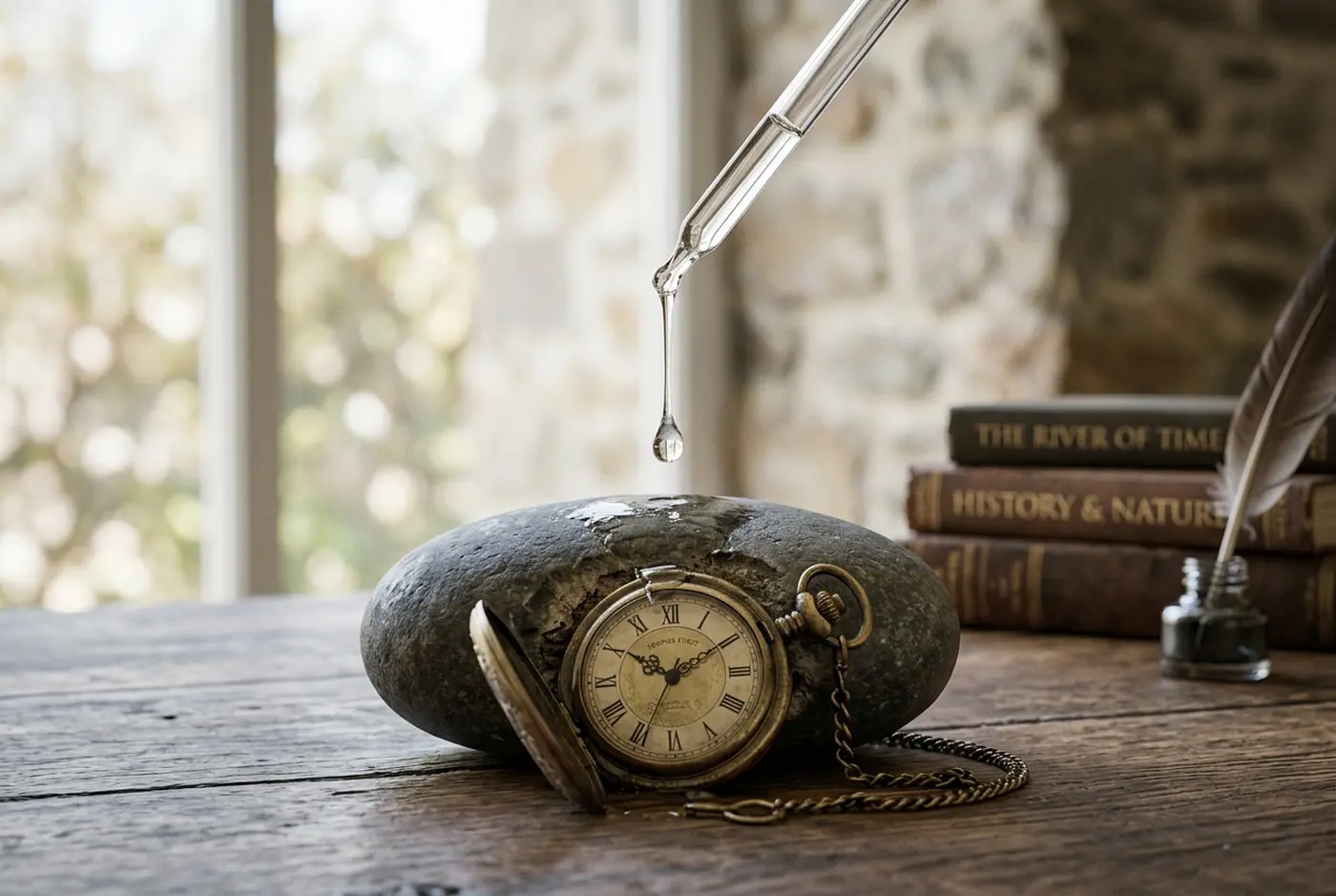
A metaphor for time can turn an ordinary sentence into something vivid and memorable. Instead of simply saying that time passes quickly, you might describe it as a river that never stops flowing. Instead of saying that life is short, you might call time a candle burning at both ends. These images help readers feel the meaning behind your words rather than just understand it.
Time is invisible. We can’t hold it in our hands, pause it whenever we want, or watch it move like a physical object. However, we can describe its effects through familiar things such as rivers, clocks, roads, seasons, shadows, and storms. That’s why metaphors about time appear in everyday conversations, poems, novels, speeches, song titles, and personal reflections.
The best metaphor depends on what you want to express. Time can feel like a thief when precious moments slip away, a teacher when experience changes us, or a gift when we appreciate the present. Each comparison carries a different emotion and helps communicate a particular idea.
In this guide, you’ll discover powerful metaphors for time, learn what they mean, explore examples in different contexts, and understand how to create your own. Whether you’re writing an essay, a poem, a heartfelt message, or a social media caption, you’ll find practical ways to make your words more expressive.
Internal link suggestion: Connect this introduction to an existing article about [metaphors and similes with examples] on your website.
You may also want to read Metaphor For Happy With Meanings And Creative Examples.
Quick Answer
A metaphor for time describes time by comparing it directly to something else without using words such as like or as. Common examples include time is a river, time is a thief, and time is a teacher. These metaphors express how time flows, takes moments away, or teaches us through experience.
What Is a Metaphor for Time
A metaphor for time is a figure of speech that describes time as something familiar, physical, or emotionally meaningful. It helps people understand an abstract idea by connecting it to an image they already know.
For example, the sentence Time is a river compares time to a flowing river. It suggests that time keeps moving forward and carries moments away. The sentence doesn’t mean that time is literally made of water. Instead, it creates a mental picture that makes the idea easier to understand.
Consider these examples.
- Time is a thief. Time seems to steal our youth and precious moments.
- Time is a teacher. Life experience helps us learn as time passes.
- Time is a river. Moments flow forward and cannot easily be recovered.
- Time is a bridge. Time connects our past experiences with our future.
- Time is a candle. Our time is limited and gradually runs out.
Each metaphor offers a different way to think about the same subject. Some suggest loss or urgency, while others express growth, hope, or change.
Why Writers Use Metaphors for Time
Writers use time metaphors to make their ideas more vivid and emotionally engaging. Instead of explaining every detail, a single image can communicate a complicated feeling.
For instance, saying I have very little time left gives the reader a straightforward fact. Saying My candle is burning low creates a stronger sense of urgency and makes the reader imagine a flame nearing its end.
Metaphors can also help people explain feelings that are difficult to describe directly. Someone who misses their childhood might say that time is a thief. A person who has grown wiser after a difficult experience might call time a teacher.
The image you choose shapes the message your reader receives.
The Most Powerful Metaphors for Time
Some metaphors work in almost any setting, from everyday conversation to creative writing. Others are better suited to poetry, emotional messages, or thoughtful essays.
1. Time Is a River
This metaphor presents time as a continuous flow. Just as a river moves downstream, moments move forward and become part of the past.
Example: Time is a river, carrying yesterday into the distance.
Best for: Poems, reflective essays, and writing about change.
2. Time Is a Thief
This metaphor describes time as something that steals moments, youth, opportunities, or years from our lives.
Example: Time is a thief that takes our childhood before we realize its value.
Best for: Nostalgia, regret, aging, and emotional writing.
3. Time Is a Teacher
This metaphor suggests that experience helps us gain wisdom. As the years pass, we learn from mistakes, relationships, and unexpected events.
Example: Time is a patient teacher that reveals lessons we once ignored.
Best for: Personal growth, life advice, speeches, and reflective writing.
4. Time Is a Journey
This metaphor compares life and the passage of time to traveling along a road. The past becomes the road behind us, and the future becomes the path ahead.
Example: Time is a journey, and every year takes us somewhere new.
Best for: Motivational writing, life stories, and speeches.
5. Time Is a Candle
A candle gradually burns down until its flame goes out. This image suggests that our time is limited and deserves careful use.
Example: Time is a candle, and every passing hour shortens its flame.
Best for: Poems, mortality, urgency, and meaningful life reflections.
These examples aren’t the only ways to describe time. Their value comes from matching the image to the message you want to share.
Metaphors for Time That Show How Quickly It Passes
Sometimes an hour feels endless. At other times, an entire year seems to disappear in a moment. Metaphors can capture this strange experience and help explain why time feels different in different situations.
Time Is a Fleeting Shadow
A shadow moves and changes throughout the day. This makes it a useful image for time that passes quietly and cannot be held in place.
Example: Time is a fleeting shadow that slips across the walls of our lives.
This metaphor works well in reflective writing because it suggests that time can disappear without drawing attention to itself.
Time Is a Shooting Star
A shooting star appears briefly before vanishing from view. Comparing time to one suggests that certain moments are beautiful but short lived.
Example: Our summer together was a shooting star across the night of our lives.
This image is especially useful for describing a memorable vacation, a brief romance, or a happy period that ended too soon.
Time Is a Melting Ice Cube
An ice cube slowly loses its shape as it melts. This metaphor makes the passing of time feel visible and immediate.
Example: Time is a melting ice cube, and every second leaves less of it behind.
Use this image when writing about deadlines, limited opportunities, or the need to act before an opportunity disappears.
Time Is a Passing Train
A train moves along its tracks and eventually leaves the station. This image suggests that opportunities and moments can pass by if we aren’t ready to take them.
Example: Time is a passing train, and hesitation can leave us standing on the platform.
This metaphor suits motivational writing and discussions about taking chances. It creates a clear picture of movement, choice, and missed opportunities.
Time Is a Falling Leaf
A leaf drifts from a tree as the seasons change. The image can represent the quiet passing of time, the arrival of autumn, or the natural process of aging.
Example: Time is a falling leaf, turning slowly before returning to the earth.
Unlike the image of a thief, this metaphor can make change feel peaceful rather than painful.
Metaphors for Time That Express Growth and Change
Time doesn’t simply take things away. It also gives people room to grow, heal, discover new ideas, and become more confident. Positive metaphors highlight this side of time.
Time Is a Garden
A garden grows through patience and care. Seeds need time to develop, and flowers don’t bloom simply because someone wishes them to.
Example: Time is a garden where patience allows our dreams to bloom.
This metaphor reminds readers that meaningful progress often happens gradually. It’s useful for writing about education, personal development, relationships, and long term goals.
Time Is a Sculptor
A sculptor shapes a piece of stone into something new. In the same way, experiences can gradually shape a person’s character, beliefs, and values.
Example: Time is a sculptor, carving wisdom into the rough stone of youth.
The metaphor suggests that personal growth can involve both creation and removal. As people gain experience, they may develop new strengths and let go of old habits.
Time Is a Season
Seasons change naturally, bringing periods of growth, warmth, rest, and renewal. Comparing time to a season suggests that life moves through different stages.
Example: Time is a season, and every chapter of life has its own weather.
This metaphor is particularly effective when describing childhood, adulthood, recovery, or a fresh start. It also reminds readers that a difficult period doesn’t have to last forever.
Time Is a Winding Staircase
A staircase leads upward or downward one step at a time. This image suggests that progress takes movement and effort, even when the destination remains out of sight.
Example: Time is a winding staircase, leading us toward lessons we cannot see from below.
Use this metaphor when describing gradual improvement, career development, or the process of learning a difficult skill.
Time Is a River That Shapes Stone
A river can gradually change the shape of stone through repeated movement. This image captures the quiet power of repeated experiences.
Example: Time is a river that shapes even the hardest stone.
The metaphor works well when discussing resilience, patience, and emotional growth. It suggests that small changes can have lasting effects.
Metaphors for Time That Express Loss and Regret
Time can feel painful when we think about missed chances, lost relationships, or moments we wish we could revisit. These metaphors express that feeling without requiring a long explanation.
Time Is a Thief in the Night
This variation makes time seem quiet and secretive. It suggests that important moments can disappear before we recognize their value.
Example: Time is a thief in the night, leaving memories where our childhood once stood.
Time Is a Fading Photograph
A photograph preserves a moment, but its colors can fade with age. This metaphor connects the passage of time with memories that gradually become less clear.
Example: Time is a fading photograph, softening the edges of yesterday.
This image suits personal essays, family stories, and writing about nostalgia.
Time Is an Unopened Letter
An unopened letter can contain a message that arrives too late or remains unknown. As a metaphor, it suggests missed opportunities, unspoken feelings, and the uncertainty of the future.
Example: Time is an unopened letter filled with chances we may never discover.
It works particularly well in fiction and poetry because it creates curiosity without explaining every detail.
Time Is a Door That Closes
A closing door suggests that an opportunity or stage of life is ending. It can express regret, but it can also make room for a new beginning.
Example: Time is a door that closes gently on the moments we cannot repeat.
This metaphor is useful when writing about graduation, retirement, moving away, or the end of a relationship.
Time Is an Eraser
An eraser removes marks from a page. This metaphor suggests that the passing years can soften memories, reduce the pain of old experiences, or make certain details disappear.
Example: Time is an eraser, slowly softening the marks of yesterday.
The image can carry a hopeful meaning when discussing healing. However, it can also express sadness when a person fears forgetting someone important.
Metaphors for Time That Inspire Action
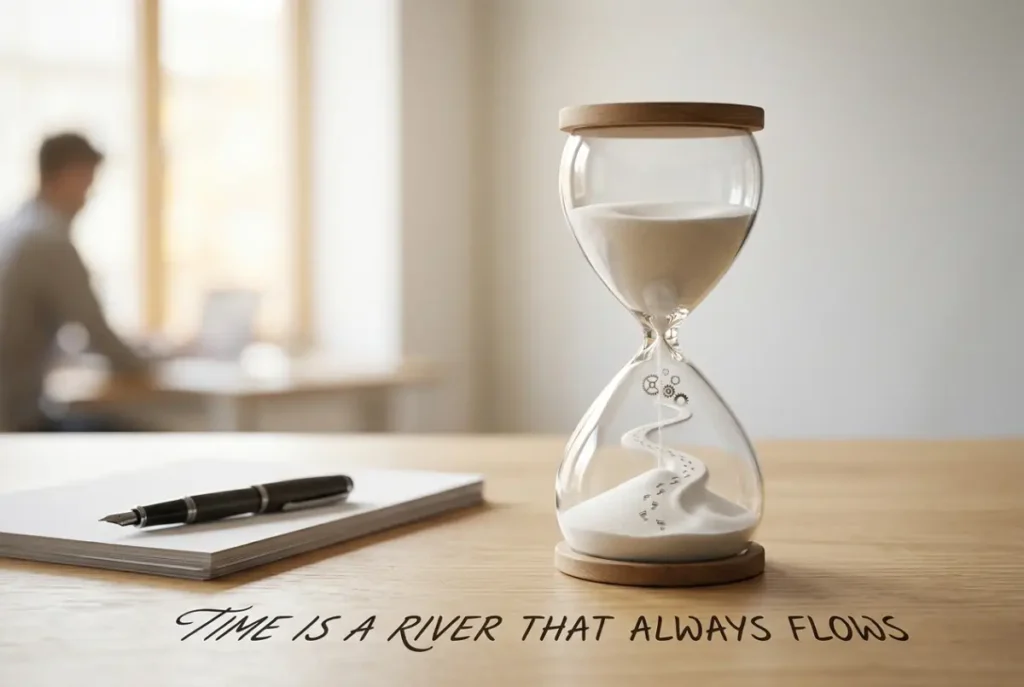
Some metaphors remind us that time is limited and that our choices matter. They’re useful in motivational speeches, personal development articles, workplace writing, and everyday advice.
Time Is a Currency
Money can be earned, spent, saved, or wasted. Comparing time to currency encourages people to think carefully about how they use their hours.
Example: Time is a currency, and every decision determines where we spend it.
This metaphor is particularly effective in productivity writing because it connects an abstract resource to something people understand clearly.
Time Is a Bank Account
A bank account holds a limited amount of money unless more is added. A metaphorical time account suggests that every day offers a finite number of hours.
Example: Time is a bank account that receives the same daily deposit for everyone.
Unlike money, lost hours cannot be replenished. This makes the image useful for discussions about priorities, rest, and work life balance.
Time Is a Race
A race involves movement toward a finish line. This metaphor presents time as something people feel pressured to keep up with.
Example: Time is a race, and the world keeps moving the finish line.
This image can express ambition and urgency. It can also highlight the stress of comparing your progress with other people’s achievements.
Time Is an Open Door
An open door represents access to possibilities. Comparing time to an open door suggests that each new day can bring fresh choices and opportunities.
Example: Time is an open door, inviting us to step into something new.
This is a hopeful metaphor for a new year, a career change, or the beginning of a personal project.
Time Is a Match Burning Down
A lit match burns quickly and cannot stay alight forever. This metaphor emphasizes urgency and the need to act before an opportunity disappears.
Example: Time is a burning match, so don’t waste its brief light.
It’s stronger and more intense than the candle metaphor because a match suggests a shorter period and a more immediate deadline.
Metaphors for Time in Everyday Conversation
You don’t need to write poetry to use a metaphor. People use figurative language in everyday conversations to explain busy schedules, changing relationships, personal memories, and the feeling that life moves too quickly.
Here are ten natural examples you can use or adapt.
- Time slipped through my fingers. The moment passed before I could fully enjoy it.
- The weekend flew by. The weekend seemed to end much sooner than expected.
- Time stood still when I saw her. The moment felt so powerful that I barely noticed anything else.
- The past is a closed book. What’s happened cannot be changed.
- Tomorrow is a blank page. The future offers new possibilities.
- Time is running on empty. There’s very little time or energy left.
- The years are rolling by. Life keeps moving forward.
- Time is knocking at the door. A deadline or important moment is approaching.
- My childhood is a distant shore. Childhood now feels far away.
- Time is a quiet companion. Life moves forward alongside us, even when we don’t notice it.
These expressions work because they connect an abstract idea to something familiar. They also help conversations sound more expressive without making the language difficult to understand.
How to Choose the Right Metaphor
The best metaphor depends on the emotion behind your message.
| Your purpose | A suitable metaphor | What it communicates |
|---|---|---|
| Show how quickly time passes | Time is a river | Constant movement |
| Express regret | Time is a thief | Lost moments |
| Encourage patience | Time is a garden | Gradual growth |
| Motivate action | Time is a currency | Careful use of time |
| Describe healing | Time is a gentle healer | Emotional recovery |
| Express hope | Tomorrow is a blank page | New opportunities |
| Describe aging | Time is a sculptor | Lasting change |
| Express urgency | Time is a burning match | Limited opportunity |
A useful writing tip is to choose the image before you write the sentence. If you want readers to feel hopeful, choose an image of growth or renewal. If you want them to feel the weight of regret, an image of something lost or fading may work better.
Metaphors for Time in Love and Relationships
Time plays a special role in relationships. It can bring two people closer, make old memories feel precious, or remind us how quickly a meaningful moment can pass. Romantic metaphors for time help express feelings that ordinary words sometimes struggle to capture.
These examples work well in love letters, anniversary messages, romantic poems, wedding speeches, and heartfelt captions.
Time Is a Bridge Between Two Hearts
A bridge connects places that might otherwise remain separated. This metaphor presents time as the connection that helps two people build trust, understanding, and lasting affection.
Example: Time is a bridge between two hearts, growing stronger with every shared memory.
The image suggests that love develops through everyday moments rather than grand gestures alone. It’s a good choice for writing about long distance relationships, lasting friendships, or a partnership that has survived difficult years.
Time Is the Thread That Stitches Us Together
A thread joins separate pieces of fabric to create something whole. In the same way, shared experiences can connect two people and turn separate lives into a common story.
Example: Time is the golden thread that stitches our memories into a life of love.
This metaphor works particularly well for wedding vows, anniversary cards, and messages celebrating a long relationship. It emphasizes connection and the small experiences that gradually build a strong bond.
Time Is a Love Letter
A love letter carries feelings from one person to another. This metaphor presents time as a message that reveals the depth of love through patience, care, and shared experiences.
Example: Time is a love letter written in the quiet moments we spend together.
The image is especially useful when you want to express lasting affection without relying on familiar romantic phrases.
Time Is a Dance Between Two Souls
A dance requires movement, timing, and attention to another person. This metaphor describes a relationship as something that changes and grows as two people learn to move together.
Example: Time is a dance between two souls, sometimes graceful and sometimes difficult, but always worth learning.
Use this image when writing about compromise, marriage, or the way relationships evolve. It recognizes that love isn’t always effortless, but partners can grow together through experience.
Time Is a Garden of Shared Memories
A garden grows through regular care. Comparing time to a garden suggests that relationships flourish when people invest attention, kindness, and patience in one another.
Example: Time is a garden, and every kind word plants another flower in our love story.
This metaphor offers a gentle way to describe a healthy relationship. It also reminds readers that strong connections usually develop through repeated acts of care.
Time Is a Candle We Share
A candle provides light while its flame continues to burn. This metaphor can represent the precious nature of time spent with someone you love.
Example: Time is a candle we share, and every moment together adds warmth to the room.
The image feels intimate and thoughtful. It works well for romantic writing about appreciating the present instead of assuming that every moment will last forever.
Metaphors for Time in Sadness and Healing
Time often becomes a powerful image when people face grief, disappointment, heartbreak, or major life changes. Some metaphors describe time as a source of healing. Others recognize that healing can be slow and uneven.
Time Is a Gentle Healer
This metaphor presents time as a caring presence that gradually makes emotional pain easier to carry.
Example: Time is a gentle healer, teaching the heart to live with what it cannot change.
The expression doesn’t mean that time automatically removes every painful feeling. Rather, it suggests that distance, reflection, and new experiences can help people find ways to move forward.
Time Is a Bandage Over an Old Wound
A bandage protects an injury while it heals. This metaphor suggests that time can soften emotional pain, even when the memory of the experience remains.
Example: Time is a bandage over an old wound, covering the hurt while life slowly repairs the damage.
This image is useful when describing recovery from heartbreak, disappointment, or loss. It also leaves room for the idea that some wounds need care beyond simply waiting.
Time Is a Storm That Eventually Passes
A storm can feel overwhelming while it lasts. However, it doesn’t remain at full strength forever. This metaphor compares a difficult period of life to severe weather that eventually moves away.
Example: Time is a storm that carries our darkest days toward calmer skies.
Use this image to offer comfort or hope. It works well in personal essays, encouraging messages, and speeches about resilience.
Time Is a River Carrying Grief Away
A river moves continuously, carrying objects downstream. This metaphor suggests that grief can change as life continues, even if the person or experience remains important.
Example: Time is a river carrying my grief toward a quieter shore.
The metaphor expresses gradual change rather than instant relief. It can be particularly moving in reflective writing about loss.
Time Is a Window Opening After Winter
A window lets fresh air and light enter a room. Combined with the image of winter, it creates a metaphor for new hope after a painful season.
Example: Time is a window opening after winter, letting warmth return to a room once filled with sorrow.
This metaphor works when writing about recovery, new beginnings, and the gradual return of happiness.
Metaphors for Time in Poetry and Creative Writing
Poetry often relies on metaphors because they allow a writer to communicate several ideas through a single image. A river can suggest movement, loss, renewal, and the passage of life. A clock can represent pressure, routine, or the fear of running out of time.
The strongest literary metaphors don’t simply decorate a sentence. They help establish mood, develop a theme, and give readers something meaningful to interpret.
Time Is an Ocean
The ocean suggests depth, mystery, movement, and forces larger than any individual.
Example: Time is an ocean, and our lives are small boats crossing its endless waters.
Literary effect: Makes time feel vast and beyond human control.
Time Is a Silent Witness
A witness observes events without taking part in them. This metaphor presents time as something that watches people change.
Example: Time is a silent witness to every promise we keep and every dream we abandon.
Literary effect: Creates a reflective and serious tone.
Time Is a Turning Page
A page turning signals movement from one part of a story to the next.
Example: Time is a turning page, carrying us into chapters we haven’t read.
Literary effect: Suggests change, discovery, and an unknown future.
Time Is a Lighthouse
A lighthouse guides ships through darkness. This metaphor suggests that the passage of time can give perspective on confusing experiences.
Example: Time is a lighthouse, illuminating the lessons hidden in yesterday’s fog.
Literary effect: Connects reflection with guidance and understanding.
How Metaphors Shape a Poem
Imagine that you’re writing a poem about childhood.
A simple sentence might say:
My childhood passed quickly.
The meaning is clear, but the sentence doesn’t offer much imagery.
Now consider these alternatives.
- My childhood was a paper boat drifting beyond the reach of my hands.
- My childhood was a garden that bloomed before I learned its name.
- My childhood was a summer afternoon slipping through an open window.
Each metaphor creates a different feeling. The paper boat suggests distance and helplessness. The garden suggests innocence and growth. The summer afternoon suggests warmth and a memory that ended too soon.
This is an important lesson for creative writers. Don’t choose a metaphor only because it sounds beautiful. Choose one that supports the emotion and meaning of the piece.
Metaphors for Time in Essays and Academic Writing
Metaphors aren’t limited to poetry or personal messages. They also appear in essays, journalism, history, psychology, and academic discussions. In these settings, a metaphor can help explain a complex idea, but it shouldn’t replace clear reasoning or evidence.
Time Is a Framework for Human Experience
A framework provides structure. This metaphor presents time as the structure through which people organize events, memories, and plans.
Example: Time is a framework that helps us place individual experiences within the larger story of a life.
This phrasing suits an essay about memory, history, or human development. It connects the abstract idea of time to the way people understand their experiences.
Time Is a Lens That Changes Perspective
A lens affects how something appears. In this metaphor, time changes the way people interpret past events.
Example: Time is a lens that can make yesterday’s failures appear as today’s lessons.
This is useful in reflective essays and discussions of personal growth. It suggests that the facts of an event may remain unchanged while our understanding develops.
Time Is a Measure of Change
A measure helps people track differences. This metaphor presents time as a way to observe how people, places, and societies develop.
Example: Time is a measure of change, revealing the distance between who we were and who we have become.
The expression works well in essays about history, education, social change, and aging. For formal academic writing, you should explain the specific changes you mean instead of relying on the metaphor alone.
Time Is a Limited Resource
This metaphor appears often in economics, business, and productivity discussions. It compares time to a resource that people must allocate among competing needs.
Example: Time is a limited resource, and every additional commitment reduces the hours available for other tasks.
The image can make an argument easier to follow. However, a formal paper should support claims about time use with relevant data or research when the topic requires evidence.
Time Is a Laboratory for Experience
A laboratory is a place for observation and testing. This metaphor presents life as a setting in which experience reveals what works and what doesn’t.
Example: Time is a laboratory in which our decisions are tested by their consequences.
This image can help introduce an argument about learning, behavior, or decision making. In a research paper, treat it as an explanatory comparison rather than a scientific claim.
Editorial tip: In academic writing, use metaphors to clarify an idea, then explain the literal meaning. A metaphor should make your argument easier to understand, not force readers to guess what you mean.
Learn the difference in Metaphor For Life Meaning And Best Examples.
Metaphors for Time in Business and the Workplace
Workplace writing often describes time through images of money, pressure, movement, and competition. These metaphors are familiar to American readers and can make advice about deadlines and productivity more engaging.
Here are ten examples with practical contexts.
- Time is money. Every hour has a cost or an opportunity value. Example: Time is money, so let’s focus the meeting on decisions we need to make.
- Time is a ticking clock. A deadline is approaching. Example: With the launch date getting closer, time is a ticking clock.
- Time is a moving target. Plans keep changing as circumstances shift. Example: Our delivery schedule has become a moving target.
- Time is a narrow bridge. A short period connects one important stage to the next. Example: The final week is a narrow bridge between testing and launch.
- Time is a crowded highway. Many competing demands make progress difficult. Example: My calendar is a crowded highway of deadlines and meetings.
- Time is a pressure cooker. A limited period creates stress. Example: The final hours before the presentation felt like a pressure cooker.
- Time is a shrinking window. The opportunity to act is becoming smaller. Example: Time is a shrinking window for correcting the issue before release.
- Time is a compass. A schedule can guide decisions and priorities. Example: Our timeline is a compass that keeps the team focused.
- Time is a runway. The available period allows a project to prepare for launch. Example: We have two weeks of runway before the product goes live.
- Time is a puzzle. Hours and tasks must fit together. Example: Managing this project is a puzzle, and every deadline affects the next piece.
Some of these are established expressions, while others are fresh figurative comparisons. In professional writing, choose images that readers can understand immediately. Avoid mixing several unrelated metaphors in one paragraph because that can make a message feel cluttered.
For example, instead of writing that time is both a highway, a bank account, and a storm in the same sentence, select one image and develop it clearly.
Metaphors for Time in Literature and Famous Writing
Writers have explored time for centuries because it touches nearly every part of human experience. It connects memory with identity, ambition with limitation, and the present with an uncertain future.
Literary works often personify time or describe it through physical images. William Shakespeare, for example, repeatedly explores time, aging, change, and mortality in his plays and sonnets. In Sonnet 19, he addresses time as a force capable of damaging and changing living things. In Sonnet 60, he compares the movement of human life to waves moving toward a shore.
These are examples of literary techniques that turn time into something readers can picture.
Personification and Metaphor in Literature
Personification gives a nonhuman thing human qualities. A metaphor compares one thing to another. The two techniques can work together.
Consider this original sentence:
Time stretched its long fingers across the room.
Time is treated as if it has fingers, so the sentence uses personification. It also creates an image of time extending across a physical space.
Now consider:
Time is a shadow following every step.
This is a metaphor because time is directly compared to a shadow. The comparison suggests that time accompanies us constantly.
Understanding the difference helps writers choose the right technique for a particular effect.
How to Use Literary Metaphors Without Sounding Forced
A literary metaphor should fit the voice and purpose of your writing. A dramatic image may suit a poem about loss, but it could feel excessive in a short business email.
Follow these practical principles.
- Choose a concrete image that readers recognize.
- Make sure the comparison expresses your intended emotion.
- Keep the image consistent for at least a sentence or two.
- Remove decorative words that don’t add meaning.
- Read the sentence aloud to check its rhythm.
A strong metaphor doesn’t need to be complicated. Often, a familiar image used in a fresh way has more impact than an elaborate comparison.
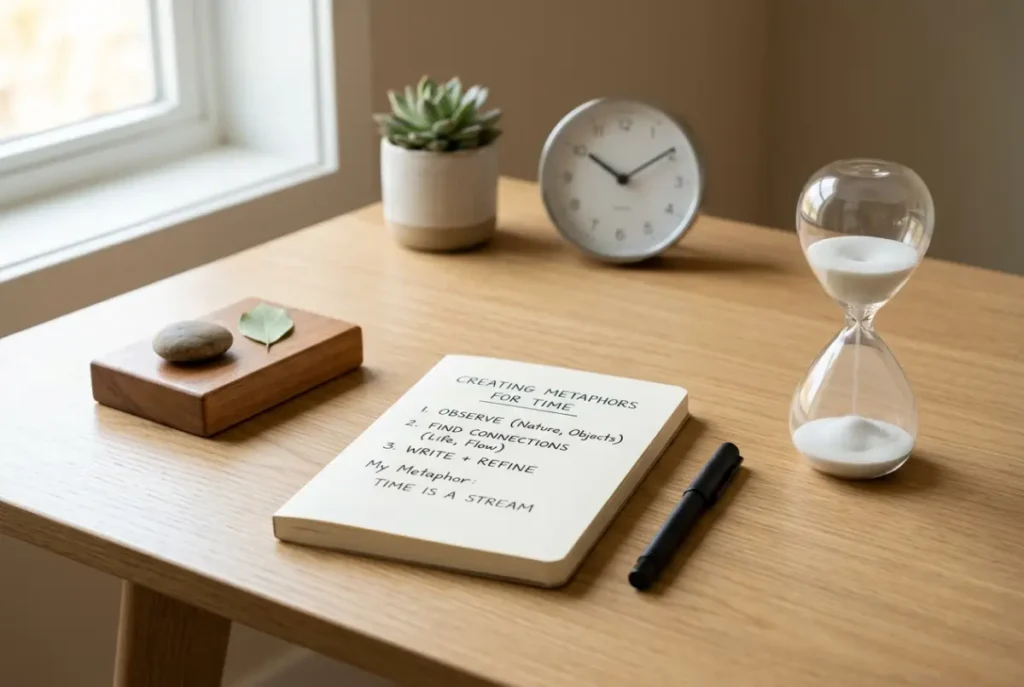
How to Create Your Own Metaphors for Time
You don’t have to rely on familiar expressions such as time is money or time is a thief. You can create original metaphors by observing how time feels in a particular situation.
Start with the experience you want to describe. Then find a physical object, place, or natural process that shares one important feature with that experience.
Step One to Identify the Feeling
Ask yourself what time feels like in the moment you’re describing.
Are you feeling rushed, hopeful, lonely, nostalgic, excited, or afraid of losing something? Naming the feeling helps you avoid choosing an image that sends the wrong message.
For example, if you’re writing about a deadline, you might feel pressure. If you’re describing a happy childhood memory, you might feel warmth mixed with sadness.
Step Two to Choose a Physical Image
Think about objects or events that share the same quality.
| Feeling | Possible image | Shared quality |
|---|---|---|
| Urgency | A burning match | Limited duration |
| Nostalgia | An old photograph | Connection to the past |
| Growth | A garden | Gradual development |
| Uncertainty | A foggy road | An unclear future |
| Regret | A closing door | Lost opportunity |
| Hope | A sunrise | A fresh beginning |
| Pressure | A boiling kettle | Rising tension |
| Peace | A slow moving river | Calm, steady movement |
You don’t need to find an image that matches every feature of time. One clear point of connection is enough.
Step Three to Write a Direct Comparison
Turn the image into a sentence.
Suppose you want to describe a short period of happiness. You might write:
Time is a summer breeze, touching our lives before moving on.
The breeze suggests something pleasant that cannot be held in place. The sentence also conveys a gentle sense of loss.
For a more urgent tone, you might write:
Time is a candle in a drafty room, fighting to keep its flame alive.
This version suggests uncertainty and danger. The image matches a situation in which time is running out.
Step Four to Add a Specific Detail
General metaphors can feel familiar because many writers use similar images. A specific detail can make your comparison more distinctive.
Instead of:
Time is a river.
Try:
Time is a river carrying the last leaves of October beneath an old wooden bridge.
The second sentence gives the reader a setting, a season, and a clearer mood. It may be too detailed for a short caption, but it could work well in a poem or descriptive essay.
Step Five to Check the Meaning
Ask three questions before keeping your metaphor.
- Does the image communicate the feeling I intended?
- Can a reader understand the comparison without extra explanation?
- Does the sentence fit the tone of the rest of my writing?
If the answer to any question is no, revise the image or choose a simpler one.
Metaphor vs Simile When Describing Time
Metaphors and similes both compare things, but they use different structures.
A metaphor states that one thing is another thing in a figurative sense. A simile compares two things using words such as like or as.
| Metaphor | Simile |
|---|---|
| Time is a river. | Time flows like a river. |
| Time is a thief. | Time steals moments like a thief. |
| Time is a candle. | Time burns like a candle. |
| Time is a storm. | Time moves through life like a storm. |
| Time is a teacher. | Time teaches us like a wise mentor. |
Both forms can be effective. Metaphors tend to make a more direct statement, while similes make the comparison explicit.
For example, Time is a thief sounds firm and memorable. Time slips away like a thief in the night gives the reader more detail about how the loss happens.
Choose the form that best suits your sentence. Neither is automatically better than the other.
Metaphor vs Personification When Describing Time
Personification gives human traits or actions to something nonhuman. A metaphor compares one thing to another. A sentence can use one technique or combine both.
Consider these examples.
- Metaphor: Time is a hungry wolf. Time is compared to an animal that consumes things.
- Personification: Time devoured my childhood. Time performs an action associated with a living creature.
- Both techniques: Time is a hungry wolf, stalking the years of our lives. The direct comparison creates a metaphor, and the wolf is also described through humanlike behavior.
Personification can make time feel active and intentional. It may appear to chase us, whisper to us, steal our memories, or knock at the door.
Metaphors can be broader. Time can become a road, a river, a garden, or a limited resource without acting like a person.
When analyzing a sentence for school, identify the main comparison first. Then check for any human actions or qualities given to time.
Common Mistakes When Using Metaphors for Time
Even a creative sentence can lose its effect if the image is unclear or the wording becomes too complicated. Watch for these common problems.
Mixing Too Many Metaphors
A mixed metaphor combines images that don’t fit together naturally.
Awkward example:
Time is a river racing up the ladder of opportunity.
The sentence moves from water to climbing without a clear connection. A cleaner version would be:
Time is a river carrying opportunities downstream.
The image now follows one central idea.
Using Clichés Without Adding Anything New
Expressions such as time is money and time is a thief are familiar because people use them often. They’re still useful, but they may feel predictable in creative writing.
Instead of abandoning every familiar metaphor, try adding a meaningful detail.
Common version: Time is a thief.
More specific version: Time is a quiet thief that takes the little things we forget to treasure.
The second version develops the original image and connects it to a clearer emotional idea.
Choosing an Image That Doesn’t Match the Tone
A playful metaphor may weaken a serious message. A dark metaphor may make a positive message feel unnecessarily gloomy.
For example, describing a child’s growth as a ticking bomb could create anxiety rather than warmth. A growing tree or unfolding flower would usually suit that subject better.
Explaining the Metaphor Too Much
A metaphor should help readers understand an idea. If you spend several sentences explaining every part of the image, the comparison may lose its impact.
Write the image, add the detail needed for clarity, and move on. Let readers make reasonable connections for themselves.
Treating Figurative Language as Literal Fact
Metaphors express ideas through comparisons. They don’t establish scientific or historical facts.
For instance, the phrase time heals all wounds is a familiar expression, not a guarantee that every emotional injury will disappear. Use it thoughtfully, especially when writing about grief or trauma.
Memory Tricks for Choosing Time Metaphors
A few simple associations can help you remember which metaphor suits a particular message.
- River means movement. Use it to describe the steady passage of time.
- Thief means loss. Use it for regret, aging, or missed opportunities.
- Garden means growth. Use it for patience and development.
- Candle means limited time. Use it to express urgency or mortality.
- Bridge means connection. Use it for relationships or links between past and future.
- Mirror means reflection. Use it to describe how time changes our understanding of ourselves.
- Door means opportunity. Use it for endings, choices, and new beginnings.
- Storm means struggle. Use it for difficult periods that eventually pass.
- Blank page means possibility. Use it for fresh starts and an unknown future.
- Sculptor means transformation. Use it for aging and the development of character.
The easiest way to remember these associations is to connect each image to one central idea. Once you know the feeling you want to express, choosing a metaphor becomes much easier.
More Metaphors for Time With Meanings and Examples
Time can represent freedom, pressure, memory, opportunity, or change. The following metaphors offer more ways to describe these ideas in essays, stories, speeches, journal entries, and everyday conversations.
Metaphors for Time and Memory
Memory gives the past a place in the present. These metaphors describe how experiences remain with us, even as time moves forward.
- Time is a dusty attic. Old memories remain hidden until something brings them back. Example: Time is a dusty attic filled with the treasures of childhood.
- Time is a photo album. Each stage of life adds another memory. Example: Time is a photo album whose pages tell the story of who we’ve become.
- Time is an echo. Past experiences continue to affect the present. Example: Time is an echo carrying the voices of people we’ve loved.
- Time is an old map. Previous experiences guide present decisions. Example: Time is an old map marked with the lessons of every wrong turn.
- Time is a fading melody. Memories can become less clear while retaining their emotional meaning. Example: Time is a fading melody that still makes my heart remember.
Metaphors for Time and Opportunity
These comparisons help express the importance of acting before a chance disappears.
- Time is an open gate. New possibilities are available. Example: Time is an open gate leading toward a future we can shape.
- Time is a short runway. A limited period remains before an important event. Example: Time is a short runway, and our project needs to be ready for takeoff.
- Time is a door on swinging hinges. Opportunities can open and close as circumstances change. Example: Time is a door on swinging hinges, and we must recognize the moment to enter.
- Time is a seed waiting for rain. A possibility needs the right conditions to grow. Example: Time is a seed waiting for the courage to take root.
- Time is a train at the station. An opportunity may not remain available for long. Example: Time is a train at the station, and our chance to begin won’t wait forever.
Metaphors for Time and Life
These images connect time with the wider experience of being human.
- Time is a woven tapestry. Individual experiences combine to form a larger life story. Example: Time is a tapestry woven from our joys, mistakes, and hopes.
- Time is a winding river valley. Life follows a changing path rather than a perfectly straight line. Example: Time is a winding valley, revealing a new view around every bend.
- Time is a quiet gardener. Life changes gradually, often without our noticing. Example: Time is a quiet gardener, tending the roots of our character.
- Time is a revolving door. Life brings repeated changes, encounters, and fresh opportunities. Example: Time is a revolving door through which people and possibilities enter our lives.
- Time is a long staircase. Each stage of life leads to another. Example: Time is a long staircase, and every step teaches us something new.
Metaphors for Time and Pressure
These comparisons work well when deadlines, responsibilities, or uncertainty make time feel difficult to manage.
- Time is a tightening knot. Pressure increases as a deadline approaches. Example: Time is a tightening knot around the final hours of the project.
- Time is a shrinking circle. The available choices or opportunities become fewer. Example: Time is a shrinking circle around our last chance to finish.
- Time is a drumbeat. The steady rhythm creates a sense of urgency. Example: Time is a drumbeat growing louder as the deadline approaches.
- Time is a fast moving conveyor belt. Tasks keep arriving and moving forward. Example: Time is a conveyor belt carrying one responsibility after another toward my desk.
- Time is a closing curtain. An event or stage is coming to an end. Example: Time is a closing curtain on the final act of our school years.
These examples can help you build a personal collection of metaphors. You can adapt their images and wording to suit your subject, voice, and audience.
How to Use Metaphors for Time in Different Types of Writing
The same metaphor can work differently depending on the situation. A phrase that sounds beautiful in a poem might feel too dramatic in a work email. Choosing the right level of imagery helps your writing stay natural.
In Daily Conversation
Everyday metaphors should feel easy to understand.
Examples include:
- Time flew by during our vacation.
- The weekend slipped through my fingers.
- The deadline is breathing down my neck.
- Tomorrow is a blank page.
- The years have rolled by like waves.
These expressions communicate familiar experiences without requiring a lengthy explanation.
In Emails and Workplace Messages
Professional writing benefits from clear and restrained metaphors. Use them to make a point more memorable, not to hide important details.
For example:
Our timeline is a roadmap for the next phase of the project.
This image suggests direction and planning. However, if you need to communicate an exact deadline, state the date clearly.
A good workplace sentence might be:
Our window for revisions is closing, so please submit your feedback by Friday.
The metaphor adds urgency, while the specific deadline tells readers what to do.
In Academic Essays
Metaphors can introduce ideas and make abstract concepts easier to understand. However, academic writing still needs precise claims and evidence.
For example:
Time provides a framework for organizing historical events and understanding social change.
This sentence uses a familiar image to explain an abstract concept. The rest of the essay should support the claim with facts, examples, or research.
In Personal Journals
Personal writing allows more freedom because the goal may be reflection rather than formal explanation.
Examples include:
- Time is a quiet room where my memories come to rest.
- Time is a mirror showing me the person I used to be.
- Time is a garden where forgotten dreams can bloom again.
- Time is a long road leading me away from old fears.
Choose images that reflect your real experience. A personal metaphor doesn’t need to sound impressive to be meaningful.
In Social Media Captions
Short metaphors can make captions expressive and easy to remember.
- Time is a sunset we can’t ask to stay.
- Time is a page turning toward something new.
- Time is a river, and I’m learning to enjoy the ride.
- Time is a gift wrapped in ordinary moments.
- Time is a quiet reminder to live today.
A caption usually works best when it communicates one central feeling. Keep the language concise and avoid stacking too many images into a single line.
Related Words and Expressions About Time
Metaphors become easier to use when you understand the related words and expressions around them.
| Word or expression | Meaning | Example |
|---|---|---|
| Passage of time | The movement from one moment to another | The passage of time changed her perspective. |
| Fleeting | Lasting for a short time | We enjoyed a fleeting moment of peace. |
| Timeless | Remaining meaningful across generations | Their friendship feels timeless. |
| Timeworn | Worn or aged through long use | The timeworn building held many memories. |
| Turning point | A moment that causes major change | Graduation was a turning point in his life. |
| Window of opportunity | A limited period in which an action is possible | We have a small window of opportunity to make changes. |
| Time flies | Time seems to pass quickly | Time flies when you’re having fun. |
| In the blink of an eye | Very quickly | The children grew up in the blink of an eye. |
| Against the clock | Working under time pressure | We worked against the clock to meet the deadline. |
| Make time | Set aside time for something | I’ll make time for my family this weekend. |
| Buy time | Gain extra time before making a decision or taking action | The team asked for another day to buy time. |
| Lost time | Time that cannot be recovered or was used poorly | We need to make up for lost time. |
Some of these expressions are idioms rather than original metaphors. They belong in the same broader discussion because they help people talk about time through figurative or established language.
Common Questions About Metaphors for Time
The following answers address common questions from English learners, students, writers, and anyone looking for a memorable way to describe time.
What Is the Best Metaphor for Time?
There isn’t one best metaphor for every situation. Time is a river works well when you want to express continuous movement. Time is a thief emphasizes loss, while time is a teacher suggests learning through experience. Choose the image that matches your message rather than using the same metaphor for every subject.
What Is a Simple Metaphor for Time?
A simple metaphor is time is money. It compares time to a valuable resource that people can use wisely or waste. Other easy examples include time is a river, time is a gift, and time is a teacher. These expressions are short, familiar, and suitable for school assignments and everyday conversations.
What Is a Metaphor for Time Passing Quickly?
Time is a speeding train is a useful metaphor for time that seems to move too quickly. You can also say that time is a shooting star or a river rushing downstream. These images suggest movement and the difficulty of holding on to a moment before it disappears.
What Is a Metaphor for Time in Poetry?
Poets often describe time as a river, a shadow, a candle, or a fading photograph. Each image creates a different mood. A river can suggest change, a candle can represent mortality, and a fading photograph can evoke nostalgia. The most effective poetic metaphor supports the poem’s theme and emotional tone.
What Is a Metaphor for Time and Life?
Time is a winding road is a strong metaphor for the relationship between time and life. It suggests that life moves through different stages and doesn’t always follow a predictable path. Other options include time is a tapestry, which emphasizes the connection between experiences, and time is a staircase, which highlights gradual progress.
What Is a Positive Metaphor for Time?
Time is a garden is a positive metaphor because it suggests growth, patience, and new possibilities. You could also describe time as a gift, an open door, or a sunrise. These images work well in motivational messages, personal reflections, and writing about fresh starts.
What Is a Negative Metaphor for Time?
Time is a thief is a common negative metaphor because it suggests that time takes away youth, opportunities, and precious moments. Other examples include time is a closing door and time is a melting candle. These images can express regret, urgency, aging, or the fear of losing something valuable.
How Do You Write Your Own Metaphor for Time?
Start by identifying the feeling you want to express. Then choose an image that shares one important quality with that feeling. For example, if time feels limited, compare it to a burning match. If time represents growth, compare it to a garden. Keep the comparison clear and make sure it fits the tone of your writing.
What Is the Difference Between a Metaphor and a Simile for Time?
A metaphor directly compares two things, as in time is a river. A simile makes the comparison using like or as, as in time flows like a river. Both forms can create vivid imagery, but a metaphor usually states the comparison more directly.
Is Time Is Money a Metaphor?
Yes. Time is money is a metaphor because it compares time to money without suggesting that time is literally cash. The expression emphasizes that time has value and that using it for one purpose means giving up the chance to use it for something else. It’s common in business, productivity advice, and everyday conversation.
Can a Metaphor for Time Be Used in Formal Writing?
Yes. Metaphors can clarify complex ideas in formal writing, provided they don’t replace precise explanations. For example, describing time as a framework can help introduce an argument about history or human development. In academic work, explain the intended meaning and support factual claims with suitable evidence.
Why Do Writers Compare Time to a River?
A river provides a familiar image of continuous movement. It flows forward, changes its surroundings, and carries objects away. These features make it a natural comparison for time, which moves from the present into the past. The metaphor can express change, the loss of moments, and the difficulty of returning to an earlier stage of life.
Expert Editor’s Note
As an editor, I’d recommend choosing a metaphor based on the meaning you want readers to remember. Don’t select an image simply because it sounds poetic. The strongest comparison makes your point clearer, creates the right emotion, and fits the surrounding sentences.
For general readers, familiar metaphors such as time is a river or time is money are easy to understand. For creative writing, a more specific image can add personality and help your work stand apart. In formal writing, use figurative language sparingly and explain any complex idea in direct terms.
It’s also important to distinguish between a metaphor, a simile, and personification. These techniques overlap, but they aren’t identical. Knowing how they work helps you create stronger sentences and explain your choices accurately.
Most importantly, don’t assume that every metaphor needs to be completely original. Familiar expressions can still work when they fit the context. What matters is using them with purpose rather than filling your writing with decorative language.
You may also want to read Metaphor for School That Makes Learning Come Alive (2026 Guide).
Conclusion
A metaphor for time helps turn an abstract idea into an image people can see, feel, and remember. Time can be a river that keeps moving, a thief that takes precious moments, a teacher that offers wisdom, or a garden that rewards patience.
The right metaphor depends on your purpose. Choose images of movement to describe time passing, images of growth to express change, and images of limited resources to communicate urgency. For romantic writing, focus on connection and shared memories. For academic work, keep the comparison clear and support your ideas with evidence.
Avoid mixing too many metaphors or choosing an image that conflicts with your message. A simple, well chosen comparison often has more impact than an elaborate sentence.
Time may be impossible to hold, but the right words can help us remember what makes each moment matter.

Editorial Reviewer & Proofreader
Grace Mitchell reviews Gramlify’s articles for clarity, consistency, and readability. She is passionate about creating accurate, approachable content that helps English learners build confidence.