
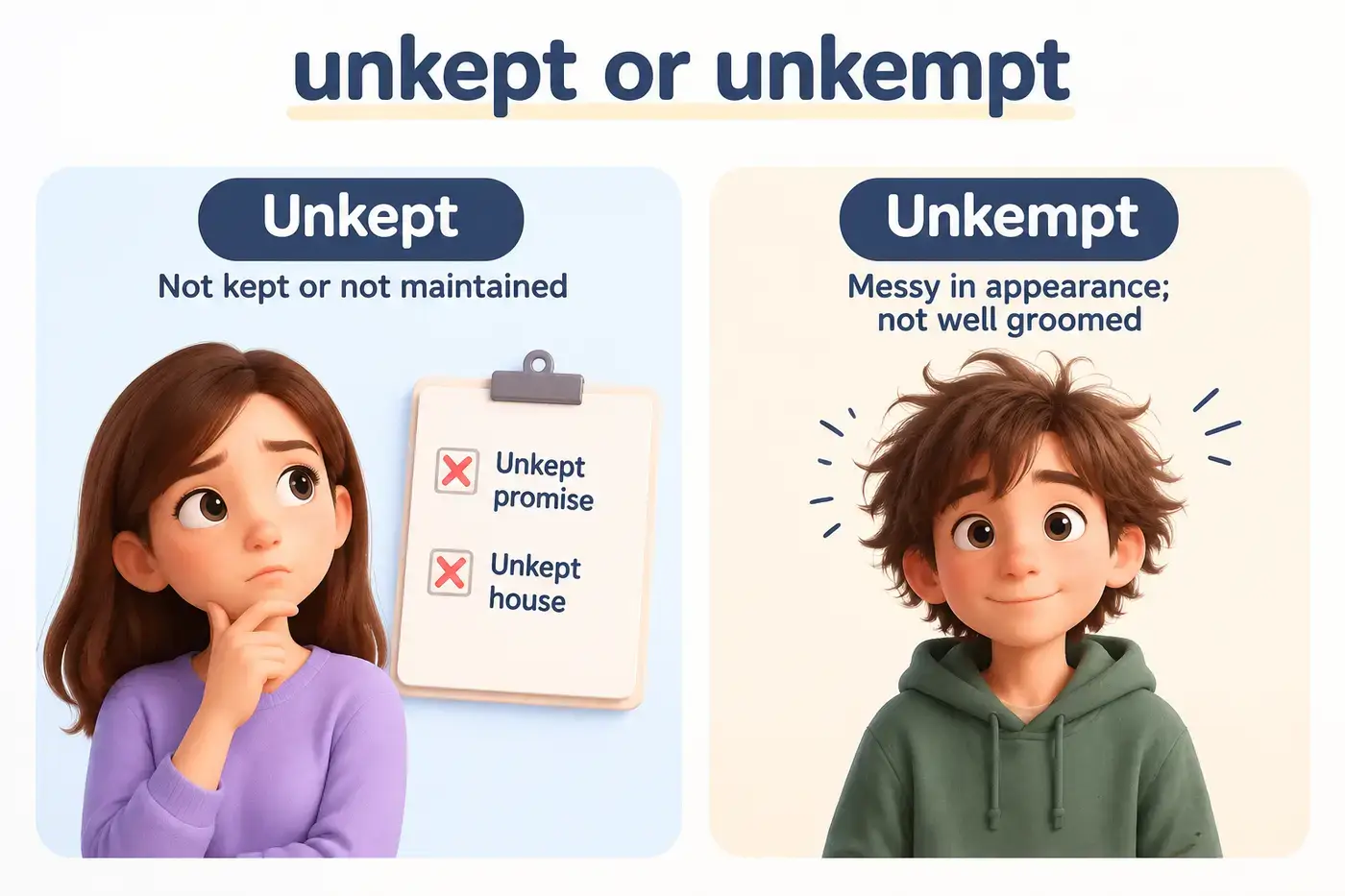
If you’ve searched for unkept or unkempt, you’re probably trying to figure out which spelling is correct. At first glance, both words seem reasonable. After all, English has words like kept, unlocked, and unfinished, so unkept looks like it should exist. That’s exactly why so many people get confused.
The short answer is simple. Unkempt is the correct English word when describing someone or something as messy, untidy, or poorly maintained. Unkept is generally considered a misspelling or a nonstandard form in modern English.
The confusion comes from the word kept. Many learners assume adding un creates the opposite, but English doesn’t always follow predictable patterns. In this case, unkempt has its own history and developed independently over centuries.
This guide explains the difference between unkept or unkempt, shows why only one belongs in standard English, explores the word’s origin, covers grammar and pronunciation, and includes plenty of natural examples to help you remember the correct spelling every time.
Need another quick comparison? Read Input Or Imput Which Spelling Is Correct 2026.
Quick Answer
Unkempt is the correct spelling. It means untidy, messy, disordered, or not well cared for. Unkept is not accepted as standard English and should be avoided in formal and everyday writing. If you want to describe messy hair, clothing, gardens, or appearances, use unkempt.
Unkept Or Unkempt Comparison Table
| Feature | Unkempt | Unkept |
|---|---|---|
| Correct spelling | ✔ Yes | ✘ No in standard English |
| Part of speech | Adjective | Nonstandard form |
| Meaning | Messy untidy poorly maintained | Usually intended to mean untidy but considered incorrect |
| Formal writing | Recommended | Avoid |
| Everyday English | Common | Rare and generally treated as a mistake |
| Dictionaries | Listed | Usually not listed as a standard word |
| Example | His unkempt hair needed a haircut. | His unkept hair needed a haircut. ✘ |
What Does Unkempt Mean
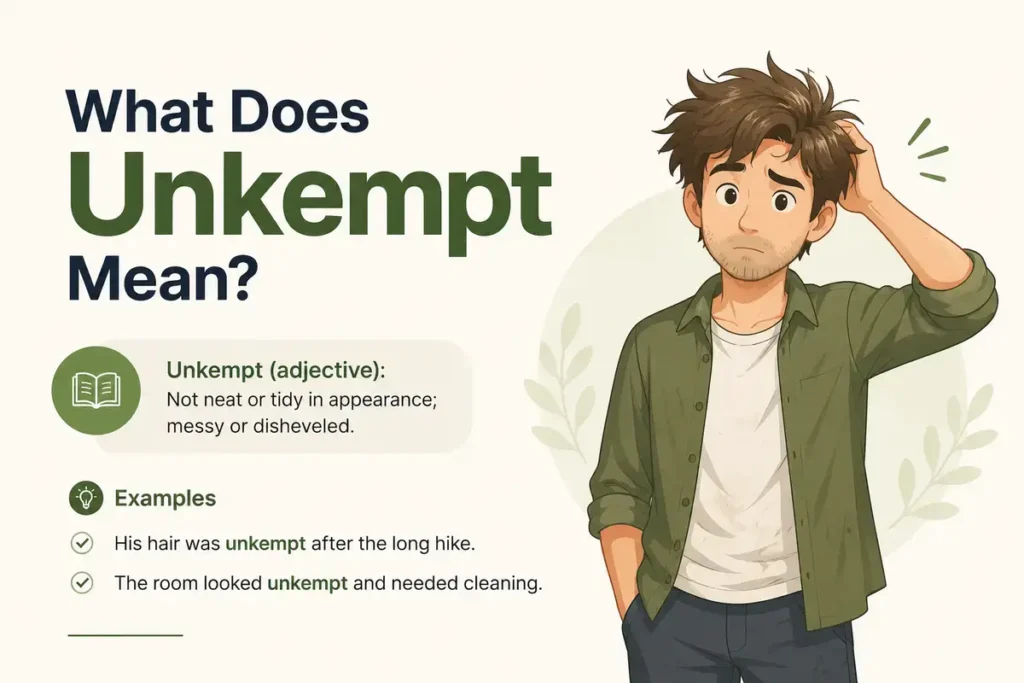
Unkempt is an adjective that describes someone or something that looks untidy, messy, or not properly cared for.
It can describe a person’s appearance, clothing, hair, beard, garden, room, or any place that lacks neatness.
Simple Definition
Unkempt means untidy, disorderly, or not well maintained.
Common Uses Of Unkempt
People often use unkempt to describe appearance or surroundings that need attention.
Examples include.
- His unkempt hair covered his eyes.
- The abandoned house had an unkempt yard.
- She arrived wearing unkempt clothes after the long trip.
- The small park became unkempt after months without maintenance.
- His unkempt beard made him look much older.
Unkempt In Different Contexts
Daily conversation.
Your lawn looks a little unkempt after all that rain.
Workplace.
Employees are expected to avoid an unkempt appearance during client meetings.
Academic writing.
The novel describes the village as unkempt after years of neglect.
Journalism.
Reporters described the property as unkempt and poorly maintained.
Is Unkept A Real Word
This is the question most people ask.
The answer is not in standard modern English.
Although unkept occasionally appears online, in older texts, or in informal writing, major dictionaries and professional style guides do not recommend it when you mean messy or untidy.
Most people use unkept because they naturally connect it with the verb kept.
For example, they think.
- kept becomes unkept.
- locked becomes unlocked.
- finished becomes unfinished.
That pattern seems logical, but English has many exceptions. Unkempt is one of them.
If you’re writing an email, school paper, article, business document, or social media post, unkempt is almost always the correct choice.
Which One Is Correct
The correct word is unkempt.
Use it anytime you want to describe something that is untidy, messy, or not properly cared for.
Correct examples.
✔ His unkempt hair needed a trim.
✔ Her jacket appeared unkempt after the hike.
Incorrect examples.
✘ His unkept hair needed a trim.
✘ She wore an unkept uniform.
Replacing unkept with unkempt immediately makes each sentence correct and natural.
Why People Confuse Unkept And Unkempt
The confusion is easy to understand because English often creates opposite words by adding the prefix un.
Examples include.
- Happy becomes unhappy.
- Finished becomes unfinished.
- Locked becomes unlocked.
- Known becomes unknown.
So many learners expect kept to become unkept.
English takes a different path here because unkempt did not develop from the modern verb keep. Instead, it comes from the old adjective kempt, which means neat or well groomed. Although kempt is rarely used by itself today, unkempt survived and became the standard word.
Another reason for the confusion is pronunciation. In fast speech, some people pronounce unkempt so quickly that listeners think they heard unkept.
Finally, spellcheck tools and autocorrect cannot always explain why a word is wrong. They simply replace it, leaving many writers unsure about the correct choice.
Key Differences Between Unkept And Unkempt
Although the two words look similar, only one belongs in standard English. Understanding the differences makes it much easier to avoid mistakes.
| Feature | Unkempt | Unkept |
|---|---|---|
| Standard English | ✔ Yes | ✘ No |
| Dictionary entry | Yes | Rare or not accepted |
| Meaning | Untidy poorly groomed or neglected | Usually an incorrect spelling of unkempt |
| Part of speech | Adjective | Nonstandard form |
| Recommended in writing | Yes | No |
| Common usage | Everyday and formal English | Mostly spelling mistakes |
The easiest way to remember the difference is simple.
Use unkempt every time you want to describe someone or something as messy or untidy.
Grammar Explanation
Grammar also helps explain why unkempt is correct.
Unkempt Is An Adjective
An adjective describes a noun.
Unkempt describes the condition or appearance of a person, place, or object.
Examples.
- The unkempt garden needed attention.
- His unkempt beard made him look tired.
- They walked past an unkempt building.
In every example, unkempt describes a noun.
Unkept Is Not Standard English
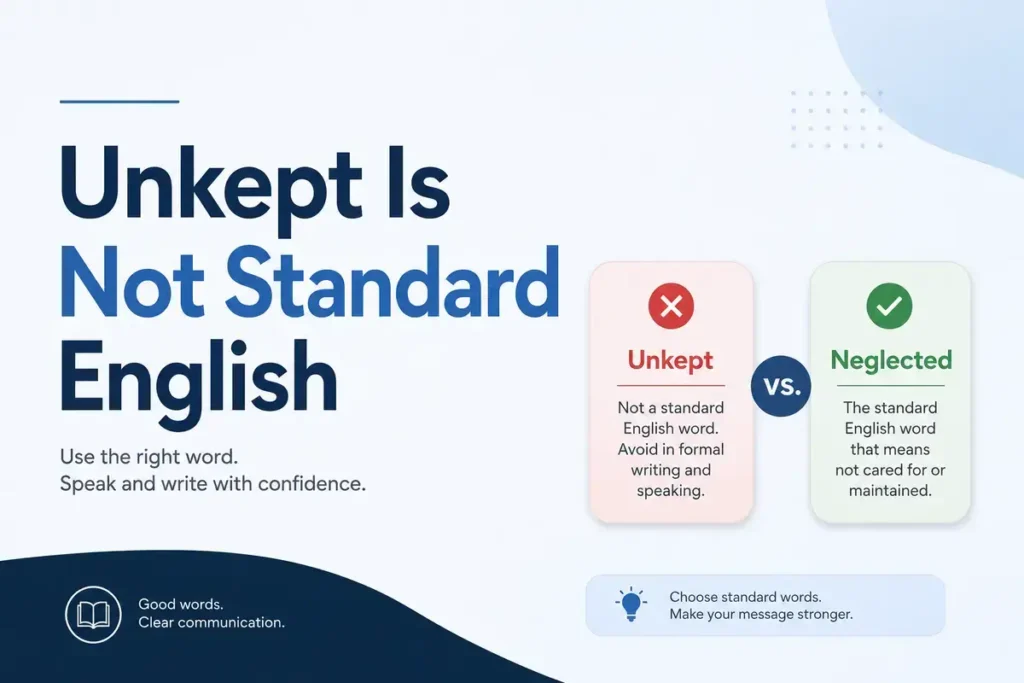
Although unkept looks like an adjective, standard English dictionaries do not recognize it as the correct word for messy or untidy.
Professional writers, editors, teachers, and publishers almost always replace unkept with unkempt.
Spelling Rule
The mistake usually comes from trying to apply a grammar rule that does not fit this word.
People often think.
- Keep becomes kept.
- Kept becomes unkept.
English does not work that way in this case.
The correct adjective already exists.
Kempt means neat or tidy.
Adding the prefix un creates unkempt, meaning not neat or not tidy.
Although kempt is uncommon today, unkempt remains widely used.
Think of it as a complete vocabulary word instead of something built from kept.
You may also want to read Comprable Vs Comparable Which Spelling Is Correct 2026.
Pronunciation Guide
Correct pronunciation helps you recognize the word when native speakers use it.
Unkempt
IPA
American English
/ʌnˈkempt/
Syllables
Un kempt.
Word Stress
The second syllable receives the main stress.
Common Pronunciation Mistakes
Some learners accidentally say the word as if it ends with kept.
The correct ending is kempt.
Saying the word slowly a few times helps.
Un kempt.
Un kempt.
After a little practice, the pronunciation feels natural.
Word Origin And History
The history of unkempt surprises many English learners.
The word comes from the old adjective kempt, which meant neatly combed or well groomed.
Kempt itself comes from the Old English verb meaning to comb.
Over time, people gradually stopped using kempt in everyday conversation.
Its opposite, unkempt, remained popular because it clearly described untidy hair, clothing, and appearance.
Today, many native speakers know unkempt but have never heard the word kempt by itself.
That unusual history explains why unkept never became the accepted spelling.
British And American English
There is no difference between British and American English for this word.
People in the United States, the United Kingdom, Canada, Australia, and New Zealand all use unkempt.
The spelling stays the same across these varieties of English.
Examples include.
- An unkempt garden.
- An unkempt appearance.
- An unkempt beard.
You do not need to change the spelling for different English speaking countries.
Real Life Examples
Seeing the word in natural sentences makes it much easier to remember.
Daily Conversation
- His unkempt hair needed a haircut.
- Your backyard looks unkempt after the storm.
- She laughed at her unkempt morning hairstyle.
- The old fence made the property look unkempt.
Workplace
- Employees should avoid an unkempt appearance during client meetings.
- The office looked unkempt after the renovation.
- His manager asked him to dress more neatly instead of looking unkempt.
Emails
- The garden has become unkempt during the winter.
- Please trim the bushes because the entrance looks unkempt.
Academic Writing
- The author described the village as unkempt and forgotten.
- Researchers noted the unkempt condition of the abandoned buildings.
Journalism
- Reporters described the property as unkempt after years of neglect.
- Neighbors complained about the unkempt yard.
Literature
- The traveler entered an unkempt cottage at the edge of the forest.
- His unkempt appearance reflected months of hardship.
Social Media
- Ignore my unkempt hair. I just woke up.
- My room looks completely unkempt after moving.
- This garden went from beautiful to unkempt in one season.
- The abandoned park feels sad because everything looks unkempt.
- Even with his unkempt beard, everyone recognized him immediately.
Common Mistakes
Many writers make the same mistakes because unkept looks like it should be correct. Knowing these errors helps you avoid them.
Using Unkept Instead Of Unkempt
Incorrect.
The yard looked unkept after the winter.
Correct.
The yard looked unkempt after the winter.
Thinking Unkept Is The Opposite Of Kept
Many learners assume adding un to kept creates the correct opposite.
English does not follow that pattern here. The accepted adjective is unkempt.
Using Unkempt For Things It Does Not Describe
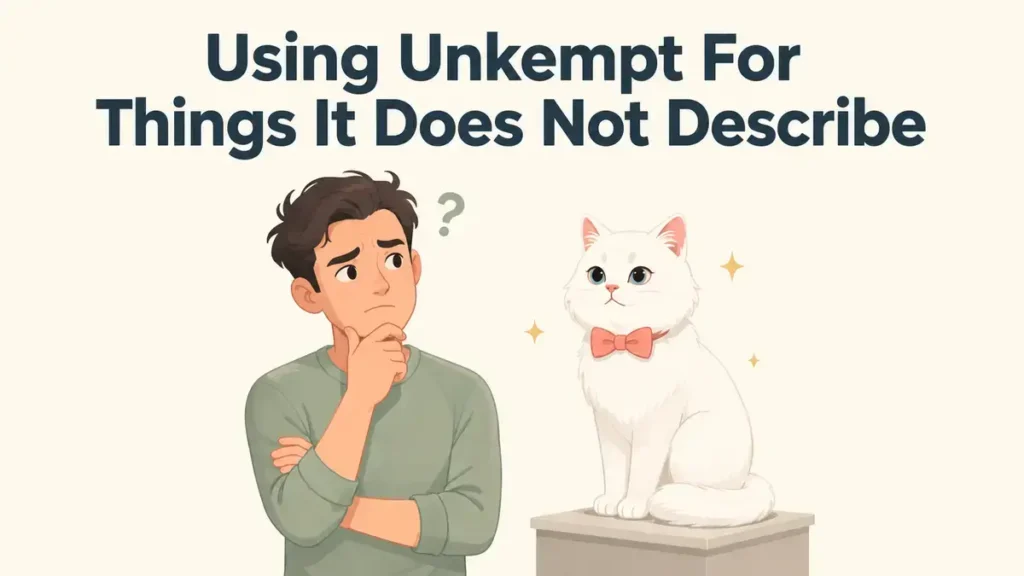
Unkempt describes appearance, grooming, places, or objects that look untidy.
Correct examples.
- An unkempt beard.
- An unkempt lawn.
- An unkempt room.
Less natural examples.
- An unkempt idea.
- An unkempt decision.
Choose words like disorganized or poorly planned for ideas instead.
Memory Tricks
A simple memory trick can save you from making this mistake again.
Think About A Comb
The word unkempt comes from an old word related to combing hair.
If hair has not been combed, it looks unkempt.
Picture someone who just got out of bed with messy hair. That image makes the word easy to remember.
Remember The Letter M
UnkeMpt contains the letter M.
Think.
M stands for Messy.
If something is messy, the correct spelling is unkempt.
Related Words
Expanding your vocabulary helps you choose the best word for each situation.
Synonyms
- Messy.
- Untidy.
- Disheveled.
- Scruffy.
- Disorderly.
- Ragged.
- Neglected.
- Unwashed.
Opposites
- Neat.
- Tidy.
- Groomed.
- Well kept.
- Orderly.
- Clean.
Related Words
- Groomed.
- Appearance.
- Hygiene.
- Disorder.
- Maintenance.
- Neglect.
- Presentable.
- Kempt.
Expert Editor’s Note
Professional editors consistently recommend unkempt.
Major dictionaries list unkempt as the standard adjective for describing someone or something that is untidy or poorly maintained.
Most style guides also prefer unkempt because it is the established spelling in modern English.
If you write unkept, many readers will assume it is a spelling mistake. Spellcheck programs often flag it for the same reason.
When editing documents, articles, essays, or business emails, replace unkept with unkempt unless you are quoting someone exactly.
Choosing the accepted spelling makes your writing clearer and more professional.
Frequently Asked Questions
Is Unkept A Correct Word?
No. Unkept is not considered standard English when you mean messy or untidy. The correct word is unkempt.
Is Unkempt A Real Word?
Yes. Unkempt is a standard English adjective found in major dictionaries. It describes someone or something that is untidy, messy, or not properly cared for.
Why Do People Say Unkept?
Many people assume the opposite of kept should be unkept. Although the pattern seems logical, English developed the adjective unkempt from the older word kempt.
Can I Use Unkempt In Formal Writing?
Yes. Unkempt is appropriate in formal writing, academic papers, journalism, business communication, and everyday English.
Does Unkempt Only Describe People?
No. It can describe people, hair, clothing, gardens, buildings, rooms, yards, and other things that appear untidy or neglected.
Is There A Difference Between American And British English?
No. American English, British English, Canadian English, and Australian English all use unkempt. The spelling remains the same across these varieties.
What Is The Opposite Of Unkempt?
Common opposites include neat, tidy, well groomed, well kept, and orderly.
Need another quick comparison? Read Nosey or Nosy Which Spelling Is Correct 2026.
Conclusion
The answer to unkept or unkempt is clear.
Unkempt is the correct spelling. It describes someone or something that looks messy, untidy, or poorly maintained.
Unkept is not accepted as standard English and should be avoided in formal and everyday writing.
The easiest way to remember the difference is to connect unkempt with messy hair that has not been combed. Once you make that connection, the correct spelling becomes much easier to remember.
Use unkempt with confidence, and your writing will sound more natural, accurate, and polished.

Editorial Reviewer & Proofreader
Grace Mitchell reviews Gramlify’s articles for clarity, consistency, and readability. She is passionate about creating accurate, approachable content that helps English learners build confidence.
1 thought on “Unkept Or Unkempt Which Word Is Correct 2026 Guide”