
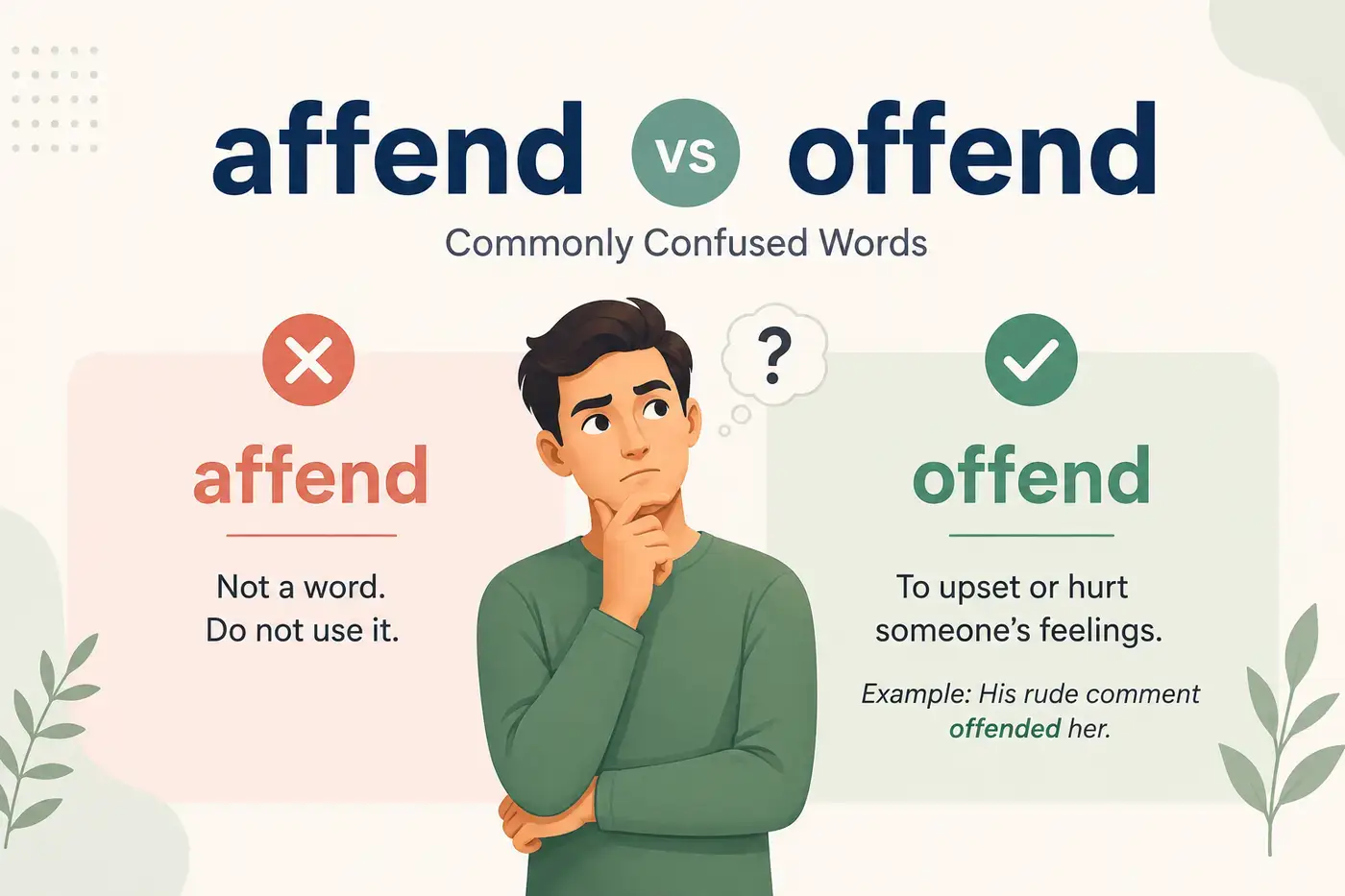
If you’ve searched for affend vs offend, you’re likely trying to figure out if both words are correct or if one is simply a spelling mistake. The short answer is easy. Offend is the correct English word. Affend is a misspelling and does not appear as a standard word in modern English dictionaries.
The confusion happens because the words look similar and have nearly the same pronunciation in casual speech. A quick typing mistake, autocorrect error, or simple memory slip can easily turn offend into affend. Since English spelling is not always predictable, many learners pause and wonder if both forms are acceptable.
Getting this right matters because offend appears in everyday conversations, workplace communication, academic writing, journalism, and legal documents. Using the wrong spelling can make your writing look careless, even if your message is clear.
This guide explains the difference between affend vs offend, shows why the mistake happens, covers the grammar behind the correct spelling, provides practical examples, and shares editor approved tips to help you remember the correct form every time.
Suggested Internal Link: Commonly Misspelled English Words You Should Stop Confusing.
For another common grammar confusion, see Provider Vs Providor Which Word Is Correct 2026 Guide.
Quick Answer
Offend is the correct spelling. It means to upset, insult, hurt someone’s feelings, or break a rule or law. Affend is not a recognized English word and should not be used in formal or informal writing. If you mean to insult or cause offense, always choose offend.
Affend Vs Offend Comparison Table
| Feature | Affend | Offend |
|---|---|---|
| Correct spelling | No | Yes |
| Dictionary entry | No | Yes |
| Part of speech | None | Verb |
| Meaning | None | To insult, upset, or violate |
| Used in English | No | Yes |
| Formal writing | Never | Yes |
| Informal writing | Never | Yes |
| Common cause | Misspelling | Correct word |
| Example | ✘ Please don’t affend anyone. | ✔ Please don’t offend anyone. |
What Does Offend Mean
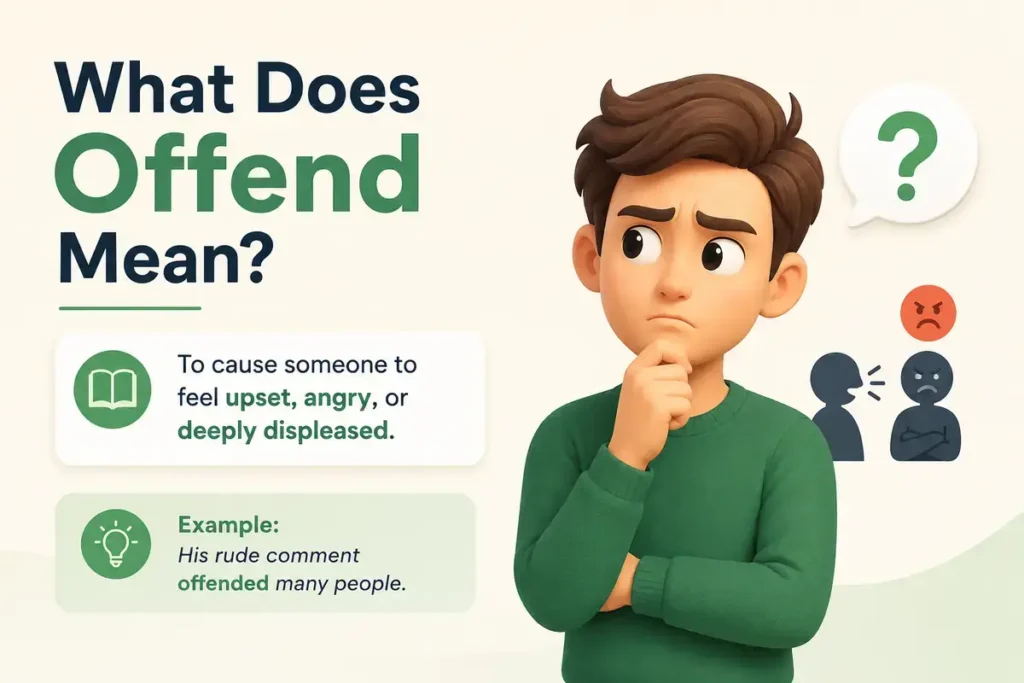
Offend is a verb that means to make someone feel hurt, insulted, embarrassed, or upset. It can also mean breaking a law, rule, belief, or accepted standard.
The meaning depends on the situation, but the idea remains the same. Someone or something causes emotional discomfort or violates expectations.
Simple Definition
Offend means to upset someone through words, actions, behavior, or attitudes.
Common Uses Of Offend
People use offend in many situations.
- Hurting someone’s feelings.
- Saying something insulting.
- Breaking social rules.
- Violating moral or religious beliefs.
- Breaking laws or regulations.
Examples
- I didn’t mean to offend you.
- His comment offended several people.
- The joke may offend some readers.
- She apologized after realizing her words offended the audience.
- Loud behavior can offend people in quiet places.
Is Affend A Real Word
No.
Affend is not a standard English word. You will not find it in trusted dictionaries because it is simply a misspelling of offend.
People usually write affend because of:
- Typing too quickly.
- Pronouncing the first vowel unclearly.
- Confusing similar letter patterns.
- Learning English as a second language.
- Relying on incorrect spellings found online.
If you see affend in writing, treat it as an error and replace it with offend.
Which One Is Correct
The correct spelling is offend.
Always use offend when talking about hurting someone’s feelings, insulting another person, or breaking accepted rules.
Correct examples.
✔ I hope I didn’t offend anyone.
✔ She never wants to offend her customers.
Incorrect examples.
✘ I hope I didn’t affend anyone.
✘ Please don’t affend your friends.
Every major English dictionary, grammar guide, and style manual recognizes offend as the correct spelling.
Why People Confuse Affend And Offend
This mistake is surprisingly common because several factors work together.
Similar Pronunciation
In fast conversation, the first vowel often sounds weak. That makes it harder for learners to hear the difference.
Keyboard Mistakes
The letters A and O are easy to confuse while typing quickly.
Memory Errors
Many English words begin with af, including affect, affirm, and afford. Writers sometimes assume offend follows the same pattern.
Autocorrect Problems
Some devices fail to correct the spelling immediately, especially if the word appears in names, usernames, or saved dictionaries.
Internet Copying
Incorrect spellings spread quickly online. Seeing the same mistake repeatedly can make it appear correct even though it is not.
Key Differences Between Affend And Offend
| Feature | Affend | Offend |
|---|---|---|
| Standard English | No | Yes |
| Dictionary recognition | No | Yes |
| Grammar | Incorrect | Correct verb |
| Meaning | None | To insult or upset |
| Appropriate for writing | Never | Always |
| Accepted worldwide | No | Yes |
The rule is simple.
If your sentence talks about insulting someone, hurting feelings, causing offense, or breaking accepted standards, offend is always the correct choice.
Grammar Explanation
Offend is a regular verb.
Like most regular English verbs, it changes form by adding ed or ing.
Base Form
Offend.
Example.
Please don’t offend your classmates.
Present Tense
- I offend no one intentionally.
- They offend people without realizing it.
Past Tense
Offended.
Examples.
- She offended her teacher.
- His words offended many readers.
Present Participle
Offending.
Examples.
- He’s offending everyone with those jokes.
- The article contains offending language.
Past Participle
Offended.
Examples.
- I was offended by the remark.
- Several customers felt offended.
Since affend is not a word, it has no correct verb forms.
Spelling Rule
The spelling follows the Latin root that begins with of, not af.
Think of other related words.
- Offense.
- Offensive.
- Offender.
Every member of this word family begins with off.
If you remember offense, you’ll naturally remember offend.
That simple connection prevents the spelling mistake almost every time.
Learn the difference in Contractor Vs Contracter Which Spelling Is Correct 2026.
Pronunciation Guide
Knowing how to pronounce offend correctly makes it easier to remember the spelling.
Offend
IPA
American English
/əˈfɛnd/
Syllables
Of fend.
Word Stress
The second syllable receives the main stress.

Common Pronunciation Mistakes
Some English learners pronounce the first vowel too clearly, making it sound like affend. In natural American English, the first vowel is reduced to a soft uh sound. Even though it sounds similar to a in fast speech, the spelling always begins with o.
Word Origin
The history of a word often explains its spelling.
Offend comes from the Latin word offendere, which means to strike against, to displease, or to annoy. It entered English through Old French and Middle English while keeping the off spelling.
Over time, its meaning expanded to include insulting someone, hurting feelings, violating moral standards, and breaking laws.
The spelling has remained consistent for centuries.
British American Canadian And Australian English
There is no spelling difference across major English varieties.
American English uses offend.
British English uses offend.
Canadian English uses offend.
Australian English uses offend.
The spelling never changes by region.
Only pronunciation may vary slightly from one accent to another.
Real Life Examples
Seeing the word in different situations helps you remember it naturally.
Daily Conversation
- I didn’t mean to offend you.
- Please don’t offend your grandparents.
- His joke offended several people.
- She worries about offending others by accident.
Workplace
- Employees should avoid language that may offend coworkers.
- The manager apologized after offending a client.
- We try not to offend customers during difficult conversations.
- Professional communication should never offend your audience.
Emails
- I hope my previous message didn’t offend you.
- My intention was to clarify the issue, not offend anyone.
Academic Writing
- The article explains why certain words offend different cultures.
- Researchers studied language that may offend readers.
Journalism
- The advertisement offended many viewers.
- Some headlines can offend readers if they ignore cultural differences.
Social Media
- He posted an apology after his comment offended thousands of users.
- Think before you post something that could offend others.
- Not everyone will offend people on purpose.
- Respectful discussions rarely offend anyone.
Literature
- The character tries hard not to offend the village elders.
- The author’s criticism did not offend thoughtful readers because it remained respectful.
Common Mistakes
Even fluent English speakers occasionally misspell offend.
Writing Affend Instead Of Offend
Incorrect.
✘ Don’t affend your teacher.
Correct.
✔ Don’t offend your teacher.
Using The Wrong Verb Form
Incorrect.
✘ She has offend him already.
Correct.
✔ She has offended him already.
Confusing Offend With Offence Or Offense
These words belong to the same family but have different jobs.
Offend is the verb.
Offense is the preferred American English noun.
Offence is the preferred British English noun.
Examples.
✔ His words offended everyone.
✔ The comment caused great offence.
Both noun spellings are correct. The preferred form depends on the variety of English.
Assuming Affend Is An Alternative Spelling
Some learners believe affend is the British spelling.
It is not.
Every major English dictionary recognizes only offend.
Easy Memory Tricks
Simple tricks make the correct spelling stick.
Think About Offense
The noun offense starts with off.
The verb follows the same pattern.
Offense becomes offend.
Remember The Word Family
These words all begin with off.
- Offend.
- Offender.
- Offensive.
- Offense.
If one word starts with off, the others do too.
Picture Someone Walking Off
Imagine someone walking off after hearing an insulting remark.
Off reminds you of offend.
That small image helps many learners remember the correct spelling for years.
Related Words
Learning related words helps you build a stronger vocabulary and avoid similar spelling mistakes.
Synonyms Of Offend
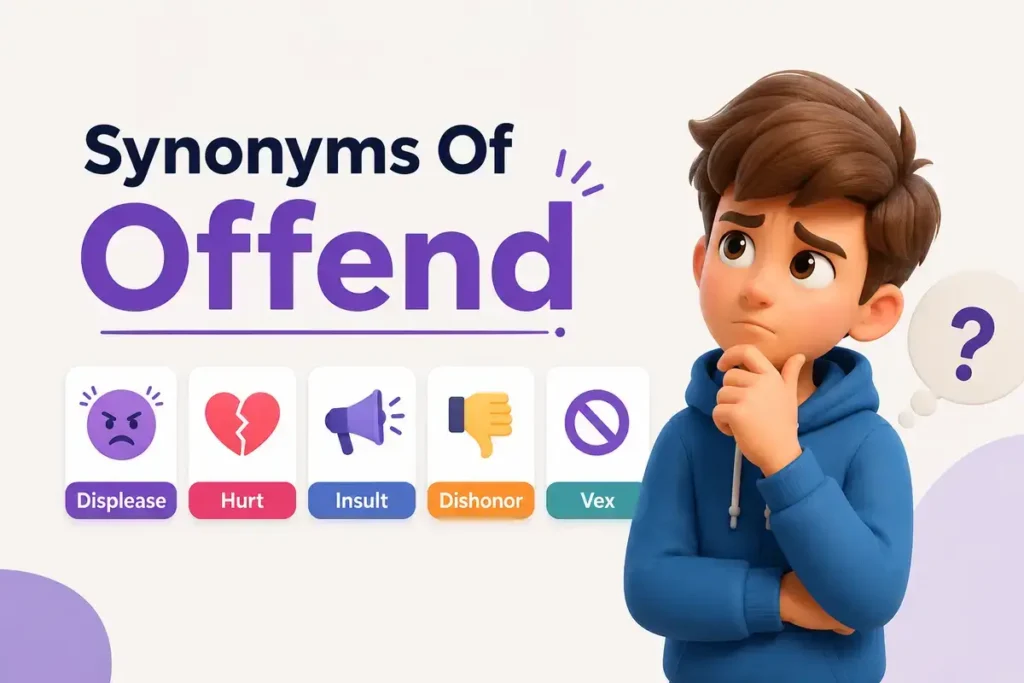
Depending on the context, offend can mean:
- Insult.
- Upset.
- Hurt.
- Annoy.
- Disrespect.
- Anger.
- Irritate.
- Embarrass.
Opposites Of Offend
- Please.
- Respect.
- Comfort.
- Praise.
- Encourage.
- Support.
Related Words
These words belong to the same word family.
- Offense.
- Offence.
- Offensive.
- Offender.
- Inoffensive.
- Offended.
Knowing these related forms makes it easier to recognize the correct spelling in any situation.
Expert Editor’s Note
Professional editors agree on one point.
Use offend every time.
The spelling affend is simply an error. It does not appear in respected dictionaries, style guides, or educational references.
Experienced proofreaders also recommend checking the surrounding words. If you can replace the verb with insult, upset, or hurt, then offend is almost certainly the correct choice.
In formal writing, avoid language that may unintentionally offend readers. Clear, respectful wording improves communication and helps your message reach a wider audience.
Frequently Asked Questions
Is Affend A Real Word?
No. Affend is not a standard English word. It is a common misspelling of offend and should not be used in any type of writing.
Which Is Correct Affend Or Offend?
Offend is always the correct spelling. It means to insult, upset, or hurt someone’s feelings, or to violate a rule or accepted standard.
Why Do People Spell Offend As Affend?
The mistake usually happens because the words sound similar in fast speech. Typing errors, memory slips, and confusion with words that begin with af also contribute to the misspelling.
Is Offend A Verb Or A Noun?
Offend is a verb. The related noun is offense in American English and offence in British English.
What Is The Past Tense Of Offend?
The past tense is offended.
Example.
She offended several guests without realizing it.
Is There A Difference Between American And British English?
No. Both American and British English use the verb offend. The only regional difference appears in the noun. American English prefers offense, while British English prefers offence.
Can I Use Offend In Formal Writing?
Yes. Offend is appropriate in formal, academic, legal, journalistic, and business writing when it accurately describes causing insult or violating accepted standards.
For another common grammar confusion, see Comprable Vs Comparable Which Spelling Is Correct 2026.
Conclusion
The answer to affend vs offend is straightforward.
Offend is the correct English word. It means to insult, upset, hurt someone’s feelings, or break accepted rules or standards.
Affend is not a recognized English word. It is simply a spelling mistake and should always be corrected to offend.
The easiest way to remember the correct spelling is to connect it with its word family.
Offend, offense, offensive, and offender all begin with off.
Once you remember that pattern, you’ll avoid this common mistake and write with greater confidence every time.

Editorial Reviewer & Proofreader
Grace Mitchell reviews Gramlify’s articles for clarity, consistency, and readability. She is passionate about creating accurate, approachable content that helps English learners build confidence.
1 thought on “Affend Vs Offend Which Word Is Correct 2026”