
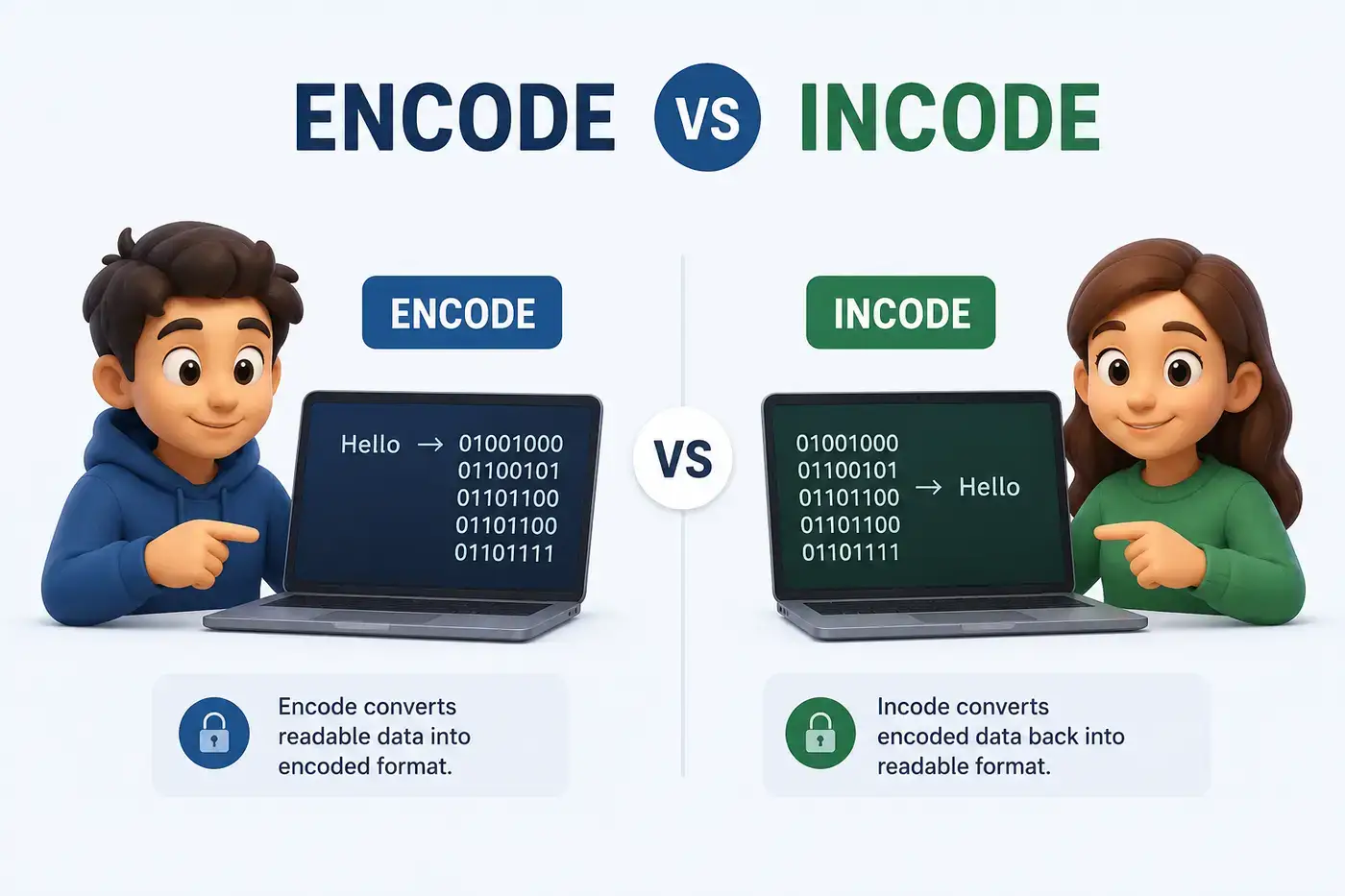
English has many words that look almost identical but carry completely different meanings. Encode vs incode is one of those confusing pairs that often appears in searches because people are unsure if both spellings are correct or if one is a typing mistake.
The correct word is encode. It means to convert information into a specific format, usually so it can be stored, transmitted, protected, or understood by a computer system or another person. Incode is not a standard English word and is generally considered an incorrect spelling.
The confusion happens because English has many words beginning with the prefix in, such as input, insert, and install. People sometimes assume incode follows the same pattern. However, encode comes from a different word structure and has a long history in English.
In this guide, you’ll learn the difference between encode and incode, why people confuse them, how encode works in technology and communication, its grammar rules, pronunciation, word origin, examples, common mistakes, and expert tips for using the correct word confidently.
You may also want to read Affend Vs Offend Which Word Is Correct 2026.
Quick Answer
Encode is the correct English word. It means to change information into a coded form, such as converting data into a computer readable format or turning a message into symbols. Incode is not recognized as a standard English word and is usually a spelling mistake.
Encode Vs Incode Comparison Table
| Feature | Encode | Incode |
|---|---|---|
| Correct spelling | Yes | No |
| Part of speech | Verb and noun form exists | Not a standard English word |
| Meaning | To convert information into a code or format | No accepted meaning in standard English |
| Pronunciation | en code | Not standard |
| Usage | Technology, communication, media, security, biology | Usually an error |
| Formal writing | Accepted | Avoid |
| Common context | Data processing, programming, encryption, language | None |
What Does Encode Mean
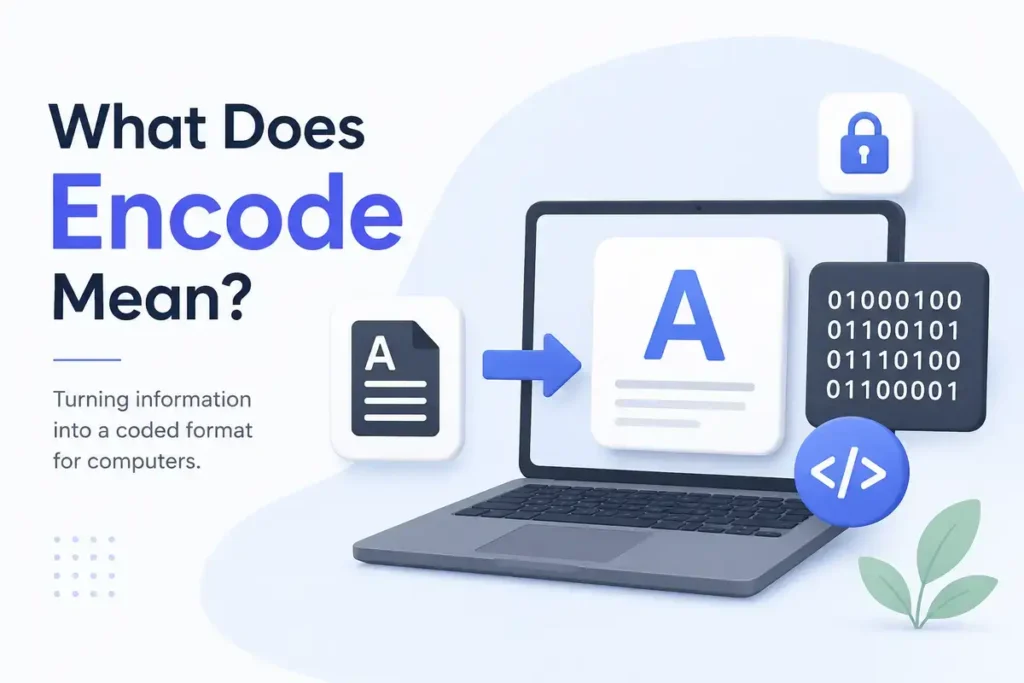
Encode is a verb that means to transform information into a particular code, format, or system.
The basic idea is simple. You take something meaningful and convert it into another form that can be stored, shared, processed, or understood.
Simple Definition
To encode means to change information into a coded format.
Common Uses Of Encode
The meaning of encode changes slightly depending on the field.
Technology
In computing, encoding means converting data into a format that computers can process.
Examples.
- A video platform encodes videos so they can play smoothly on different devices.
- Developers encode information before sending it through a network.
- The software encodes files into a smaller format.
Communication
Encoding can describe the process of turning thoughts into words, symbols, or signals.
Example.
A writer encodes an idea into language so readers can understand it.
Security
Encoding can protect or organize information by changing its format.
Example.
The system encodes user data before transferring it.
It is important to understand that encoding is not always the same as encryption. Encoding changes the format of information, while encryption protects information by making it unreadable without a key.
Biology
In biology, encode describes how genetic information provides instructions for creating proteins.
Example.
A gene encodes a protein needed for normal cell function.
What Does Incode Mean
Incode is not a standard English word.
You may see it online because people sometimes create incorrect spellings by adding the prefix in to a familiar word. However, dictionaries do not recognize incode as the correct form for the meaning people usually intend.
If you want to describe changing information into a code, the correct choice is always encode.
Incorrect.
The program will incode the file.
Correct.
The program will encode the file.
Which One Is Correct Encode Or Incode
The correct spelling is encode.
English uses encode because the word developed from the idea of putting something into a code.
The prefix en means to put into or make something have a certain quality.
Examples.
- Enable means to make something possible.
- Enrich means to make something richer.
- Encode means to put something into code.
The word does not use in because it does not mean putting something inside a location. It describes the process of converting information into a coded form.
Why People Confuse Encode And Incode
The confusion between these words comes from several common language patterns.
Similar Looking Prefixes
English has many words beginning with in.
Examples.
- Insert.
- Install.
- Input.
- Include.
Because of this pattern, some writers assume incode should exist.
However, English words do not always follow predictable patterns. Many words come from different historical roots, and their spelling develops over time.
Keyboard Mistakes
Typing quickly can create spelling errors.
The letters e and i are close enough in the spelling pattern that people may write incode without noticing the mistake.
Internet Influence
Search engines sometimes show incorrect spellings because many people search for them.
A common search does not automatically make a word correct.
For example, thousands of people may search for a misspelled word, but that does not change dictionary rules.
Technology Context
Because encode appears often in programming, software, and digital communication, beginners may encounter unfamiliar terms and guess the spelling.
Technical vocabulary can feel confusing at first because many words use specialized meanings.
Key Differences Between Encode And Incode
The biggest difference is simple.
Encode is a real English word. Incode is not.
Meaning
Encode has a clear meaning. It refers to converting information into a coded form.
Incode has no standard meaning in English.
Grammar
Encode works as a verb.
Examples.
- The app encodes the video.
- The software encoded the file.
- The system is encoding the data.
Incode does not function as a standard verb.
Usage
Encode appears in many professional fields.
Common areas include:
- Computer science.
- Programming.
- Digital media.
- Communication.
- Genetics.
- Data storage.
Incode does not appear in standard professional writing.
Formality
Encode works in both everyday and technical writing.
Examples.
The camera encodes images into a digital format.
The researcher explained how genes encode proteins.
Incode should not appear in formal or informal writing.
Grammar Explanation Of Encode
Understanding how encode works in sentences helps you use it correctly.
Encode As A Verb
The main use of encode is as a verb.
A verb shows an action.
Examples.
- The software encodes audio files.
- Engineers encode information before transmission.
- The system encoded the message successfully.
Verb Forms Of Encode
Like most regular verbs, encode follows normal English patterns.
Present tense.
Encode.
Example.
The program encodes the data.
Past tense.
Encoded.
Example.
The program encoded the data yesterday.
Present participle.
Encoding.
Example.
The program is encoding the data now.
Past participle.
Encoded.
Example.
The data has been encoded.
Sentence Structure
The common pattern is:
Subject + encode + object.
Examples.
- The app encodes videos.
- Scientists encode genetic information.
- The device encodes signals.
This structure makes encode easy to use in everyday writing.
Spelling Rules For Encode
The spelling of encode follows a common English pattern.
The En Prefix
The prefix en often means to put into or cause something to happen.
Examples.
- Encourage.
- Enclose.
- Enable.
- Encode.
The spelling connects naturally with the word code.
Adding Verb Endings
When adding endings, encode follows normal rules.
Encode + s becomes encodes.
Example.
The software encodes files.
Encode + d becomes encoded.
Example.
The system encoded the message.
Encode + ing becomes encoding.
Example.
The machine is encoding information.
There is no spelling change because the final letter is silent e and follows a standard pattern.
Pronunciation Guide For Encode
Pronunciation can help reinforce the correct spelling of encode.
Encode Pronunciation
IPA
American English: /ɪnˈkoʊd/
Syllables
En code.
Stress Pattern
The second syllable receives the main stress.
en CODE.
The word sounds like two clear parts:
en + code.
Common Pronunciation Mistake
Some learners pronounce encode with the stress on the first syllable, similar to words like income or input.
Incorrect pattern.
EN code.
Correct pattern.
en CODE.
The stress difference matters because English often changes meaning and word recognition through syllable stress.
Encode Word Origin And History
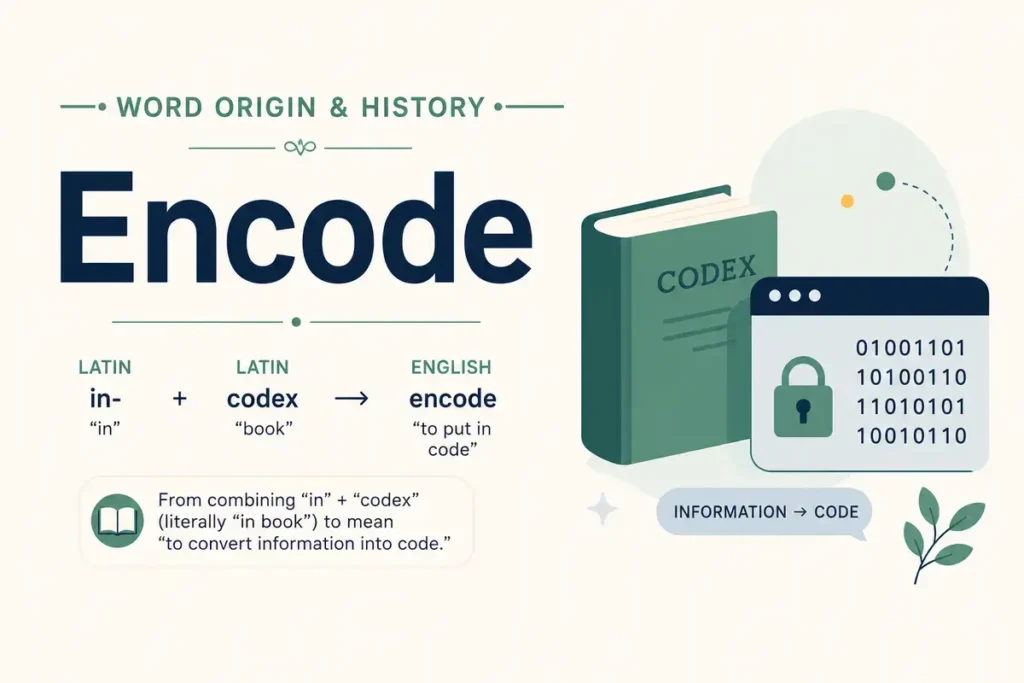
The history of encode explains why the spelling uses en instead of in.
The word comes from the French word encoder, which developed from the idea of putting something into a code.
The word combines:
- The prefix en meaning to put into or cause to be.
- The word code meaning a system of symbols, rules, or information.
Together, encode means to put information into a code.
The word became more common with the growth of communication technology and computer science. Today, people use encode in areas like software development, digital media, genetics, and information systems.
Encode In British And American English
There is no spelling difference between British English and American English.
Both use:
Encode.
Encoded.
Encoding.
Encodes.
The meaning stays the same across English speaking regions.
American English
American speakers commonly use encode in technology and everyday digital conversations.
Example.
The software encodes the video before uploading it.
British English
British speakers use encode in the same way.
Example.
The system encodes the information into a digital format.
Canadian And Australian English
Canadian and Australian English also use encode with the same spelling and meaning.
The word is universal in modern English because technology has made terms like encode part of global communication.
Real Life Examples Of Encode
Seeing encode in different situations makes the meaning easier to understand.
Daily Conversation Examples
- My phone automatically encodes photos before saving them.
- The app needs to encode the file before sharing it.
- The message was encoded so only the intended person could understand it.
- The video takes time to encode because the file is large.
- Your brain encodes memories through experiences and emotions.
Workplace Examples
- The developer explained how the software encodes customer information.
- Our team needs to encode the data before sending it to the client.
- The engineer encoded the instructions into the machine system.
- The company uses special tools to encode digital content.
- The technician is encoding the files for the new platform.
Learn the difference in Zeroes Or Zeros Which Spelling Is Correct 2026 Guide.
Email Examples
- Please encode the document before uploading it to the secure system.
- The attached file has already been encoded for compatibility.
- The developer confirmed that the system encoded the information correctly.
Academic Writing Examples
- Researchers studied how the brain encodes language.
- The study explains how genes encode important biological instructions.
- Scientists discovered how cells encode information through DNA sequences.
- The researcher examined how humans encode memories.
Journalism Examples
- The report explained how streaming platforms encode video content.
- The article described how digital systems encode information.
- Experts discussed how technology encodes personal data.
Social Media Examples
- The platform encodes videos to improve loading speed.
- Creators often encode videos into different formats for viewers.
- The image was encoded incorrectly and appeared damaged.
Literature And Communication Examples
- Writers encode emotions and ideas into their stories.
- Artists often encode hidden meanings into their work.
- A symbol can encode a deeper cultural message.
Encode In Technology
The word encode appears frequently in technology because computers need information in specific formats.
Computers do not understand human language, images, or sounds in the same way people do. Encoding helps convert information into forms machines can process.
Common examples include:
Video Encoding
Video files are encoded to reduce size and improve playback.
Example.
A streaming service encodes videos so users can watch them smoothly.
Audio Encoding
Music files are encoded into formats like MP3 so they can be stored and played easily.
Text Encoding
Computers encode characters using systems such as Unicode.
Example.
The letter A is represented by a specific digital value that computers recognize.
Data Encoding
Businesses encode information so different systems can exchange data properly.
Encode In Biology
In biology, encode has a different but related meaning.
A gene can encode a protein.
This means the information stored in the gene provides instructions for making that protein.
Example.
DNA encodes the instructions needed for life processes.
This use shows how broad the word encode has become. The main idea remains the same: information is stored in a specific form that can be understood or used.
Encode In Communication
Communication experts also use encode to describe how people create messages.
The communication process often includes:
- A person forms an idea.
- The person encodes the idea into words, gestures, or symbols.
- Another person receives and interprets the message.
Example.
A speaker encodes a message through language, while a listener decodes the meaning.
Common Mistakes With Encode
Even though encode is a simple word, people often misuse it.
Mistake One Writing Incode
Incorrect.
The program will incode the video.
Correct.
The program will encode the video.
Remember that incode is not the accepted spelling.
Mistake Two Confusing Encode And Encrypt
Many people use these words as if they mean the same thing.
They are related but different.
Encode
Changes information into another format.
Example.
A video is encoded into a smaller file type.
Encrypt
Protects information by hiding it from unauthorized users.
Example.
A password protects encrypted information.
A file can be both encoded and encrypted, but the processes have different purposes.
Mistake Three Using Encode As A Noun
Encode is mainly a verb.
Incorrect.
The encode of the file took five minutes.
Better.
The encoding of the file took five minutes.
The noun form is usually encoding.
Mistake Four Confusing Encode With Decode
These words describe opposite actions.
Encode means changing information into a coded form.
Decode means changing coded information back into an understandable form.
Example.
The software encodes the message.
The receiver decodes the message.
Memory Tricks To Remember Encode
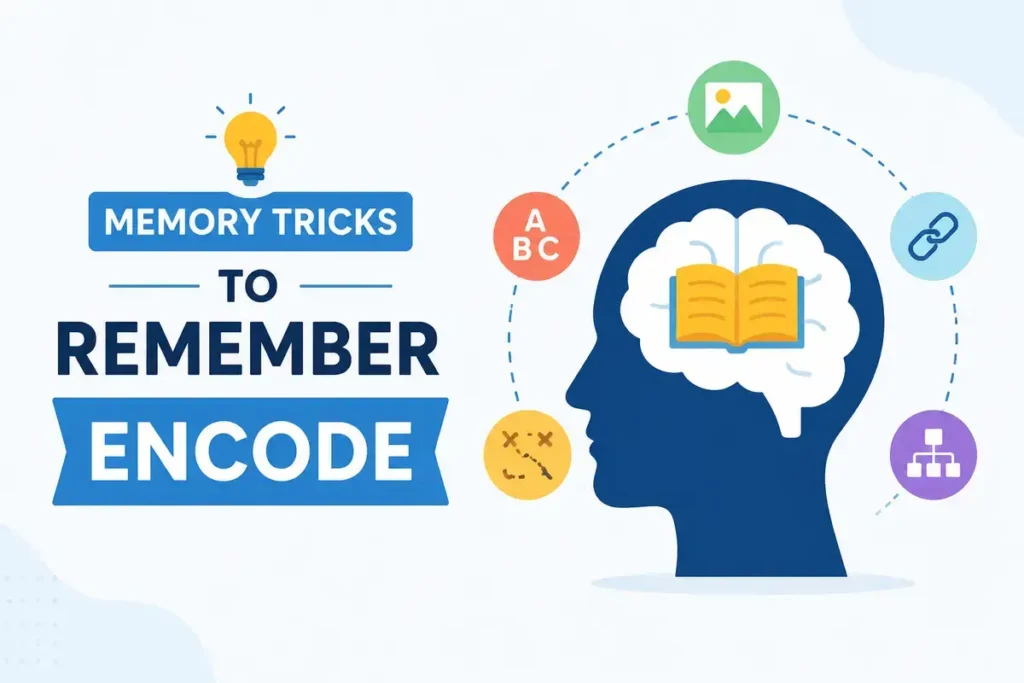
A good memory trick can prevent spelling mistakes.
Think En Means Entering Code
Imagine information entering a code system.
En + code = encode.
The information goes into a coded format.
Remember The Opposite Pair
Encode and decode work as opposites.
Encode.
Put information into code.
Decode.
Take information out of code.
If you remember one, the other becomes easier.
Visual Memory Trick
Picture a box labeled code.
When information goes into the box, it is encoded.
When information comes out, it is decoded.
Related Words To Encode
Understanding related words builds stronger vocabulary.
Encoding
The process of converting information into a coded format.
Example.
The encoding process takes several minutes.
Decoder
A tool or person that converts coded information back into readable form.
Example.
The device includes a video decoder.
Decode
To convert coded information into an understandable format.
Example.
The receiver decodes the message.
Encryption
A security process that protects information by making it unreadable without permission.
Cipher
A system used for writing or reading secret messages.
Similar Words And Frequently Confused Terms
Encode Vs Decode
Encode changes information into code.
Decode changes coded information back into its original form.
Encode Vs Encrypt
Encode focuses on format.
Encrypt focuses on security.
Encode Vs Input
Input means entering information into a system.
Encode means converting information into a specific format.
Encode Vs Include
Include means containing something.
Encode means converting something into code.
These words may look similar because of their prefixes, but their meanings are completely different.
Expert Editor’s Note On Encode Vs Incode
Professional editors and language teachers look at one thing first: meaning.
The correct word is encode because it clearly communicates the action of converting information into a code, format, or system. The spelling follows established English patterns and appears in dictionaries, technical manuals, academic writing, and everyday communication.
Incode is not accepted as standard English. If you see it in a document, article, or message, it is most likely a spelling mistake.
Editors also recommend paying attention to the difference between encode, encoding, and encoded.
Examples.
- The software will encode the file.
- The encoding process takes several minutes.
- The file has been encoded successfully.
Using the correct form makes your writing sound more natural and professional.
What Dictionaries Say About Encode
Major English dictionaries define encode as the act of converting information into a coded form.
Common dictionary meanings include:
- To convert data into a particular code.
- To change information into a form that can be stored or transmitted.
- To express information through symbols, signals, or language.
The word appears across many fields, including:
- Computer science.
- Digital communication.
- Biology.
- Media production.
- Linguistics.
Frequently Asked Questions About Encode Vs Incode
Is Encode The Correct Spelling?
Yes. Encode is the correct spelling. It means to convert information into a coded format. The word is widely used in technology, communication, biology, and data processing. Incode is not a standard English word and should not be used in professional or academic writing.
Why Do People Write Incode Instead Of Encode?
People often write incode because English contains many words that start with in, such as input, insert, and include. However, encode comes from the prefix en, which means to put into or cause something to become. The spelling developed from the word code.
What Is The Difference Between Encode And Encrypt?
Encoding changes information into another format so it can be stored, shared, or processed. Encryption protects information by making it unreadable without the correct key. A file can be encoded for compatibility and encrypted for security at the same time.
Is Encode A Verb Or A Noun?
Encode is mainly used as a verb. It describes an action, such as encoding a file or encoding information. The related noun form is usually encoding. For example, you would say the encoding of the video took time, not the encode of the video took time.
How Do You Use Encode In A Sentence?
You can use encode when talking about converting information into a specific format. Examples include: The app encodes videos before uploading them. Scientists study how genes encode proteins. The system encodes messages before sending them across the network.
What Is The Opposite Of Encode?
The opposite of encode is decode. Encoding puts information into a coded format, while decoding changes coded information back into a readable or understandable form.
Is Encode Used In Everyday English?
Yes. While encode is common in technical fields, people also use it in everyday situations involving digital devices. Phones, websites, apps, and media platforms often encode files, images, videos, and messages.
Is Incode Ever Correct?
In some cases, a word may appear as a name, brand, software title, or specialized term created by a company. However, as a normal English verb meaning to convert information into code, incode is incorrect.
For another common grammar confusion, see Totalling Vs Totaling Which Spelling Is Correct 2026.
Conclusion
The difference between encode vs incode is straightforward.
Encode is the correct English word. It means to convert information into a coded format that can be stored, shared, processed, or understood.
Incode is not a standard English word and is usually a spelling mistake.
The easiest way to remember the difference is to connect encode with code. You put information into a code, so you encode it.
Avoid guessing based on similar looking words. English spelling often follows history and meaning rather than simple patterns. Choosing the correct word makes your writing clearer, more accurate, and easier for readers to trust.

Editorial Reviewer & Proofreader
Grace Mitchell reviews Gramlify’s articles for clarity, consistency, and readability. She is passionate about creating accurate, approachable content that helps English learners build confidence.