
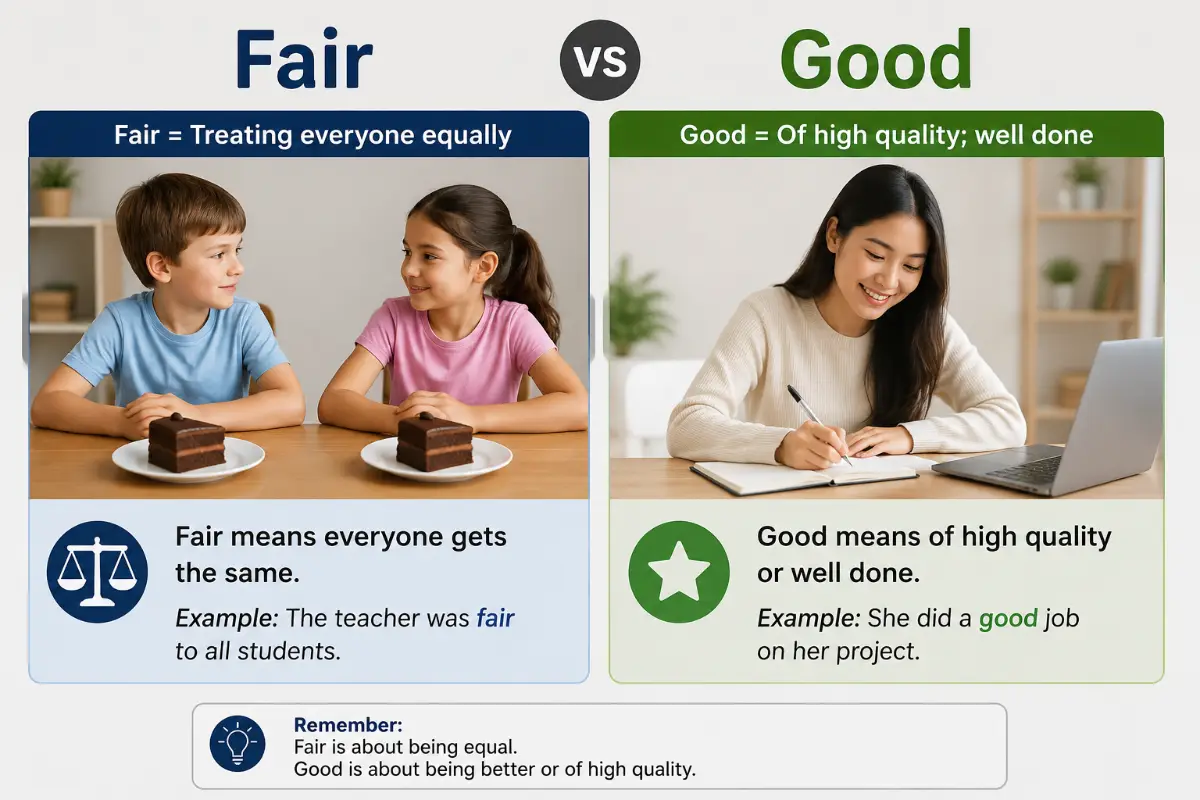
You are staring at a listing, a review, or a report card, and one word is doing a lot of work: is this thing “fair” vs “good”? The gap between those two words feels small until you realize it can change how much you pay for a used car, whether you accept an offer on a couch, or whether a grade actually means what you think it means. Fair and good are not interchangeable, and mixing them up in the wrong context can cost you money or set the wrong expectations entirely.
This guide breaks down exactly where fair ends and good begins, across the situations where people actually search for this: resale marketplaces, car listings, furniture, grading scales, and plain old everyday English.
A related grammar guide is Village Vs Subdivision Differences Explained Clearly 2026.
Quick Answer: Fair vs Good
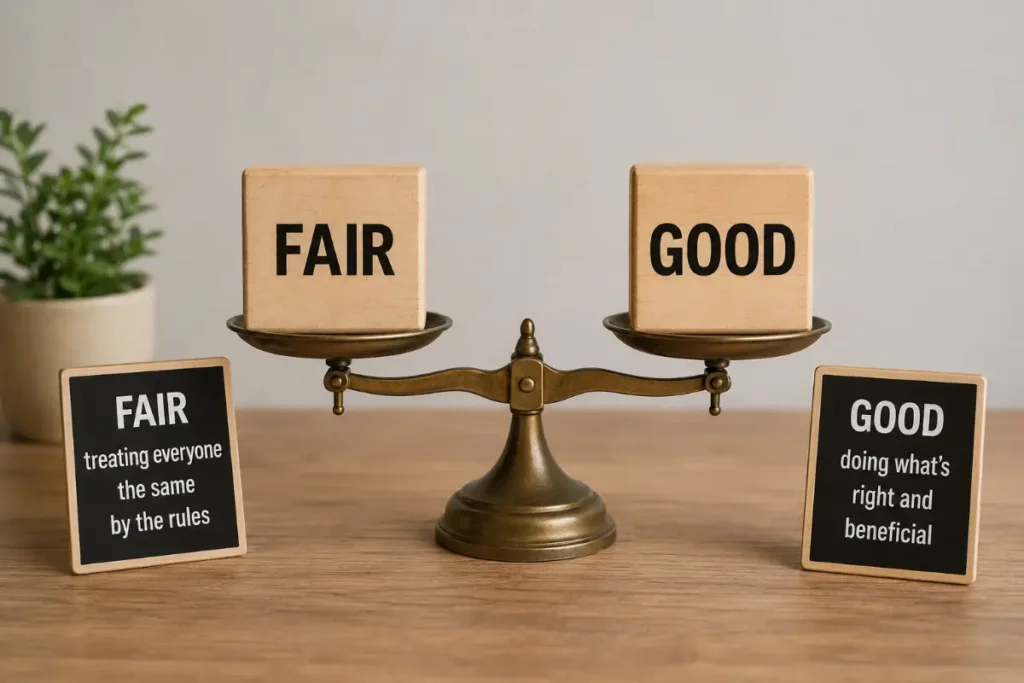
Fair means acceptable, average, or okay, but with noticeable flaws or limitations. It sits in the middle of a quality scale, above poor but below good.
Good means solid, reliable, and above average, with only minor issues if any. It signals genuine quality, not just something that gets the job done.
The short version: fair means “it works, but don’t expect much.” Good means “you can trust this.”
| Rating | What It Signals | Typical Position on Scale |
|---|---|---|
| Poor | Significant flaws, barely functional | Lowest |
| Fair | Noticeable wear or issues, usable | Below average |
| Good | Minor wear, reliable, solid | Above average |
| Excellent | Little to no flaws, near-new | Highest |
Keep that four-tier scale in your head. Almost every context where “fair vs good” comes up, whether it is a used car listing or a resale app, is really a version of this same ladder.
Fair Meaning: The Full Picture
The word “fair” carries two very different meanings depending on context, and that dual identity is part of why it confuses people.
In an ethical or judgment sense, fair means just, equitable, or free from bias. A fair decision treats everyone the same way. A fair price reflects honest value rather than exploitation. This meaning has nothing to do with quality at all.
In a rating or grading sense, which is the meaning most people are actually searching for when they type “fair vs good,” fair describes something of moderate or average quality, usually with visible flaws. A fair condition item works, but it shows its age. A fair grade on a report card means passable, not impressive. A fair review means the product does its job without wowing anyone.
That second meaning is the one that matters most in marketplaces, grading rubrics, and condition reports, so that is the meaning this guide focuses on going forward.
Good Meaning: The Full Picture
Good is a more straightforward word, but its exact position on a quality scale shifts depending on what is being rated. In general usage, good means satisfactory to a high degree, something that performs well and holds up under normal use. A good condition item shows light wear at most. A good review means the reviewer was genuinely satisfied. A good grade signals solid understanding, well above the bare minimum.
The key distinction between fair and good is not just “better versus worse.” It is the difference between something that merely functions and something you can actually rely on without reservation.
Fair vs Good vs Excellent: The Full Grading Scale
Most rating systems, whether for cars, furniture, electronics, or clothing, use some version of a four or five tier scale. Understanding where fair and good sit relative to the tiers around them makes the whole system click into place.
Poor describes an item with significant damage, malfunction, or wear that affects usability. It might still technically work, but expect real problems.
Fair describes an item that is usable and functional but shows clear signs of wear, age, or minor damage. Think scratches, faded color, a part that needs replacing soon, or cosmetic flaws that are hard to ignore. Fair does not mean broken. It means used, and it looks used.
Good describes an item in solid working order with only minor, easy-to-overlook wear. Most of its function and appearance remain intact. This is the tier where most well-maintained secondhand items land.
Excellent (sometimes labeled “like new” or “very good” depending on the platform) describes an item that shows little to no sign of prior use. It performs and looks close to brand new.
Some platforms insert an extra tier between good and excellent, often called “very good,” which narrows the gap even further. When you see that extra tier, treat it as splitting the difference: still clearly above fair, but not quite flawless.
The consistent thread across every version of this scale is that fair and good are neighbors, not opposites. Fair is the last stop before something starts looking genuinely worn out. Good is the first stop where an item starts to feel trustworthy again.
Good vs Fair Condition Car: What Buyers Need to Know
Car listings lean on condition ratings constantly, and this is one of the highest-stakes places to understand fair versus good, since a misread rating can mean thousands of dollars in unexpected repairs.
A car listed in fair condition typically has visible cosmetic damage such as dents, scratches, or interior wear, and it may have mechanical issues that need attention soon, even if the car currently runs. Tires might be near the end of their life. There could be a check engine light or a history of deferred maintenance. Fair condition cars are usually priced noticeably lower than similar models in better shape, and that lower price reflects real, tangible problems, not just an overly cautious seller.
A car listed in good condition runs reliably with only minor cosmetic flaws, like small scratches or light interior wear that comes from normal use. Mechanically, it should not need immediate work beyond routine maintenance. Good condition is the tier most buyers hope to land in when shopping secondhand, since it represents a balance between price and dependability.
If you are comparing listings, always ask for maintenance records and, ideally, get a pre-purchase inspection regardless of which tier the seller claims. Self-reported condition ratings are useful shorthand, but they are not a substitute for a mechanic’s eyes on the actual vehicle.
Good vs Fair Condition Furniture: A Practical Breakdown
Furniture resale, whether through consignment shops, Facebook Marketplace, or dedicated apps, uses the same fair-to-excellent logic, but the specific flaws look different from a car.
Fair condition furniture usually has visible surface damage such as scratches, stains, fading, or minor structural looseness, like a wobbly chair leg or a drawer that sticks. It is still functional and worth buying if the price reflects the flaws, especially for budget-conscious buyers or anyone planning to refinish or reupholster the piece anyway.
Good condition furniture shows light, expected wear from normal use but no significant damage or structural issues. Joints are solid, surfaces are mostly clean and unmarked, and the piece looks presentable without needing repair work.
A useful rule when shopping secondhand furniture: fair condition is often the better deal if you have the time or skill to fix cosmetic issues yourself, since you are effectively paying for the flaws to be discounted. Good condition is worth the premium when you want something ready to use immediately, with no project attached.
Need another quick comparison? Read Deep Seated Vs Deep Seeded: Which One Is Correct (2026 Guide).
Fair Condition on Depop and Resale Fashion Apps
Clothing resale platforms, Depop included, use condition tags heavily, and “fair” on these apps carries a specific, fairly consistent meaning across the industry. Fair condition on Depop and similar apps generally means the item is wearable and functional but has noticeable flaws: pilling, small stains, minor fraying, a loose thread, or visible fading from wash and wear. It is not the tier you want for a special-occasion piece, but it is completely reasonable for everyday basics where a small imperfection will not be a dealbreaker.
Good condition on these same apps signals an item close to its original state, with only light signs of wear that would not be obvious unless someone looked closely. Sellers listing in good condition are telling buyers they can expect the item to look close to how it appears in photos, without unpleasant surprises on arrival.
One tip that seasoned resale shoppers rely on: always check listing photos closely and read the full description, regardless of which condition tag is used. Individual sellers apply these labels with different levels of strictness, and a “fair” from a meticulous seller might look better than a “good” from someone less careful.
What People on Reddit Actually Say About Fair vs Good
Threads on resale and shopping communities return to the same handful of themes again and again. A recurring piece of advice is to treat condition labels as a starting point, not a guarantee, since ratings are subjective and depend entirely on the seller applying them. Another common thread is that “fair” gets undersold by cautious sellers who rate conservatively, meaning a fair-rated item sometimes turns out better in person than the label suggests. The opposite happens too, with optimistic sellers stretching “good” to cover items that would more honestly sit in the fair range. The consistent, practical takeaway across these discussions is simple: use the condition label to filter your search, but always verify with photos, descriptions, or direct questions before committing to a purchase.
A Quick Detour: Fair Food
Worth flagging separately, since it is a completely different meaning hiding inside the same search term. “Fair food” usually has nothing to do with condition or quality ratings at all. It refers to food sold at county fairs, state fairs, and carnivals, things like funnel cake, corn dogs, deep-fried specialties, and other festival staples. If that is what brought you here, the short answer is that fair food describes a food category tied to fairground events, not a quality tier on the fair-to-excellent scale discussed throughout this guide. Different word, same spelling, completely unrelated context.
Fair vs Good: Quick Reference by Context
| Context | Fair Means | Good Means |
|---|---|---|
| Used cars | Visible damage, possible mechanical issues, runs but needs attention | Reliable, minor cosmetic wear, no urgent repairs |
| Furniture | Noticeable scratches, stains, or minor structural looseness | Light wear, structurally solid, presentable |
| Clothing/Depop | Pilling, small stains, visible fading | Close to original state, minor unnoticeable wear |
| Report cards/grades | Passable, below average understanding | Solid, above average understanding |
| General judgment | Just, unbiased, equitable | High quality, satisfactory, dependable |
Bookmark this table if you regularly shop secondhand across multiple categories. The label changes slightly by platform, but the underlying logic stays remarkably consistent.
How to Decide Which Tier Actually Matters for You
Not every purchase needs the same condition tier, and that is worth saying plainly. If you are buying something you plan to use hard, refinish, or replace soon anyway, fair condition often represents genuine value, since you are paying less for flaws that do not affect your plans. If you want something dependable with no surprises and no extra work, good condition is worth the price difference. The mistake most buyers make is assuming higher is always better, when really the right tier depends entirely on what you are going to do with the item once it is yours.
Many readers also check Ballot Or Bullet Which Word Is Correct 2026 Guide.
The Bottom Line
Fair and good are not just softer or stronger ways of saying the same thing. Fair signals something usable but flawed, while good signals something reliable with only minor wear. That gap shows up the same way whether you are reading a car listing, a furniture ad, a Depop tag, or a report card, because nearly every rating system leans on the same poor-to-excellent ladder underneath.
The real skill is not memorizing definitions, it is matching the tier to what you actually need. Fair condition can be the smarter buy when you are willing to fix small flaws yourself. Good condition earns its higher price when you want something dependable with zero surprises. Read the label, but always check the photos and description behind it, since sellers apply these words with different standards. Once you know what each tier promises, you stop guessing and start shopping with confidence.
Frequently Asked Questions
Is fair condition better or worse than good condition?
Fair condition is worse than good condition. Fair sits below good on nearly every standard rating scale, meaning fair items show more visible wear or have more functional issues than items rated good.
What does fair condition mean when buying secondhand?
Fair condition means the item is usable but shows clear signs of wear, damage, or age. It is not broken, but expect visible flaws like scratches, stains, fading, or minor mechanical issues depending on what is being sold.
What is the difference between fair, good, and excellent?
Fair means usable with noticeable flaws, good means reliable with only minor wear, and excellent means close to new condition with little to no visible flaws. The three sit in ascending order on most quality scales, with poor sometimes added below fair.
Is a fair condition car worth buying?
A fair condition car can be worth buying if the price reflects its flaws and you get a pre-purchase inspection. It often needs upcoming repairs or has cosmetic damage, so factor those costs into your decision before committing.
What does good condition mean on resale apps like Depop?
Good condition on resale apps means the item is close to its original state, with only light, easy-to-overlook wear. It should not have noticeable stains, tears, or fading, unlike items listed in fair condition.
Why do sellers rate items differently even with the same condition label?
Condition ratings are subjective and depend on each seller’s standards. Some sellers rate conservatively and undersell decent items as fair, while others stretch the good label to cover items with more visible wear, so always check photos and descriptions directly.
Does fair food relate to fair condition ratings?
No. Fair food refers to food sold at fairs and carnivals, like funnel cake or corn dogs. It shares the word “fair” but has no connection to condition or quality ratings.

Vocabulary & Language Research Writer
Ethan Parker researches English vocabulary, word meanings, slang, idioms, and commonly confused words. His goal is to help readers understand how English is actually used in everyday conversations and writing.