
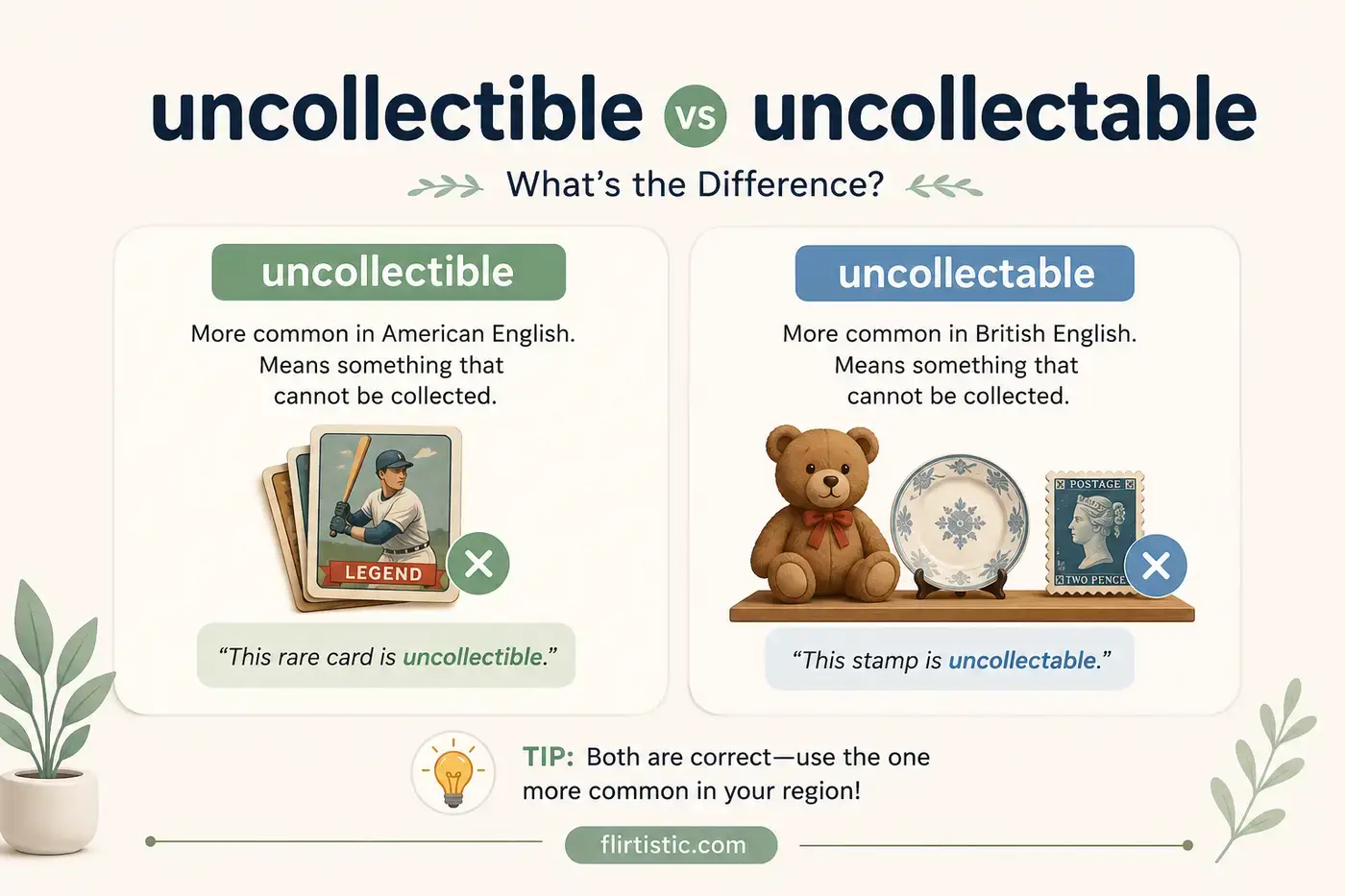
Many English words create confusion because they look almost identical but carry slightly different meanings. Uncollectible vs uncollectable is one of those cases. Both words are considered correct, and both relate to something that cannot be collected. However, native speakers often choose one over the other depending on the situation.
The confusion happens because the suffixes ible and able often create similar meanings. In many cases, these endings can be interchangeable, but they do not always sound equally natural. Writers, editors, accountants, and legal professionals may prefer one form because it fits their field better.
The short answer is simple. Uncollectible is more common when talking about money, debts, accounts, or items that cannot be recovered. Uncollectable is also correct and often describes something that cannot be collected in a broader physical or general sense.
This guide explains the difference between uncollectible vs uncollectable, including meanings, grammar, spelling rules, usage examples, word origins, common mistakes, and expert writing advice. By the end, you’ll know which word fits your sentence naturally.
You may also want to read Tweek Vs Tweak Which Spelling Is Correct 2026.
Quick Answer
Uncollectible and uncollectable are both correct English words. Use uncollectible most often for debts, payments, or financial amounts that cannot be recovered. Use uncollectable for things that cannot be gathered, obtained, or collected in a general sense. The difference is mainly about usage and context, not grammar.
Uncollectible Vs Uncollectable Comparison Table
| Feature | Uncollectible | Uncollectable |
|---|---|---|
| Correct spelling | Yes | Yes |
| Part of speech | Adjective | Adjective |
| Main meaning | Impossible to collect or recover | Impossible to collect or gather |
| Common context | Finance, accounting, debts, payments | General situations, objects, collections |
| Formality | Very common in professional writing | Correct but less common |
| Pronunciation | un kuh LEK tuh buhl | un kuh LEK tuh buhl |
| Common example | The loan became uncollectible. | The rare item was uncollectable. |
| Frequency | More common | Less common |
What Does Uncollectible Mean
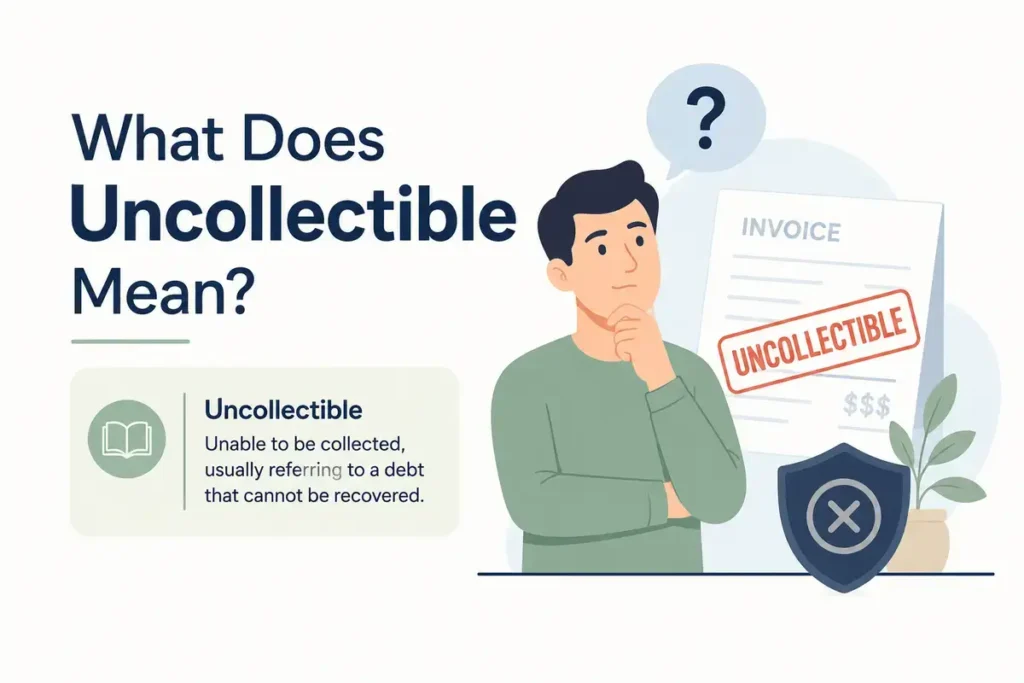
Uncollectible is an adjective that describes something that cannot be collected, recovered, or received.
The word is especially common in financial and business settings. It often refers to money that someone owes but will not pay.
Simple Definition
Uncollectible means impossible to collect or recover.
Common Uses Of Uncollectible
The word appears frequently in accounting, banking, and business communication.
Examples:
- The company removed several uncollectible accounts from its records.
- The bank considered the loan uncollectible after years of missed payments.
- The unpaid balance became uncollectible after the customer disappeared.
- The accountant recorded the debt as an uncollectible amount.
- The agency identified several uncollectible payments during the review.
In these examples, the focus is not on physically gathering something. The focus is on recovering money or value.
Uncollectible In Business And Accounting
In professional settings, uncollectible is the preferred term when discussing money.
Accountants use phrases like:
- Uncollectible debt.
- Uncollectible accounts.
- Uncollectible receivables.
- Uncollectible balance.
A company may have customers who owe money but are unlikely to pay. Those amounts are called uncollectible because the business cannot realistically recover them.
Example:
The company created an allowance for uncollectible accounts.
This means the business expects some customers will not pay their bills.
What Does Uncollectable Mean
Uncollectable is also an adjective. It describes something that cannot be collected.
It has a wider meaning and can apply to objects, information, materials, or anything someone tries to gather.
Simple Definition
Uncollectable means impossible to collect or gather.
Common Uses Of Uncollectable
Examples:
- The damaged cards were considered uncollectable by the museum.
- The scattered evidence was uncollectable after the storm.
- Some natural samples are uncollectable because the area is protected.
- The old documents were uncollectable due to their fragile condition.
- The data was uncollectable because the system failed.
In these cases, the meaning focuses on the act of collecting rather than recovering money.
Which One Is Correct
Both uncollectible and uncollectable are correct.
The choice depends on your meaning and audience.
Use uncollectible when you mean:
- A debt that cannot be paid.
- Money that cannot be recovered.
- An account that has no realistic chance of collection.
Use uncollectable when you mean:
- Something that cannot be gathered.
- Something impossible to obtain.
- Something unavailable for collection.
Compare these examples.
Correct:
The customer’s debt is uncollectible.
This means the money will probably never be recovered.
Correct:
The rare artifact is uncollectable.
This means it cannot be collected or added to a collection.
Both sentences work because each word matches the situation.
Why People Confuse Uncollectible And Uncollectable
The confusion comes from English spelling patterns and similar meanings.
Similar Suffixes
The endings ible and able often create adjectives with similar meanings.
Examples:
- Understandable.
- Visible.
- Accessible.
- Flexible.
- Collectible.
Because these endings can overlap, learners often wonder which form sounds correct.
Same Root Word
Both words come from collect.
Collect means to bring things together or receive something.
Adding prefixes and suffixes changes the meaning.
Collect.
Collectible.
Uncollectible.
Uncollectable.
The shared root makes the words look like alternatives.
Different Professional Usage
Many people see uncollectible in financial documents, tax reports, and accounting records. This repeated exposure makes it feel more common.
Uncollectable appears less often and usually has a broader meaning.
Internet Confusion
Online discussions sometimes claim one spelling is wrong. That is inaccurate.
Both words appear in dictionaries and are accepted English forms. The important point is choosing the word that matches your intended meaning.
Key Differences Between Uncollectible And Uncollectable
The main difference is not spelling. It is usage.
Meaning Difference
Uncollectible usually means something cannot be recovered.
Example:
The unpaid invoice is uncollectible.
The company cannot get the money.
Uncollectable usually means something cannot be collected.
Example:
The damaged items were uncollectable.
The items cannot be gathered into a collection.
Context Difference
Financial writing strongly prefers uncollectible.
General writing may use either word depending on the situation.
Tone Difference
Uncollectible sounds more technical because professionals use it in accounting and finance.
Uncollectable sounds more general and descriptive.
Function Difference
Both words function as adjectives. They describe nouns.
Examples:
Uncollectible debt.
Uncollectable object.
Uncollectible account.
Uncollectable material.
Grammar Explanation Of Uncollectible And Uncollectable
Understanding the grammar behind uncollectible vs uncollectable makes the difference much easier.
Both words are adjectives. They describe a noun by showing that something cannot be collected.
Uncollectible As An Adjective
Uncollectible describes something impossible to collect or recover.
The word structure is:
Un + collectible = uncollectible
The prefix un means not or the opposite of.
The word collectible means something that can be collected. Adding un changes the meaning to something that cannot be collected.
Examples:
- The company marked the old debt as uncollectible.
- The unpaid invoice became uncollectible after several attempts to recover payment.
- The bank reported millions of dollars in uncollectible loans.
In each example, the word describes something that cannot be recovered.
Uncollectable As An Adjective
Uncollectable follows a similar pattern.
The word structure is:
Un + collectable = uncollectable
The prefix un changes the meaning of collectable from possible to impossible.
Examples:
- The damaged coins were uncollectable.
- The samples became uncollectable after contamination.
- The evidence was uncollectable because the location was unsafe.
Here, the focus is on gathering or obtaining something.
Spelling Rules Behind Uncollectible And Uncollectable
The difference between these words comes from two adjective endings.
The Ible Ending
The ending ible often appears in words that come from Latin roots or words where the ability idea is less obvious.
Examples:
- Visible.
- Possible.
- Flexible.
- Collectible.
- Uncollectible.
The word collectible is the base form used in uncollectible.
The Able Ending
The ending able usually means capable of or able to.
Examples:
- Readable.
- Enjoyable.
- Manageable.
- Collectable.
- Uncollectable.
The word collectable means capable of being collected.
Why Both Forms Exist
English often keeps multiple forms because words develop through different historical paths.
Both collectible and collectable are accepted forms. Their negative versions follow the same pattern.
This is why both uncollectible and uncollectable exist.
Pronunciation Guide
The pronunciation of these words is almost identical, which adds to the confusion.
Uncollectible
IPA
/ˌʌnkəˈlektəbəl/
Syllables
Un col lect i ble.
Stress Pattern
The strongest stress falls on the third syllable.
col LECT.
Uncollectable
IPA
/ˌʌnkəˈlektəbəl/
Syllables
Un col lect a ble.
Stress Pattern
The main stress also falls on the third syllable.
col LECT.
Common Pronunciation Mistake
Many speakers pronounce the ending too strongly and separate the words incorrectly.
In natural speech, both words usually sound the same.
The meaning comes from context.
Example:
The debt is uncollectible.
The listener understands the financial meaning.
The item is uncollectable.
The listener understands the general meaning.
Etymology And Word Origin
The history of these words begins with the root word collect.
Origin Of Collect
The word collect comes from the Latin word colligere, meaning to gather together.
It entered English through Old French and developed meanings connected with gathering, receiving, and bringing things together.
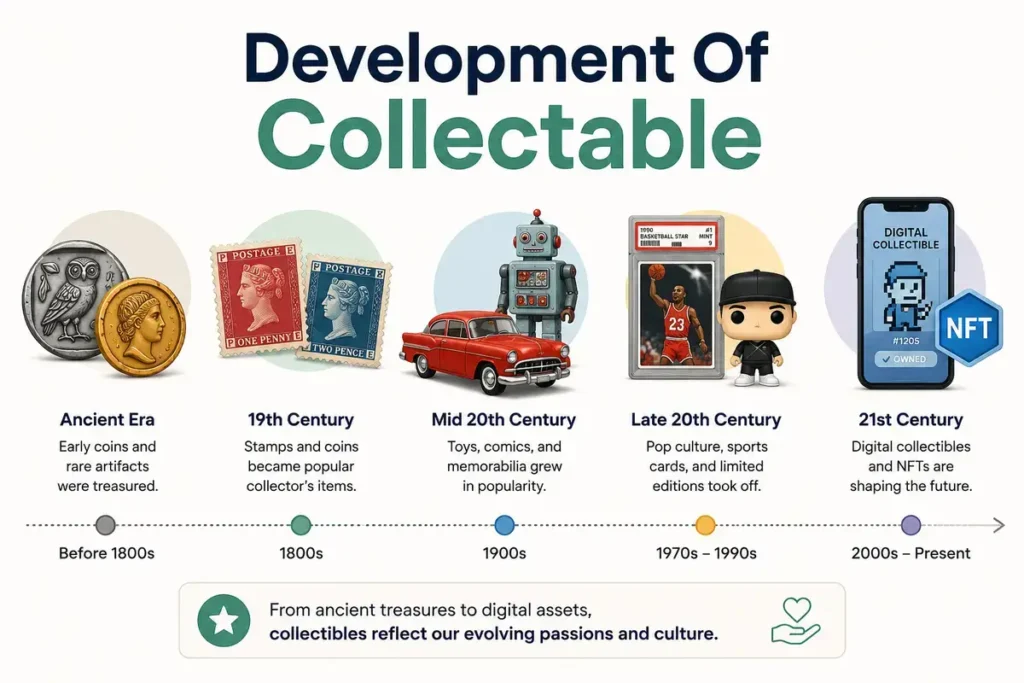
Development Of Collectible
As English developed, speakers created adjectives from verbs.
Collect became collectible.
Collectible described something suitable for collecting or something valuable as part of a collection.
Later, uncollectible developed to describe things that could not be collected.
Development Of Collectable
The form collectable developed through the common English pattern of adding able to verbs.
It follows the same structure as:
- Acceptable.
- Changeable.
- Washable.
- Collectable.
Both forms became part of modern English.
British American Canadian And Australian English
The difference between uncollectible and uncollectable is not mainly regional, but usage patterns can vary.
American English
American English strongly prefers uncollectible in financial contexts.
Examples:
- Uncollectible debt.
- Uncollectible accounts.
- Uncollectible receivables.
Businesses and accountants commonly use this form.
British English
British English accepts both forms. Writers may use uncollectable slightly more often when referring to general objects or collections.
Canadian English
Canadian English follows both British and American influences. Both words appear, but professional financial writing often uses uncollectible.
Australian English
Australian English also recognizes both forms. The choice depends mainly on context.
The important point is that neither spelling is incorrect.
Still confused? Compare Whiny Vs Whiney Which Spelling Is Correct 2026.
Real Life Examples Of Uncollectible And Uncollectable
Seeing these words in different situations helps build natural understanding.
Everyday Conversation Examples
- I think that old bill is uncollectible because the person moved away.
- The broken toys were uncollectable after the cleanup.
- The company admitted the missing payment was uncollectible.
- Those rare items are uncollectable because the owner refuses to sell them.
Workplace Examples
- The finance department reviewed all uncollectible accounts.
- The manager removed several uncollectible balances from the report.
- The damaged products were considered uncollectable.
- The team created a plan to reduce future uncollectible losses.
Email Examples
- We identified several uncollectible invoices during the monthly review.
- The records show that these payments are unlikely to be recovered and should be treated as uncollectible.
- The archived materials are uncollectable because they were destroyed.
- The research team confirmed the samples were uncollectable.
Academic Writing Examples
- The study examined methods for reducing uncollectible financial losses.
- Researchers classified the damaged evidence as uncollectable.
- The report explained how organizations handle uncollectible accounts.
- The author discussed the challenges of collecting uncollectable historical materials.
Journalism Examples
- The company announced millions in uncollectible debt.
- Officials reported that some damaged documents were uncollectable.
- The investigation revealed a rise in uncollectible payments.
- The article explained why certain items remained uncollectable.
Social Media And Informal Writing Examples
- Some promises become uncollectible when people stop trying.
- That old collection is uncollectable now because nobody can find the pieces.
- The unpaid money feels completely uncollectible.
- Those memories are priceless but impossible to collect.
Common Mistakes With Uncollectible And Uncollectable
Writers often make mistakes because they focus only on spelling instead of meaning.
Mistake One Using Uncollectable For Financial Debts
Incorrect:
The bank reported several uncollectable loans.
Better:
The bank reported several uncollectible loans.
The first sentence is understandable, but uncollectible is the standard choice in finance.
Mistake Two Thinking Uncollectible Is The Only Correct Form
Incorrect belief:
Uncollectable is wrong.
Correct:
Both forms are accepted.
The choice depends on context.
Mistake Three Confusing Collectible And Collectable
Both base words are correct too.
Examples:
This coin is collectible.
This coin is collectable.
However, collectible is often preferred when discussing valuable items people collect.
Mistake Four Adding A Hyphen
Incorrect:
Un collectible.
Correct:
Uncollectible.
The prefix un joins directly with the word.
No hyphen is needed.
Memory Tricks To Remember Uncollectible And Uncollectable
Remembering the difference between these two words becomes easier when you connect each one with its most common use.

Think About Money With Uncollectible
The word uncollectible is strongly connected with money.
Remember:
Uncollectible = Unable to recover.
Think about unpaid bills, loans, and accounts.
Example:
The unpaid loan became uncollectible.
The company cannot recover the money.
Think About Gathering With Uncollectable
The word uncollectable focuses on the act of collecting something.
Remember:
Uncollectable = Unable to gather.
Example:
The damaged artwork was uncollectable.
The item cannot be added to a collection.
Use The Root Word Trick
Both words start with collect.
Ask yourself:
Is someone trying to collect money or recover value?
Choose uncollectible.
Is someone trying to gather an item, object, or material?
Choose uncollectable.
This simple question solves most usage problems.
Related Words And Similar Expressions
Understanding related vocabulary helps you recognize these words faster.
Words Related To Uncollectible
- Unpaid.
- Irrecoverable.
- Outstanding.
- Bad debt.
- Written off.
- Doubtful account.
- Nonrecoverable.
Examples:
The company wrote off the irrecoverable debt.
The unpaid balance became a bad debt.
Words Related To Uncollectable
- Unobtainable.
- Unavailable.
- Impossible to gather.
- Inaccessible.
- Unreachable.
Examples:
The missing records were unobtainable.
The rare samples were impossible to gather.
Opposite Words
Knowing opposites can strengthen your understanding.
Opposites Of Uncollectible
- Collectible.
- Recoverable.
- Payable.
- Obtainable.
- Receivable.
Example:
The company expects the invoice to be recoverable.
Opposites Of Uncollectable
- Collectable.
- Gatherable.
- Available.
- Obtainable.
- Accessible.
Example:
The museum displayed many collectable items.
Expert Editor’s Note
Professional editors look at meaning before choosing a spelling.
Both uncollectible and uncollectable are accepted English words. A good editor does not mark one as incorrect simply because another form appears more often.
In financial writing, uncollectible is usually the better choice because it matches industry language.
Accountants, banks, and businesses commonly write:
- Uncollectible accounts.
- Uncollectible debt.
- Uncollectible receivables.
For general writing, uncollectable can be the better choice when the meaning involves gathering physical things or information.
Dictionary editors recognize both forms. The difference comes from usage patterns rather than grammar rules.
A useful writing habit is to consider the reader. A financial report should use the language professionals expect. A general article about collections may use either form depending on the situation.
Frequently Asked Questions
Is Uncollectible Or Uncollectable More Common?
Uncollectible is more common, especially in American English business and accounting writing. It frequently appears in discussions about unpaid debts, loans, and financial records. Uncollectable is less common but still correct when referring to things that cannot be gathered or collected.
Are Uncollectible And Uncollectable The Same?
They have similar meanings, but they are not always used in the same situations. Both describe something impossible to collect. However, uncollectible usually refers to money or recoverable value, while uncollectable often refers to objects, materials, or things that cannot be gathered.
Is Uncollectable A Correct Spelling?
Yes. Uncollectable is a correct English spelling. It follows the common pattern of adding the prefix un to the word collectable. Although it appears less often than uncollectible, it is accepted in standard English.
Should I Use Uncollectible In Formal Writing?
In financial and professional writing, uncollectible is usually the preferred choice. It is the standard term used in accounting, banking, and business reports. For other types of formal writing, choose the word that best matches the meaning of your sentence.
What Is The Difference Between Collectible And Collectable?
Both words are correct. Collectible often describes something valuable or interesting enough for people to collect, such as coins, cards, or antiques. Collectable has a broader meaning and simply means something that can be collected.
Why Do English Have Two Words For The Same Idea?
English often develops multiple forms from different word patterns and historical influences. The endings ible and able can create similar meanings, which is why both uncollectible and uncollectable exist.
How Do I Know Which Word To Use?
Look at the context. If you are talking about a debt, payment, or account, choose uncollectible. If you are talking about gathering an object, sample, or item, uncollectable may sound more natural.
Internal Linking Opportunities
After the introduction:
Commonly Confused English Words Explained With Simple Rules.
Before the conclusion:
Collectible Vs Collectable Difference Explained With Examples.
Learn the difference in Sapphire Or Saphire Which Spelling Is Correct 2026 Guide.
Conclusion
The difference between uncollectible vs uncollectable comes down to context, not correctness.
Both words are valid English adjectives. Uncollectible is the common choice for money, debts, accounts, and anything that cannot be recovered. Uncollectable works better when talking about objects, materials, or things that cannot be gathered.
The most common mistake is assuming one spelling is wrong. English often has more than one accepted form, and the best choice depends on meaning and audience.
When writing, remember one simple rule.
Uncollectible focuses on recovery. Uncollectable focuses on gathering.
Choose the word that matches your message, and your writing will sound natural and professional.

Editorial Reviewer & Proofreader
Grace Mitchell reviews Gramlify’s articles for clarity, consistency, and readability. She is passionate about creating accurate, approachable content that helps English learners build confidence.
1 thought on “Uncollectible Vs Uncollectable Which Word Is Correct 2026”