
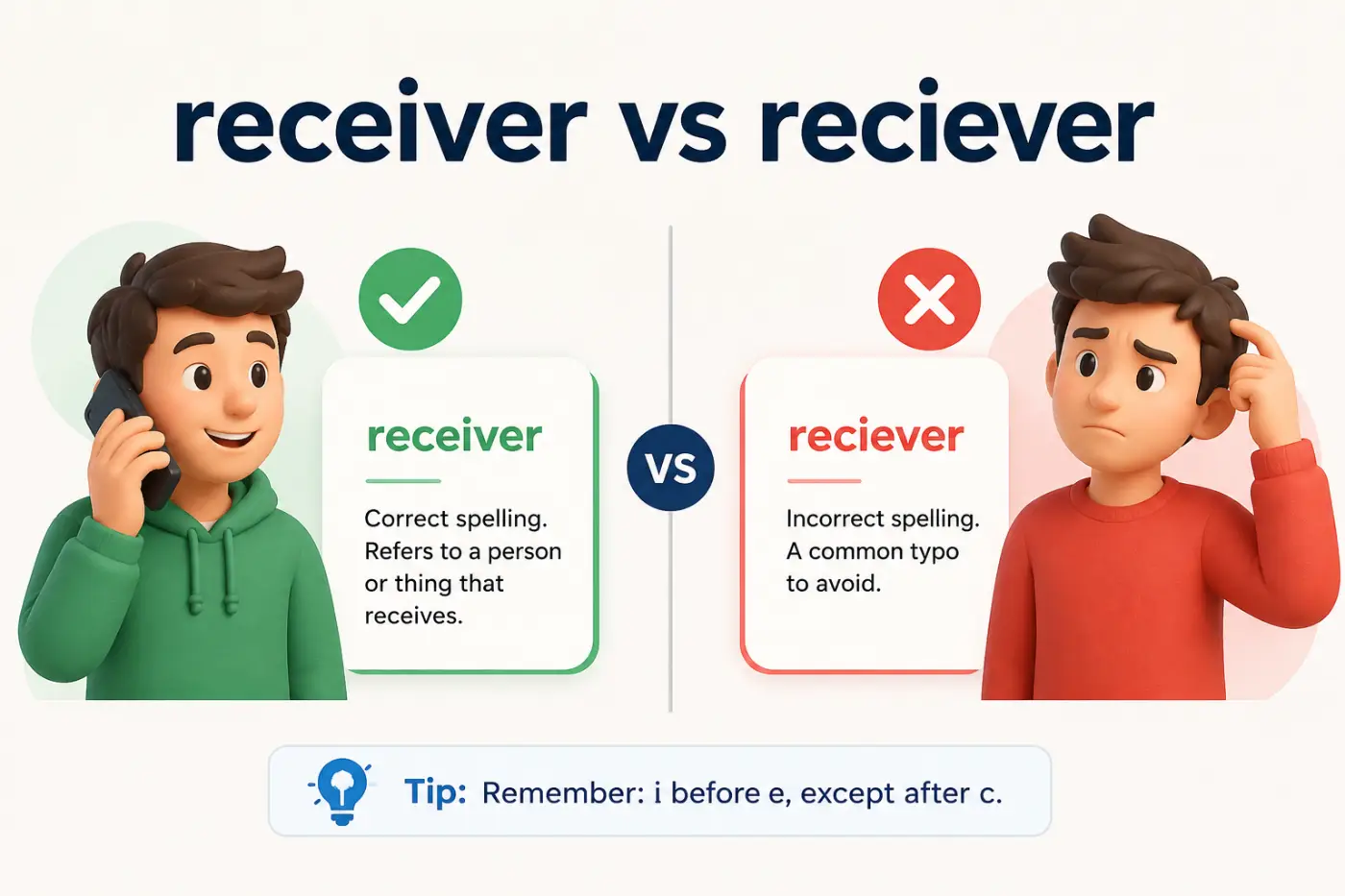
If you’ve ever paused while typing receiver vs reciever, you’re not alone. This is one of the most common English spelling mistakes. The two words look almost identical, sound exactly the same, and differ by only two letters. That small difference causes thousands of people to misspell the word every day.
The correct spelling is receiver. The spelling reciever is incorrect and should never appear in standard English writing. The mistake usually happens because many people remember the familiar phrase I before E except after C but forget that this word is one of the classic examples where ei follows the letter c.
The confusion becomes even more common because receive, receiver, received, and receiving all share the same spelling pattern. If you accidentally reverse the letters, spell check often catches it, but not everyone notices before sending an email, submitting homework, or publishing online.
In this guide, you’ll learn the correct spelling, the grammar behind it, the famous spelling rule, why so many people make this mistake, and practical ways to remember the correct form. By the end, you’ll never hesitate over receiver vs reciever again.
You may also want to read Conex Or Connex Which Spelling Is Correct 2026 Guide.
Quick Answer
Receiver is the correct spelling. Reciever is a misspelling and is not accepted in standard English. Remember the spelling rule I before E except after C. Since c comes before the vowel pair, the correct order is ei, making receiver the only correct form.
Receiver Vs Reciever Comparison Table
| Feature | Receiver | Reciever |
|---|---|---|
| Correct spelling | ✔ Yes | ✘ No |
| Meaning | A person or device that receives something | No accepted meaning |
| Part of speech | Noun | Incorrect spelling |
| Pronunciation | Same | Same |
| Used in dictionaries | Yes | No |
| Formal writing | Yes | Never |
| Academic writing | Yes | Never |
| Everyday writing | Yes | Incorrect |
| Example | The receiver signed the package. | Incorrect spelling |
Which One Is Correct
The correct spelling is receiver.
The spelling reciever is always incorrect.
This rule applies everywhere, including:
- School assignments.
- Business emails.
- Job applications.
- Academic papers.
- Websites.
- News articles.
- Books.
- Social media.
Professional editors, teachers, dictionaries, and style guides all recognize receiver as the standard spelling.
Examples.
✔ Please write the receiver’s full name.
✔ The football receiver caught the winning pass.
✘ Please write the reciever’s name.
✘ The reciever signed the document.
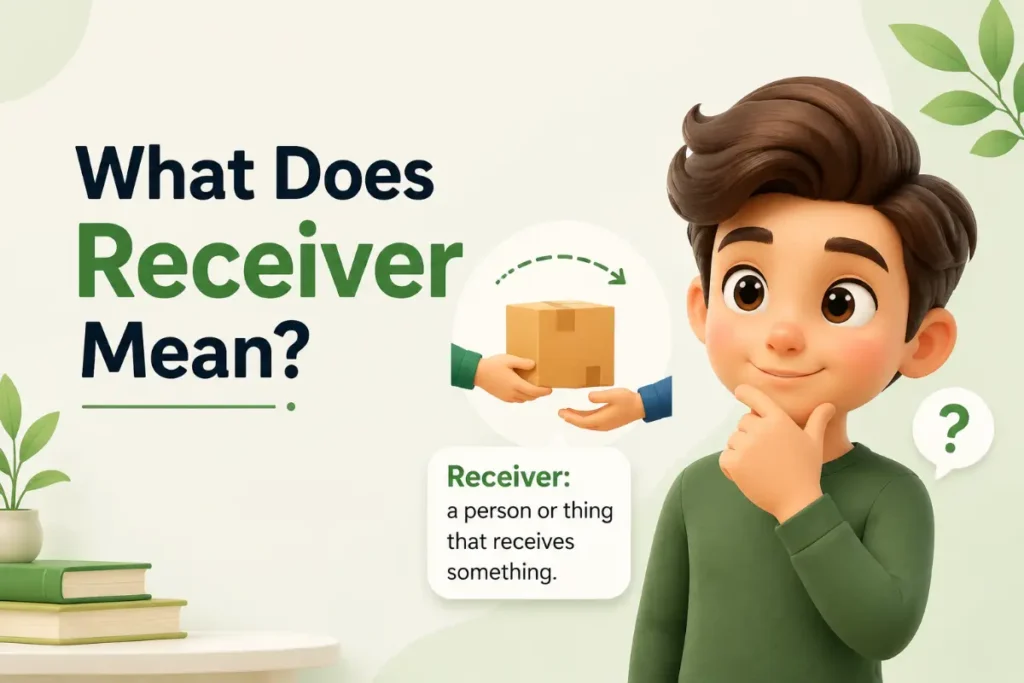
What Does Receiver Mean
A receiver is a person, object, or device that receives something.
The exact meaning depends on the situation.
General Meaning
A receiver is someone who receives something from another person.
Examples.
- The receiver accepted the award.
- Every receiver must sign for the package.
- The receiver thanked the sender for the gift.
In Sports
In American football, a receiver catches passes thrown by the quarterback.
Examples.
- The receiver made an incredible catch.
- The team’s fastest receiver scored twice.
- Every receiver practiced route running before the game.
In Technology
A receiver is an electronic device that receives signals.
Examples.
- The satellite receiver stopped working.
- My AV receiver controls all the speakers.
- The GPS receiver found the location quickly.
In Law
A receiver can also be a person appointed by a court to manage property or finances.
Examples.
- The judge appointed a receiver for the company.
- The receiver managed the business during bankruptcy proceedings.
Why People Misspell Receiver
The mistake rarely comes from pronunciation because both spellings sound exactly alike.
Instead, several factors lead people to write reciever.
The Letters Look Reversed
The only difference is the position of e and i.
When typing quickly, it’s easy to switch them.
The Famous Spelling Rule
Most people remember the saying.
I before E except after C.
Receiver follows this rule because the letters come after c.
The correct order becomes ei.
Receive.
Received.
Receiver.
Receiving.
Every word in this family keeps the same spelling.
Typing Quickly
Many spelling mistakes happen because fingers move faster than the brain.
Since both spellings look believable, writers often miss the error during proofreading.
Pronunciation Gives No Clue
Both spellings are pronounced the same way.
You cannot rely on sound to choose the correct spelling.
Instead, you must remember the spelling pattern.
Receiver Vs Reciever Spelling Rule
The easiest way to remember the correct spelling is to understand the rule behind it.
English learners often hear this saying.
I before E except after C.
While English has exceptions, receiver is one of the words that follows the rule perfectly.
Look at the pattern.
- Receive.
- Received.
- Receiver.
- Receiving.
- Receipt.
Notice that every word places ei after the letter c.
Once you remember one word, the rest become much easier to spell.
Pronunciation Guide
Receiver
IPA
American English
/rɪˈsiːvər/
Syllables
Re ceiv er.
Stress
The second syllable receives the primary stress.
Reciever
Although people sometimes write this spelling, it has exactly the same pronunciation because it is simply a misspelling of receiver.
Pronunciation cannot help you identify the correct spelling.
You must rely on the spelling rule instead.
Grammar Explanation
Receiver is a noun.
It names a person, device, or object that receives something.
Examples.
- The receiver answered immediately.
- Every receiver must show identification.
- The receiver confirmed delivery.
Singular And Plural
Singular.
Receiver.
Plural.
Receivers.
Examples.
- All receivers attended the meeting.
- The coach praised every receiver on the team.
Possessive Form
Singular possessive.
Receiver’s.
Plural possessive.
Receivers’.
Examples.
- The receiver’s signature is required.
- The receivers’ lockers were renovated.
Understanding these forms helps you avoid spelling mistakes throughout your writing.
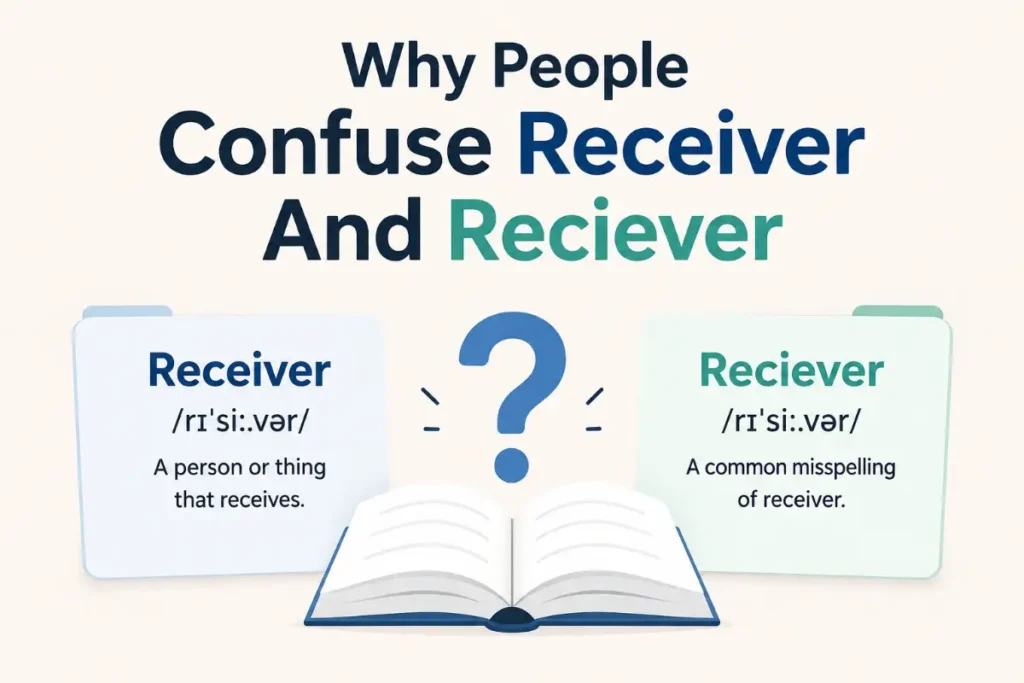
Why People Confuse Receiver And Reciever
The confusion between receiver and reciever is one of the most common spelling mistakes in English. The words sound exactly the same, but only one spelling is correct.
Several reasons explain why people mix them up.
The Letters Are Easy To Reverse
The only difference is the order of e and i.
When typing quickly, many people accidentally write ie instead of ei.
Pronunciation Does Not Help
Both spellings are pronounced the same way.
Since your ears cannot tell the difference, you must rely on spelling instead of sound.
The I Before E Rule Can Be Confusing
Many people remember only the first part of the famous spelling rule.
I before E except after C.
They forget the second part.
Because receiver has the letter c before the vowel pair, the correct spelling becomes ei.
Muscle Memory
Some people have typed reciever incorrectly for years.
The mistake becomes a habit until they consciously learn the correct spelling.
Autocorrect Is Not Always Enough
Most spell checkers correct reciever automatically.
Still, handwritten work, exams, and some online forms may not catch the mistake.
Learning the correct spelling is always better than depending on software.
Receiver Vs Reciever Key Differences
| Feature | Receiver | Reciever |
|---|---|---|
| English word | ✔ Yes | ✘ No |
| Dictionary entry | Yes | No |
| Accepted spelling | Yes | Never |
| Used in formal writing | Yes | No |
| Used in exams | Yes | No |
| Meaning | Person or thing that receives | None |
| Pronunciation | Same | Same |
The easiest way to remember the difference is simple.
If the word comes from receive, it always keeps the ei spelling.
Receiver Vs Reciever Grammar Explained
Understanding the grammar helps you use receiver correctly in every sentence.
Receiver Is A Noun
A noun names a person, place, thing, or idea.
Receiver names someone or something that receives.
Examples.
- The receiver signed for the package.
- Every receiver received an email confirmation.
- The satellite receiver needs an update.
Common Articles
Receiver often follows an article.
Examples.
- A receiver.
- The receiver.
- Every receiver.
Common Adjectives
You can describe a receiver with adjectives.
Examples.
- Primary receiver.
- Intended receiver.
- Electronic receiver.
- Wide receiver.
- Court appointed receiver.
Common Verb Partners
Receiver commonly appears with verbs such as.
- Receive.
- Sign.
- Accept.
- Catch.
- Confirm.
Examples.
- The receiver accepted the shipment.
- The receiver signed the document.
- The receiver caught the pass.
You may also want to read Different or Diffrent: Which Spelling Is Correct 2026 Guide.
Spelling Rules Behind Receiver
English spelling often follows recognizable patterns.
The word receiver comes from the verb receive.
When the suffix er is added, the original spelling stays the same.
Receive.
Receiver.
Received.
Receiving.
Notice something important.
The letters ei never change.
The spelling stays consistent across the entire word family.
Other Words That Follow The Same Pattern
Learning similar words makes the spelling easier to remember.
- Receive.
- Received.
- Receiving.
- Receipt.
- Conceive.
- Perceive.
- Deceive.
- Ceiling.
Although English has exceptions to spelling rules, receiver is not one of them. It follows the expected pattern.
Pronunciation Guide
Correct pronunciation does not change the spelling, but it helps you recognize the word.
Receiver
IPA
American English.
/rɪˈsiːvər/
Syllables
Re ceiv er.
Stress Pattern
The second syllable receives the strongest stress.
Common Pronunciation Mistakes
Most learners pronounce receiver correctly.
The challenge is almost always spelling, not speaking.
Remember that pronunciation cannot tell you where e and i belong.
Word Origin
The history of the word explains why its spelling has remained stable.
The verb receive entered English from Old French and ultimately comes from the Latin word recipere, meaning to take back or accept.
Over time English developed several related words from the same root.
- Receive.
- Receiver.
- Received.
- Receiving.
- Receipt.
Because they belong to the same word family, they all preserve the ei spelling.
British American Canadian And Australian English
There is no regional difference in spelling.
English speakers around the world write receiver the same way.
This includes.
- American English.
- British English.
- Canadian English.
- Australian English.
- New Zealand English.
The spelling reciever is considered incorrect in every major variety of English.
Real Life Examples
Seeing the word in natural sentences helps reinforce the correct spelling.
Daily Conversation
- The receiver answered the door.
- Please write the receiver’s address clearly.
- The receiver thanked everyone for the thoughtful gift.
Workplace
- The receiver confirmed that the shipment arrived safely.
- Every receiver must sign before accepting the package.
- Our accounting department contacted the receiver this morning.
Emails
- Double check the receiver before sending the email.
- Make sure the receiver’s name is spelled correctly.
Academic Writing
- The receiver acknowledged receipt of the documents.
- Researchers identified the receiver of the signal.
Technology
- The wireless receiver connected immediately.
- Restart the receiver if the signal disappears.
- My television receiver supports high definition broadcasts.
Sports
- The receiver caught every pass during practice.
- The rookie receiver impressed the coaching staff.
- The quarterback trusted his receiver in the final seconds.
Journalism
- Police interviewed the receiver of the stolen goods.
- The receiver released a public statement after the hearing.
Social Media
- Tag the receiver before sharing the photo.
- The receiver posted a thank you message online.
Common Mistakes
The spelling receiver is straightforward once you know the rule, but people still make several common mistakes.
Writing Reciever
This is by far the most common error.
Incorrect.
✘ Please enter the reciever’s address.
Correct.
✔ Please enter the receiver’s address.
Reversing The Letters
Many writers accidentally type ie instead of ei because their fingers move faster than their eyes.
Always proofread words from the receive family before sending an email or submitting a document.
Thinking Both Spellings Are Accepted
Some people believe receiver is American English and reciever is British English.
This is false.
Every major English dictionary recognizes receiver as the only correct spelling.
Forgetting The Word Family
If you remember receive, you can spell every related word correctly.
- Receive.
- Received.
- Receiving.
- Receiver.
The spelling pattern never changes.
Easy Memory Tricks
A simple memory trick can save you from making this mistake again.
Think About Receive
Start with the word receive.
Now add r to the end.
Receive.
Receiver.
Nothing changes except the ending.
Remember The Letter C
The letter c comes immediately before ei.
Think of this sentence.
After C comes EI in receive and receiver.
Learn The Whole Family
Instead of memorizing one word, remember the entire family.
- Receive.
- Receiver.
- Received.
- Receiving.
If one word is correct, the others follow naturally.
Related Words
Learning related words strengthens both your spelling and vocabulary.
Related Nouns
- Reception.
- Recipient.
- Receipt.
- Receptionist.
- Receiver.
Related Verbs
- Receive.
- Accept.
- Collect.
- Obtain.
- Gather.
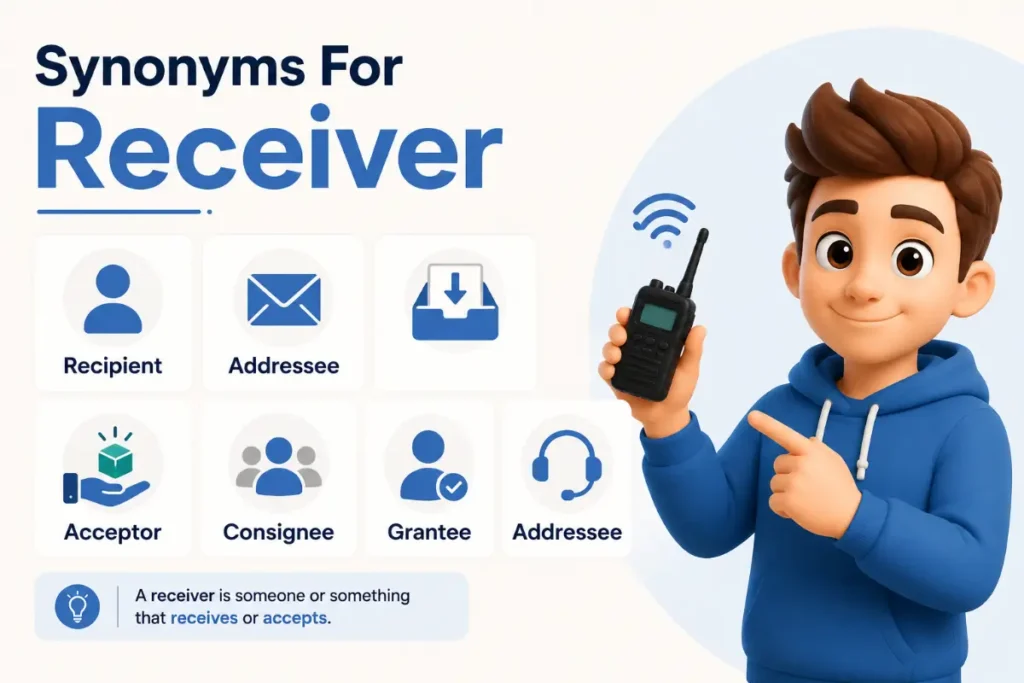
Synonyms For Receiver
The best synonym depends on the context.
- Recipient.
- Recipient party.
- Listener.
- Device.
- Catcher.
Frequently Confused Words
- Receive and recieve.
- Receiver and reciever.
- Receipt and recieve.
- Recipient and receiver.
- Accept and receive.
Understanding these related words makes your spelling more consistent.
Expert Editor’s Note
Professional editors immediately recognize reciever as a spelling mistake.
Major dictionaries, including Merriam Webster, Cambridge, Oxford, and Collins, list only receiver as the correct spelling.
Editors also recommend learning words in families instead of memorizing them one at a time. If you know how to spell receive, the spelling of receiver, received, and receiving becomes much easier to remember.
One proofreading habit can prevent this mistake.
Whenever you write a word that begins with rece, pause for a second and check that ei follows the letter c.
That quick check catches most spelling errors before anyone else sees them.
Frequently Asked Questions
Is Receiver Or Reciever Correct?
Receiver is the correct spelling. Reciever is a misspelling and should not be used in formal or informal writing.
Why Is Receiver Spelled With EI?
The word comes from receive. Since the letters follow c, the correct spelling uses ei, matching the well known spelling pattern.
Is Reciever Ever Correct?
No. Modern English dictionaries do not recognize reciever as a correct spelling.
Is Receiver Used In British And American English?
Yes. Receiver is the standard spelling in American, British, Canadian, Australian, and other varieties of English.
What Is A Receiver?
A receiver is someone or something that receives something. The word can describe a person, an electronic device, a sports player, or a court appointed official depending on the context.
How Can I Remember The Correct Spelling?
Remember the word receive first. Every related word, including receiver, keeps the same ei letter pattern.
What Is The Difference Between Receiver And Recipient?
A receiver is anyone or anything that receives something. A recipient usually refers to the person who receives a gift, message, award, or benefit. Both words are correct, but they fit different situations.
You may also want to read Witnesss Or Witness Which Spelling Is Correct 2026 Guide.
Conclusion
The answer to receiver vs reciever is simple.
Receiver is the only correct spelling in English.
Reciever is a common misspelling caused by reversing the letters e and i.
The easiest way to remember the correct form is to think about the word receive. Every word in the same family keeps the ei spelling after the letter c.
When in doubt, look for the ei pattern. It is a small detail that makes a big difference in clear, professional writing.

Editorial Reviewer & Proofreader
Grace Mitchell reviews Gramlify’s articles for clarity, consistency, and readability. She is passionate about creating accurate, approachable content that helps English learners build confidence.